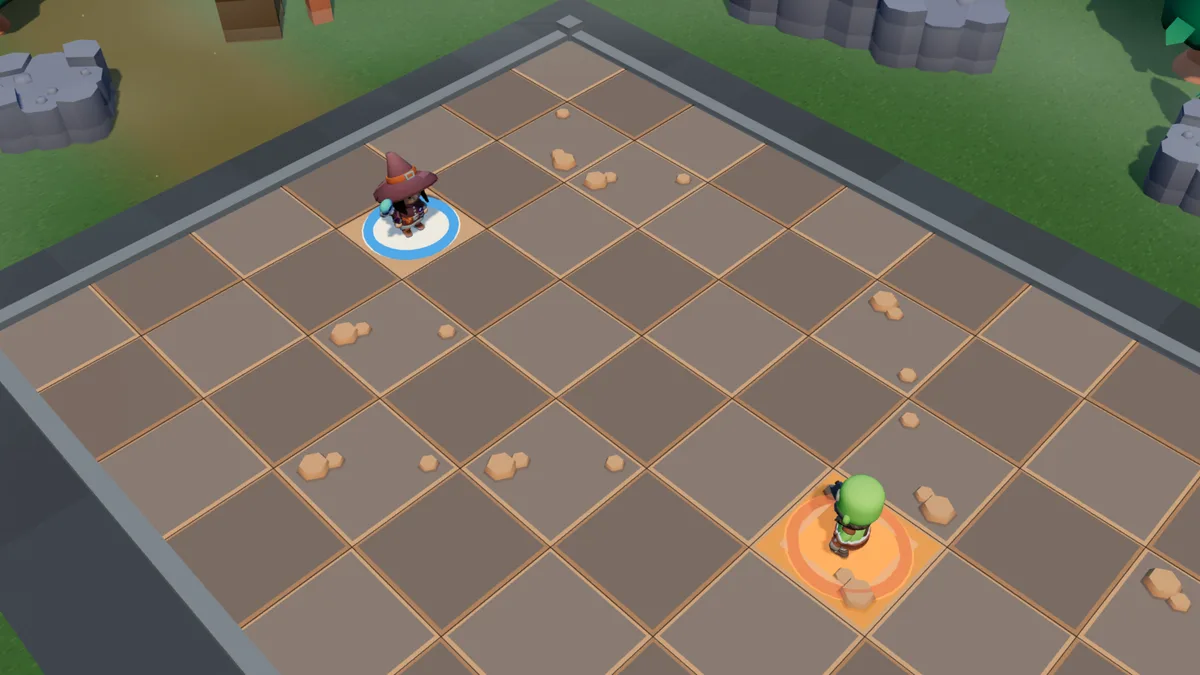
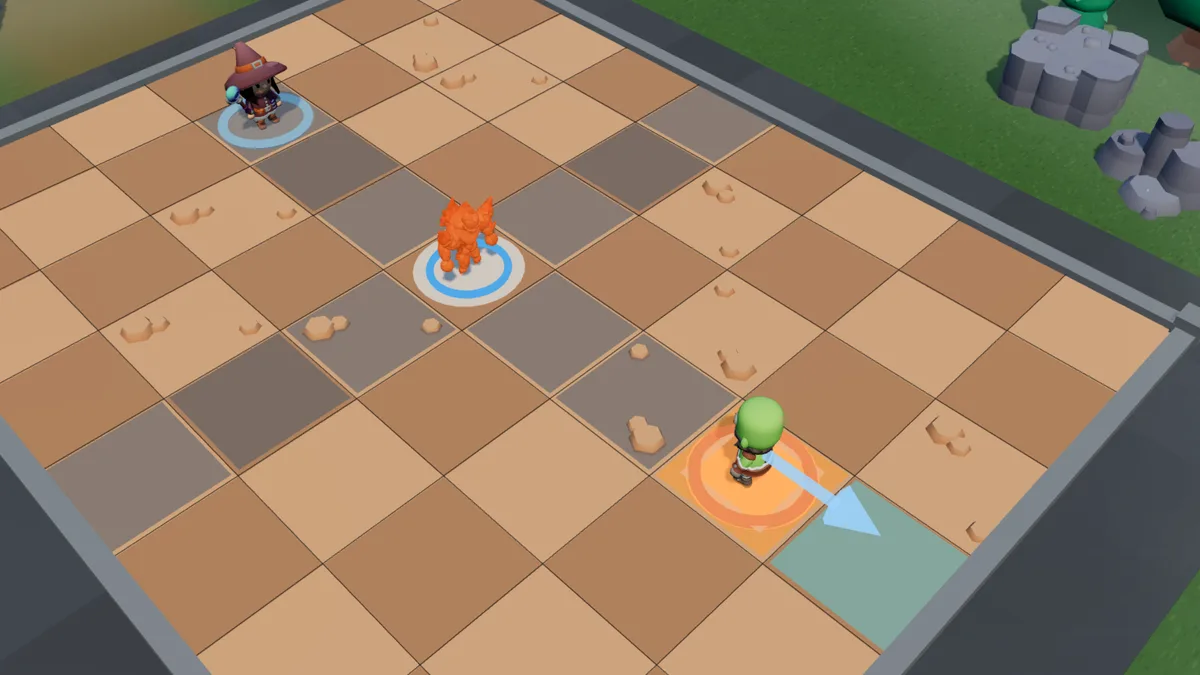
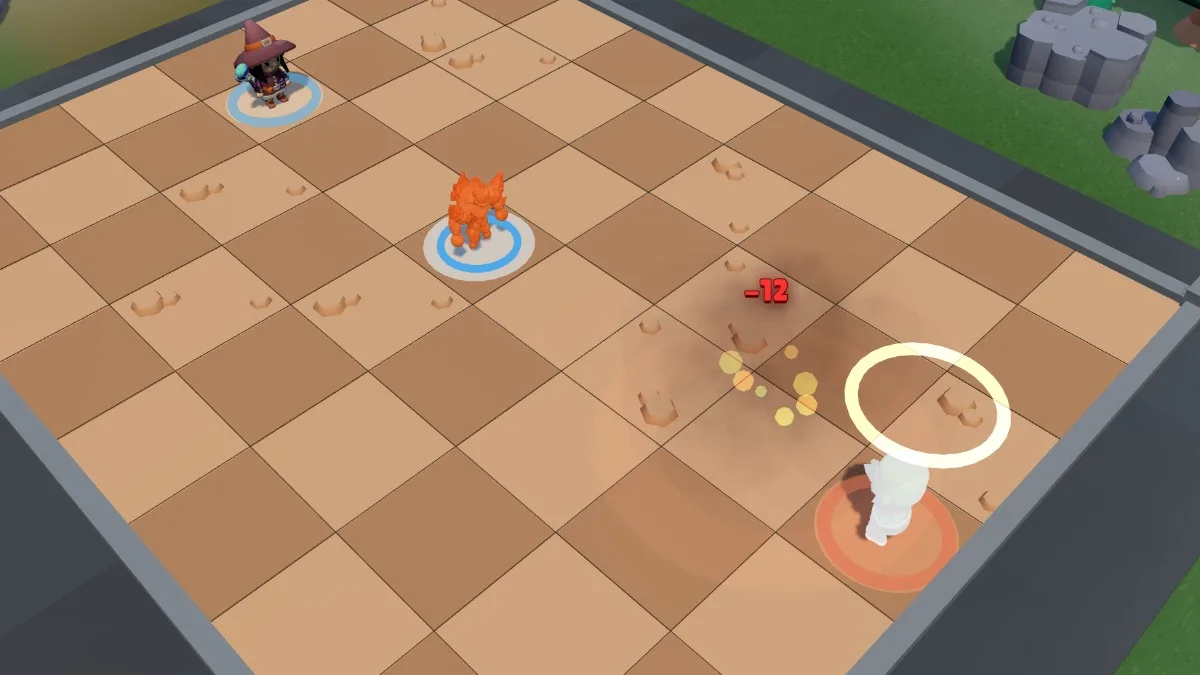
The Arcanist has two more action points than anybody else and the smallest health pool in the game. They turn a clear line of sight into a death sentence — provided they never let their opponent get within five tiles.
In short
Role — the Arcanist is the ranged damage class of Solwaris: they hit harder the further away their target is.
Stats — the Arcanist has 700 health, 14 AP — two more than every other class — and 6 MP.
Passive — their Focus adds 5% damage per tile past 2, up to +40% at 10 tiles, and extends all their spells of range 2 or more by one tile.
Key spell — Fire bolt costs 3 AP, reaches 8 tiles and is cast 2 times per turn; on the third Ignite mark, the target explodes for 38 to 54 damage on itself and on enemies on the adjacent tiles.
Escape hatch — Blink costs 2 AP, has no cooldown and teleports the Arcanist up to 3 tiles (4 with Focus), once per turn.
Weakness — with 700 health, no armour and no Focus bonus in melee, the Arcanist loses the exchange the moment you get next to them.
700health
14action points
6movement points
25%resistance to AP removal
20%resistance to MP removal
Those 14 AP do not come from a passive: they are part of the class stats. Two extra AP a turn is a free Blink in every attacking turn.
The passive: Focus
Focus
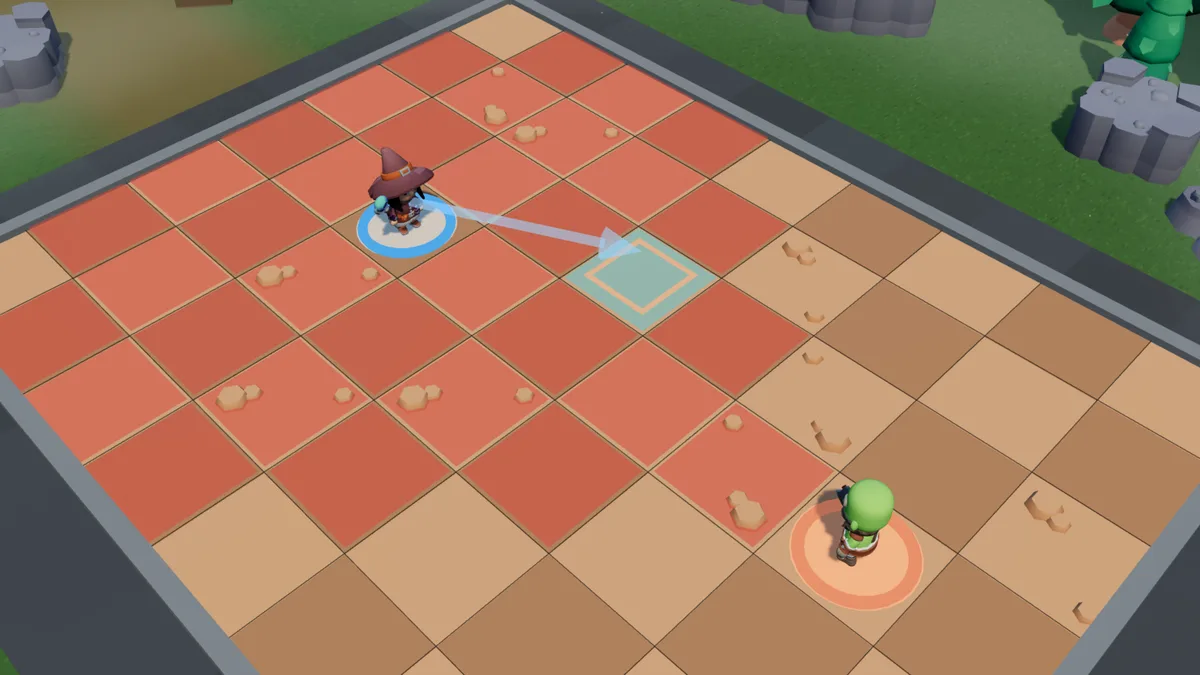
The farther the target, the harder you hit: +5% damage per tile beyond 2, up to +40% at 10 tiles. In melee, no bonus. Only the direct damage of your spells benefits: neither Blaze’s burn nor the Ignite explosion. And all your spells of range 2 or more reach 1 tile farther.
The second effect is the one people forget: Fire bolt actually reaches 9 tiles, Blast 8, Comet 9, Blink 4. With Mage’s eye, count two more tiles again.
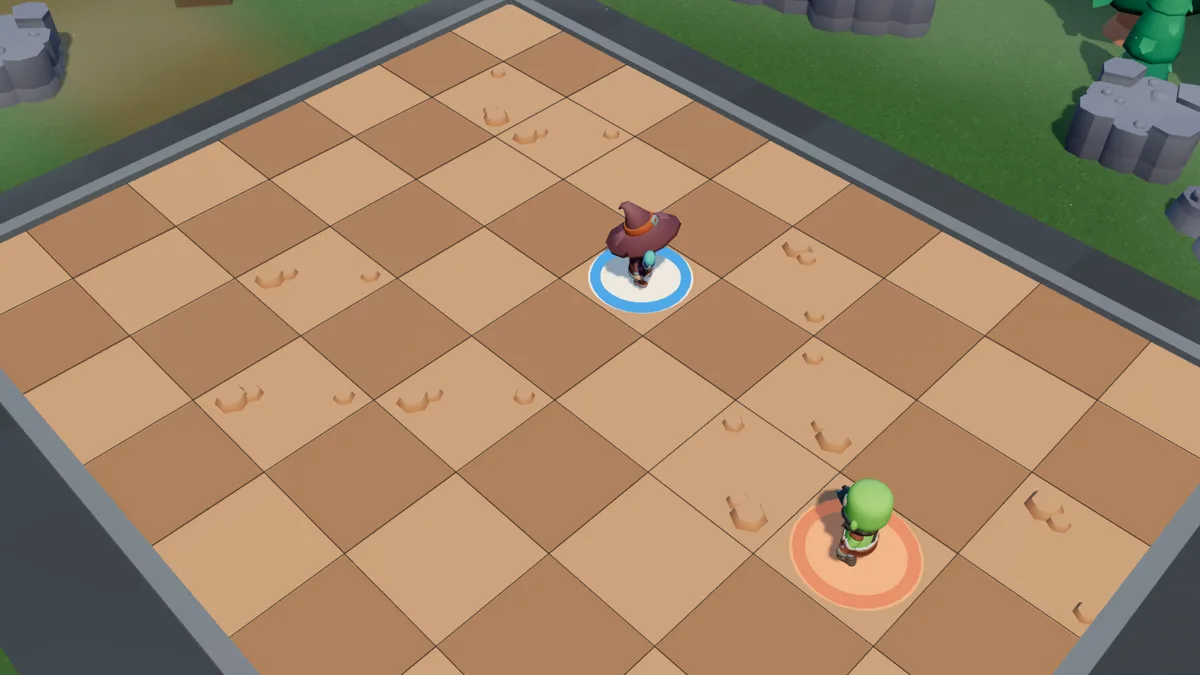
The first effect dictates your position. At 2 tiles you hit like everybody else; at 8 tiles you hit 30% harder. A decent Arcanist does not back off to survive, they back off because that is where their damage is.
The Arcanist’s eight spells
Fire bolt
3 AP · range 1 to 8 (9 with Focus) · 2 casts per turn · no cooldown
16 to 24 damage, and above all an Ignite mark that lasts 3 turns. On the third mark, the target explodes: 38 to 54 damage on itself and on enemies on the adjacent tiles, and the marks start again from zero. Since you can only cast two Fire bolts per turn, the third mark always lands on the following turn — it is an appointment your opponent can plan for, and so can you.
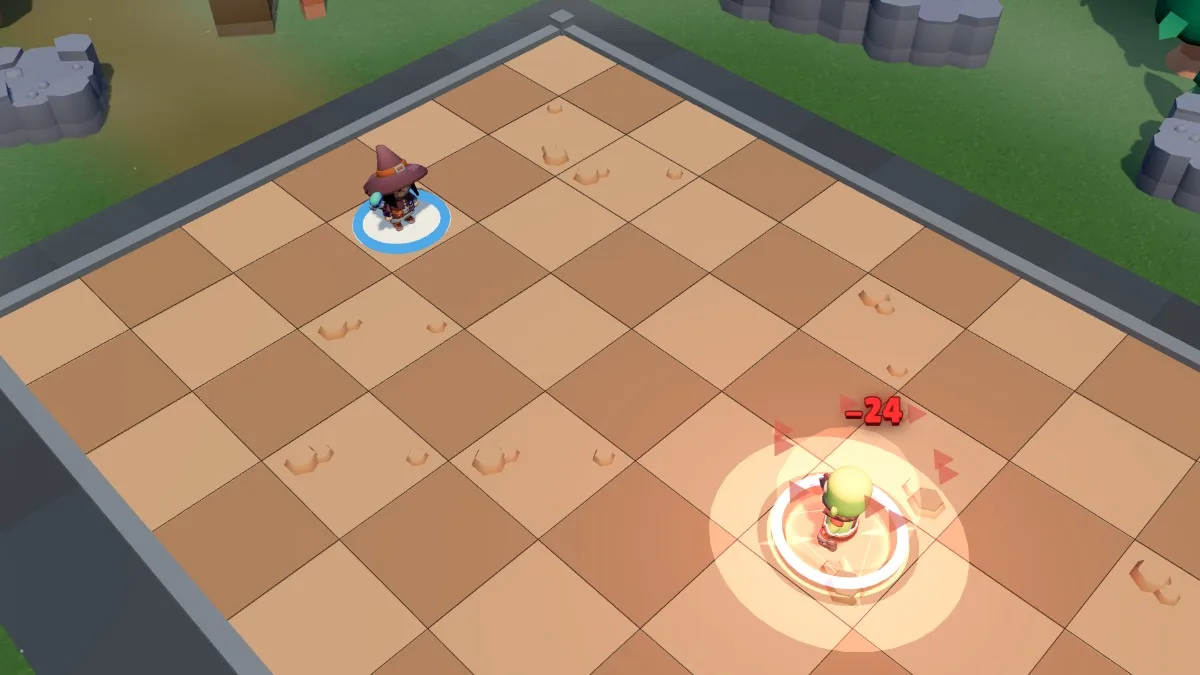
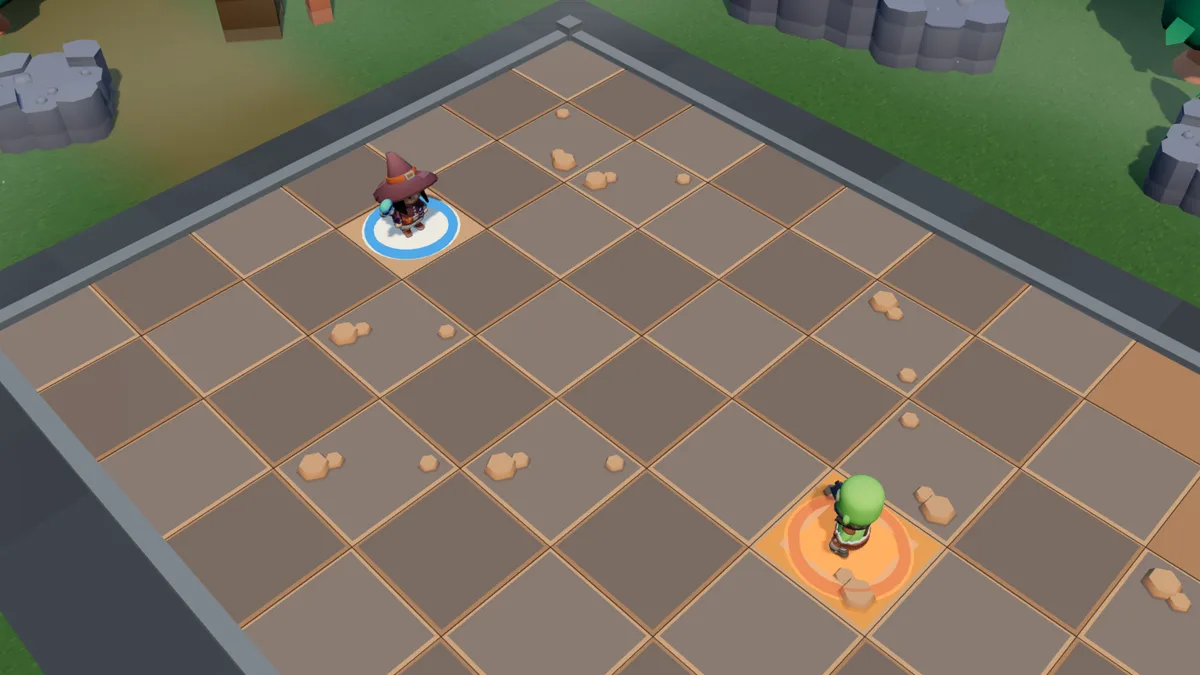
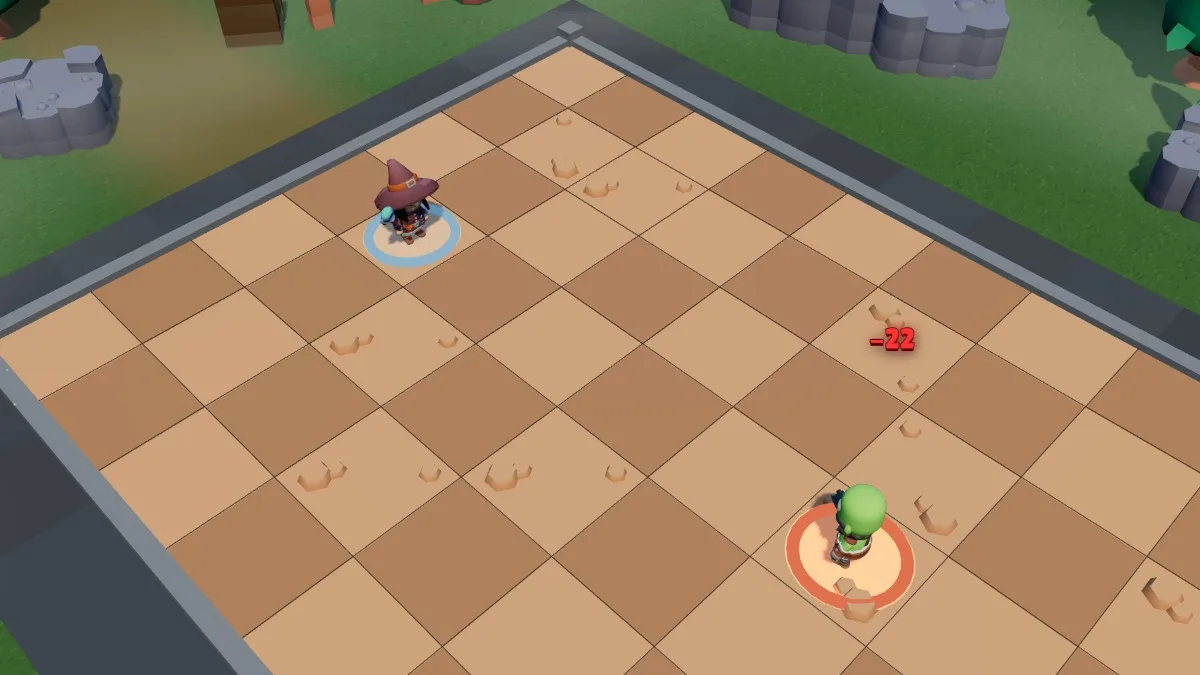
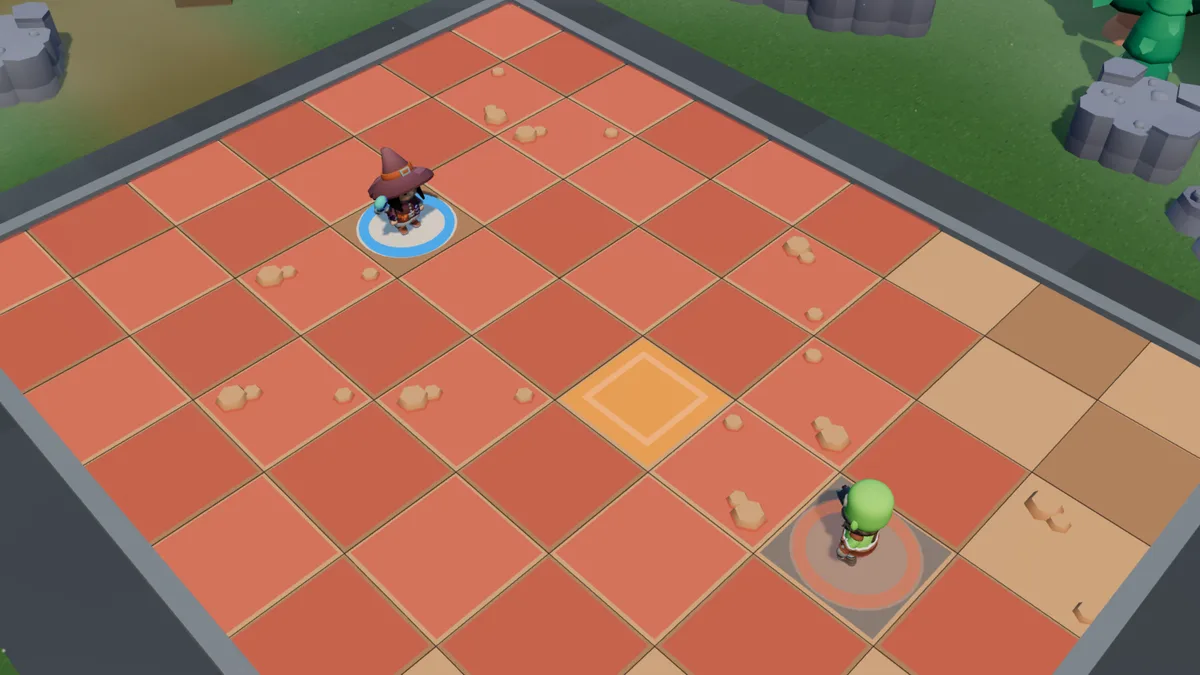
Range 1 to 9, Focus included.24 damage, and an Ignite mark.
Blast
5 AP · range 2 to 7 · circle of 1 tile · 1 cast per turn · 1-turn cooldown
21 to 30 damage on the target tile and the four adjacent tiles, your allies included. It targets a tile, not an enemy: along with Comet, it is your way to hit an invisible Shade, and the spell that punishes a hero standing next to their summon.
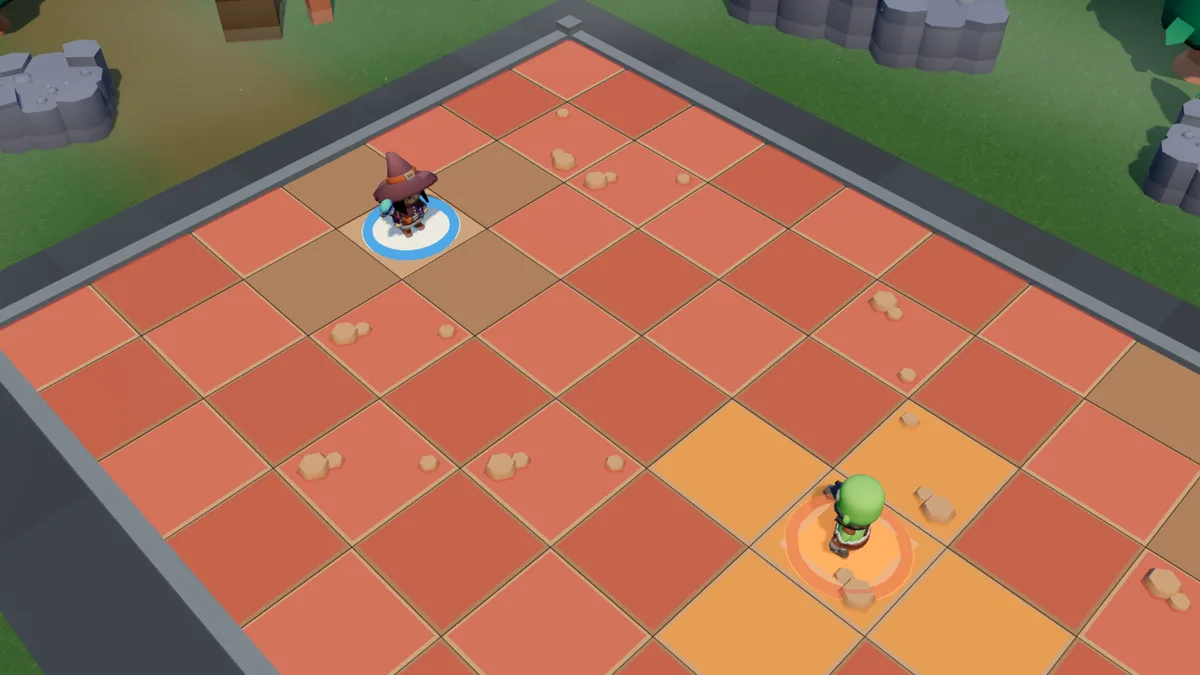
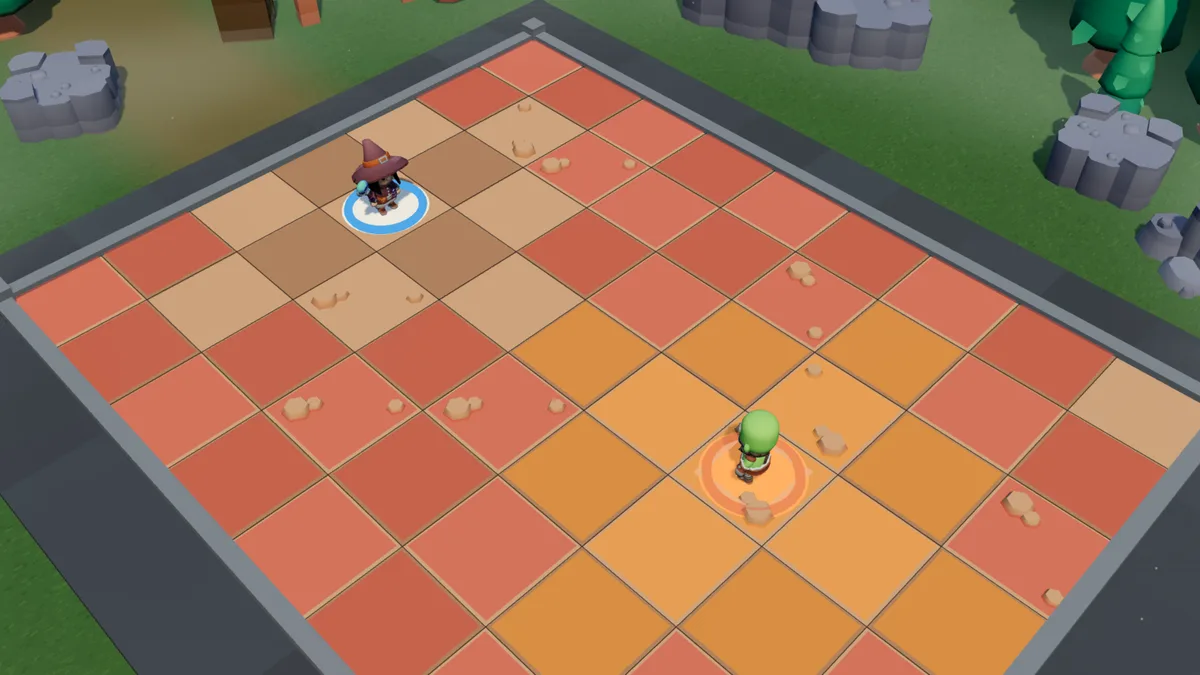
A circle of 1 tile, from 2 to 8 tiles away from you.30 damage to everything in the circle.
Blaze
4 AP · range 1 to 7 · 2-turn cooldown
No immediate damage: the target burns for 17 to 25 at the start of each of its next 2 turns. Once applied, the burn ignores distance, line of sight and walls, and it goes through armour and resistances — which makes it the best spell to cast just before breaking out of melee and disappearing around a corner. In return, it gets no damage bonus: no Focus, no Mage’s eye, no critical hit.
Range 1 to 8, on an enemy.At the start of their turn: 22 burn damage, two turns in a row.
Comet
6 AP · range 3 to 8 (9 with Focus) · circle of 2 tiles · 3-turn cooldown
23 to 33 damage to everything within 2 tiles of the target point, your allies included. The widest area in the class, and the one that most easily reaches a hero and their summons at once. Minimum range 3: it can never be cast on someone who has just closed on you.
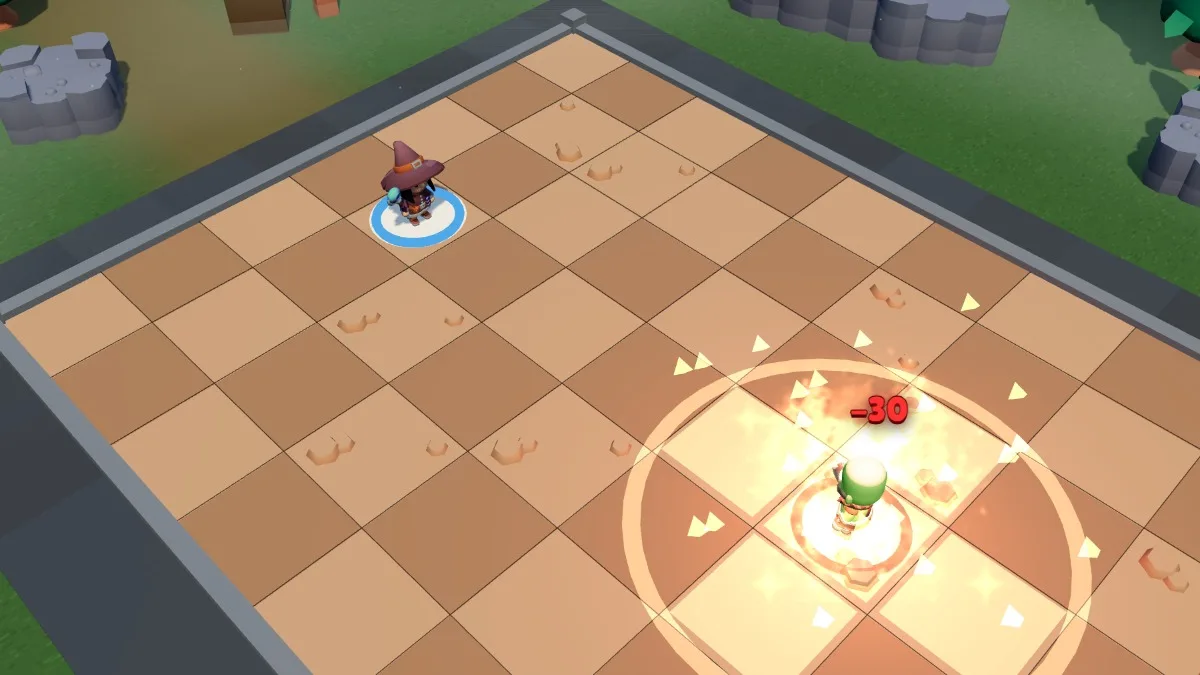
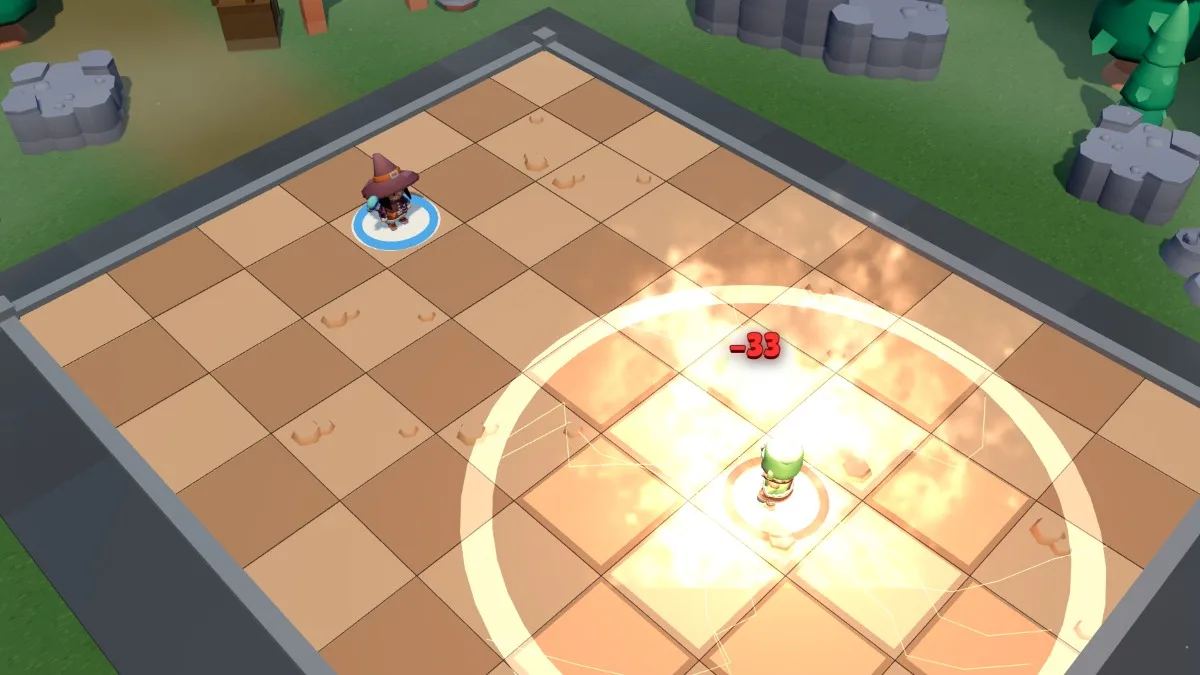
A circle of 2 tiles, from 3 to 9 tiles away from you.33 damage to everything in the circle.
Blink
2 AP · range 1 to 3 (4 with Focus) · free tile in sight · 1 cast per turn · no cooldown
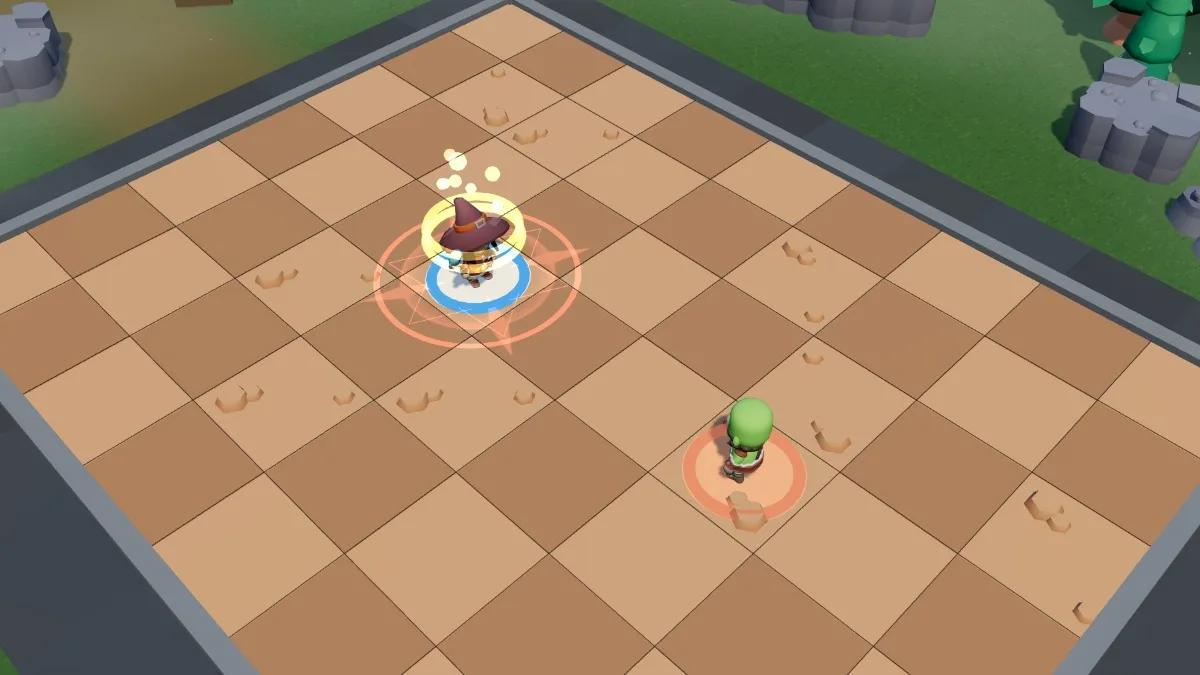
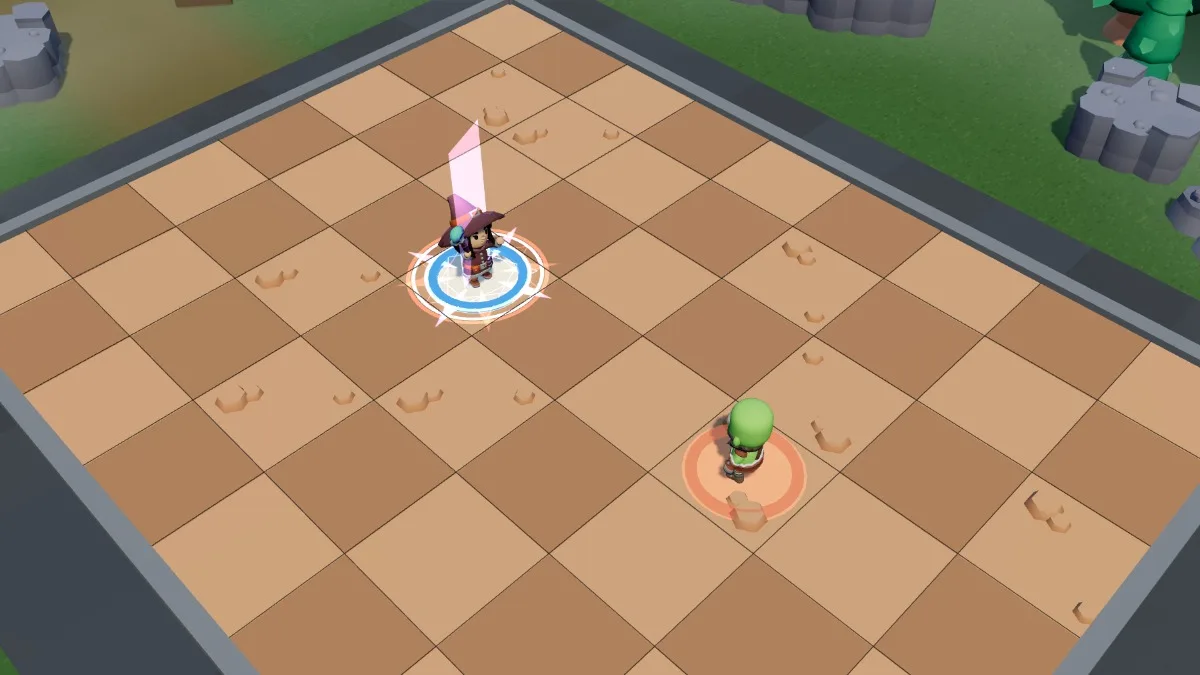
A short teleport, with no cooldown: you have it every turn. Two AP to get out of melee, find a line of sight again, or cross the void. It needs a line of sight to the arrival tile: it goes over no obstacle, not even a low one. It is the most important spell in the class, and the one beginners spend too early.
A jump of 1 to 4 tiles to a free tile in sight.You reappear on the target tile, without spending MP.
Mage’s eye
3 AP · on self · 4-turn cooldown
+2 range on all your spells and +20% damage, this turn and the next. Fire bolt then reaches 11 tiles: enough to strike from an angle where your opponent simply cannot reach you in one turn.
+2 range and +20% damage for 2 turns.
Arcane mirror
3 AP · on self · 4-turn cooldown
For 2 turns, half the damage you take is also dealt to whoever hits you — you still take it, and poison and burns are not reflected. It is an answer to melee, not a protection: against a Warrior chaining two Lunges it returns more than any shield in the class, which has none.
Half the damage taken goes back to whoever dealt it, for 2 turns.
Flame elemental
5 AP · range 1 to 5 · free tile · 6-turn cooldown
Summons an elemental with 130 health and 4 MP, which you play on its own turn, right after yours. It spits embers at 5 tiles (26 to 38 damage, 5 AP) and breathes in a straight line to push back 2 tiles (12 to 18 damage, 3 AP). It plays 4 turns, then vanishes at the start of its 5th. Beyond the damage, it blocks a tile: placed in a corridor, it buys you the turn you need.
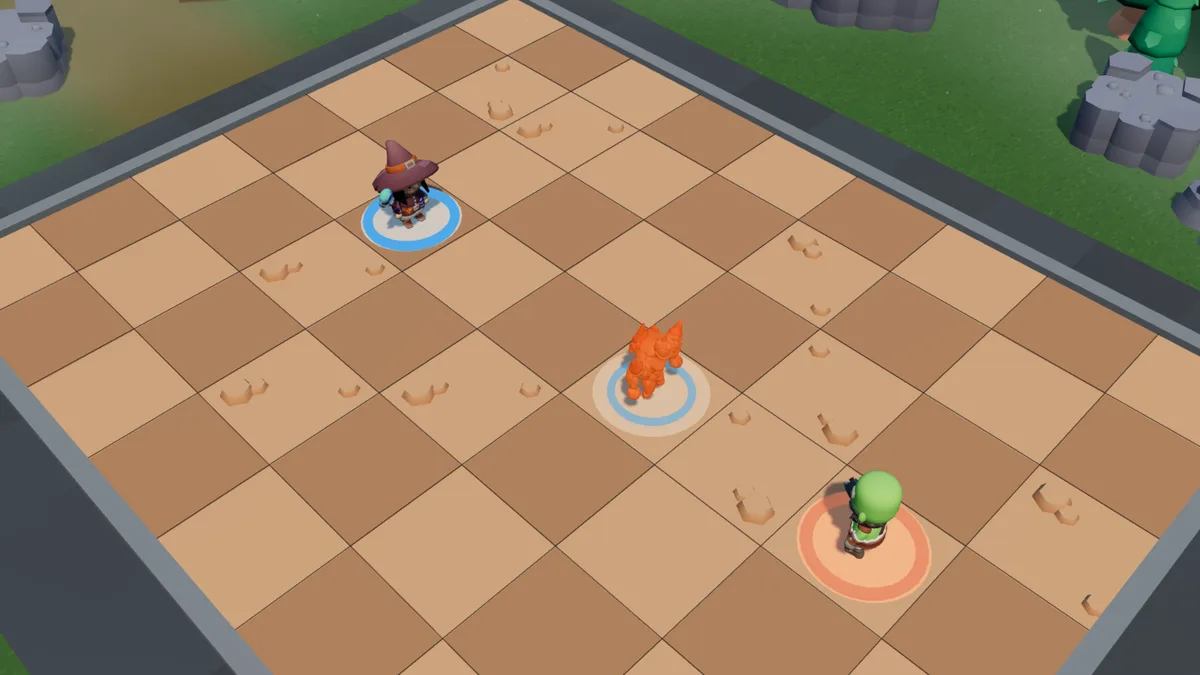
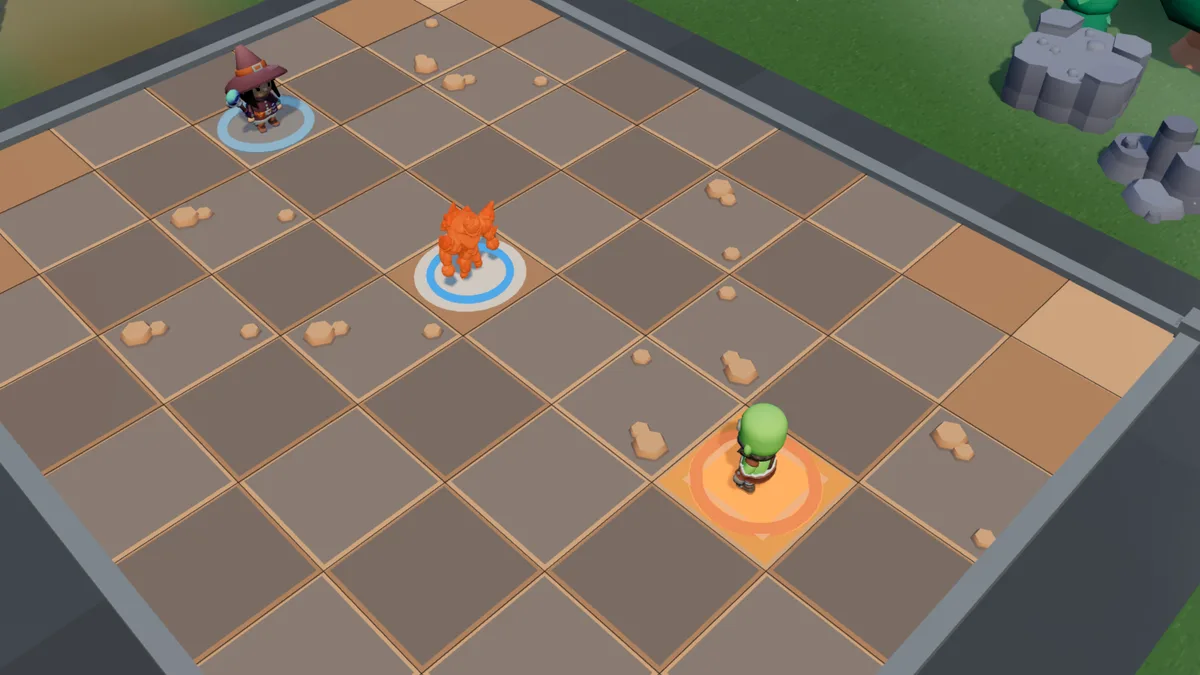
Range 1 to 6: a free tile.A 130 HP elemental that you play on its own turn, for 4 turns.
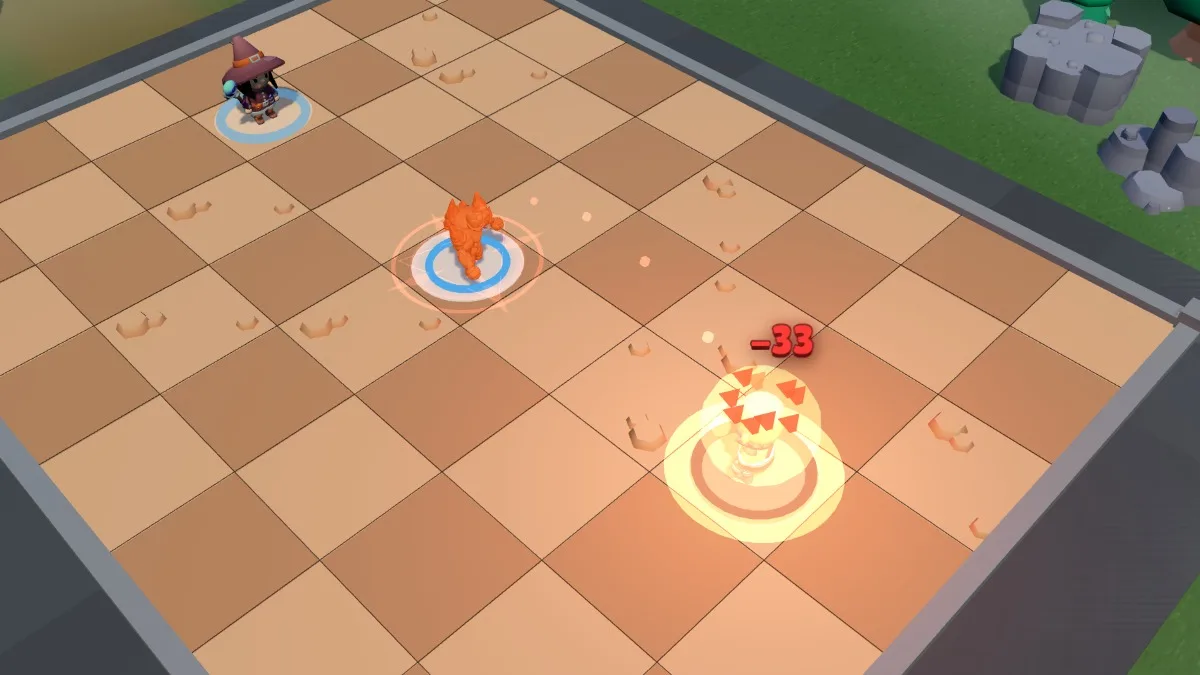
The elemental, on its own turn — you play it like a second hero.
Ember spit (5 AP): range 1 to 5.33 damage to the Brute.Burning breath (3 AP): in a straight line, up to 3 tiles.12 damage, and the target is pushed all the way to the edge of the arena.
The variants
Every spell slot has a second version, and so does the passive: before the fight, in the grimoire, you pick one version per slot. The Arcanist’s variants heal, grant AP and poison; her base kit doesn’t change. A heal cast on an enemy hurts it. The choice is locked when the fight starts, and your opponent sees it. All of them are available, in every mode.
Benevolence (passive variant)
Replaces Focus.
Each heal from your Soothing chant on an ally also restores to you 10% of the HP healed. The farther the healed ally, the stronger that heal: +5% per tile beyond 2, up to +25% at 7 tiles. Even without an ally, the passive works: the heals you give yourself are 15% stronger (Soothing chant, Featherstep, Great canticle placed on yourself). The bunny’s Cuddle, Great canticle placed on an ally and Venom chant’s lifesteal do not benefit.
Heals hurt
Two of the school’s heals hurt, Soothing chant and the bunny’s Cuddle: an enemy hit by one of them takes 150% of its value as damage — direct damage like any other, reduced by armour and resistances, raised by a critical hit and dodgeable by a Shade. The heal given to an ally does not change.
Keen chant
3 AP · range 1 to 7 · 2 per turn
Replaces Fire bolt.
A word that wounds an enemy: 12 to 18 damage, plus an echo for 2 turns: every heal you or an ally receive in that time, wherever it comes from (chant, bunny, lifesteal, turret, regeneration), deals as much damage to them, in two halves, at the start of their next 2 turns. Their armour and resistances reduce this damage.
Tip. Little damage up front: its worth is the echo. Mark the enemy, then heal — every heal given during the echo hurts them for as much. Cast it before Great canticle or Soothing chant. Its catch: with no heal behind it, it is your weakest shot.
Soothing chant
4 AP · range 0 to 6 · area of 1 · no limit per turn
Replaces Blast.
Heals allies on the targeted tile and the 4 adjacent tiles (yourself included): 9 to 13 HP each. Enemies in the area are hurt: 14 to 20 damage (150% of the heal), a direct hit that can be dodged. No cooldown and no limit per turn: as many times as your AP allow.
Tip. A group heal that hurts at the same time: aim at the tile that reaches both your allies and the enemy next to them. In a duel, next to your opponent, it heals you and hits them in a single cast. Its catch: far from any enemy, it is a small heal for its cost.
Venom chant
4 AP · range 1 to 7 · 2-turn cooldown
Replaces Blaze.
A poison that eats at an enemy at the start of each of their next 3 turns (18 to 24) and restores to you half of the damage it actually deals. It cannot be dodged and goes through armour. It stops as soon as a healing spell touches the target; lifesteal or regeneration does not stop it.
Tip. Damage spread over several turns for a single cast, and a share of each bite comes back to you as HP: apply it early, then back off. It keeps eating away while you heal or run, and goes straight through armour. Its catch: a healing spell on the target stops it dead — of little use against an opponent who has a heal. Lifesteal or regeneration do not stop it.
Chant of zeal
2 AP · range 0 to 6 · area of 1 · 5-turn cooldown
Replaces Comet.
Your allies on the targeted tile and the 4 adjacent tiles (yourself included, if you are there) have 2 more AP for their next 2 turns.
Tip. The team spell par excellence: your allies in the area play their next turns with more AP, and so do you if you stand in it. Cast it before the decisive turn of your hardest-hitting ally. Its catch: a long cooldown, and it takes the slot of Comet, your biggest area spell.
Featherstep
3 AP · range 1 to 2 · free tile · 1-turn cooldown
Replaces Blink.
A short jump to a free tile in sight, up to 2 tiles away (3 with Focus); on landing, you recover 8 to 12 HP. Every other turn.
Tip. A shorter jump than Blink, but one that heals you on landing — and that heal counts for the echo of Keen chant, if you were wounded. Its catch: every other turn only, and too short to escape a determined melee.
Chant of vigour
3 AP · range 0 to 6 · an ally or yourself · 4-turn cooldown
Replaces Mage’s eye.
An ally (or yourself) gains 8% max HP — and as much HP — for 3 turns. At the end, max HP returns to normal; the excess HP is lost.
Tip. A temporary health cushion: cast it before the enemy’s big hit, on yourself or on the targeted ally. Its catch: the extra HP vanish at the end — it is a respite, not a heal.
Great canticle
6 AP · range 0 to 6 · an ally or yourself · 1-turn cooldown
Replaces Arcane mirror.
A protective chant on an ally (or yourself), until the start of your next turn: each time they take damage, they immediately recover half of the damage actually taken (after armour and resistances) — hits, areas, poison, pushes, glyphs and traps. A killing blow kills: the heal does not happen. Every other turn: the chant has worn off by the time you can cast it again. Does not stack: another Arcanist’s on the same target only renews the duration.
Tip. It does not heal on the spot: it gives back a share of every hit taken while it lasts. Cast it BEFORE taking damage, on whoever the opponent is about to target — usually you. Under the echo of Keen chant, every HP it restores falls back on the marked enemy. Its catch: it drops at the start of your next turn and can only be recast every other turn — so it covers only one enemy turn out of two; if nobody hits its target, the AP are wasted, and a killing blow still kills.
Healer bunny
4 AP · range 1 to 4 · free tile · 5-turn cooldown
Replaces Flame elemental.
Summons a healer bunny (140 HP, 4 MP) that you control on its turn: once per turn, it heals an ally, you or itself up to 4 tiles away (16 to 21 HP), or wounds an enemy (24 to 32 damage). It plays 3 turns, the first right after yours, then leaves at the start of its 4th.
Tip. A healer that plays on its own turn and leaves your AP for everything else. Place it behind an obstacle, within range of those it must heal. With nobody to heal, its heal cast on an enemy hurts them. Its catch: it is fragile and only stays a few turns — an opponent who targets it kills it fast, and its cooldown is long.
Playing the variants
The variants change the Arcanist’s job: they heal, strengthen their allies and wear the opponent down instead of burning them from afar. In two versus two, that makes a complete support; in a duel, their heals double as attacks, since a heal cast on an enemy hurts them.
The echo (13 AP)
Keen chant (3 AP) — on the enemy: the echo is set.
Great canticle (6 AP) — on yourself or the ally about to be hit: every HP it gives back will fall on the marked enemy.
Soothing chant (4 AP) — a second heal inside the echo, plus direct damage if the enemy is in the area.
Heals received during the echo come back as damage, in halves, at the start of the enemy’s next turns. Only HP actually restored count: healing someone at full health yields nothing. Great canticle, for its part, only gives back if its target gets hit.
Poison and step back (7 AP)
Venom chant (4 AP) — the poison eats away at the start of their next turns, and a share of its damage comes back to you as HP.
Featherstep (3 AP) — a short jump, and a few HP regained on landing.
The poison stops as soon as a healing spell reaches the target: keep it for opponents who have no heal.
Three combos
The Ignite turn (10 AP out of 14)
Fire bolt (3 AP): first mark.
Fire bolt (3 AP): second mark. The limit of two casts a turn stops there.
Blaze (4 AP): the burn runs while the marks ripen.
4 AP are left — one Blink and 2 AP of margin. On the next turn, the first Fire bolt sets off the explosion for 38–54 on the target and the enemies next to it.
The maximum-range turn (14 AP)
Mage’s eye (3 AP): +2 range and +20% damage for two turns.
Comet (6 AP) at 10 tiles, boosted by Focus as well as by the Eye.
Fire bolt (3 AP), then Blink (2 AP) to finish out of sight.
Every AP is spent. The Blink at the end of the turn is not a luxury: it is what decides the distance your opponent’s turn will start at, and therefore your damage on the following turn.
Take off without losing your turn (6 AP)
Blaze (4 AP) on the adjacent enemy: they will burn even if you disappear.
Blink (2 AP) to get out of melee.
The rest in MP, to gain a few more tiles — every tile is worth 5% damage on the next turn.
Combos that work
These lines are the ones that come up most often, and pay off most, across several thousand training matches played by the game’s automatic opponents at their best level. For each one: the spells in order, what you need, what you get out of it, the most common follow-up, and when to do without it. A sequence missing from this list is not necessarily a bad one.
Break away and ignite (13 AP)
Blink (2 AP)
Fire bolt (3 AP)
Fire bolt (3 AP)
Blast (5 AP)
Conditions. The enemy has just got next to you, or you have no line of sight: Blink fixes both. Blast cannot be cast on a tile next to you.
Result. Two Ignite marks and an area, cast from farther away — so they hit harder, thanks to Focus. On the next Fire bolt, the third mark explodes.
The line. I play Blink, Fire bolt twice, then Blast; they answer by laying their traps if they are a Shade, or by coming back at me with Warrior’s leap; then I have the jump again, a Fire bolt that sets off the mark, and Comet.
When not to play it. When they have the means to get back into melee every turn and your HP is melting away: the jump is no longer enough, keep AP for Arcane mirror.
Comet from a distance (14 AP)
Blink (2 AP)
Fire bolt (3 AP)
Fire bolt (3 AP)
Comet (6 AP)
Conditions. All your AP. Comet cannot be cast too close to you: the jump gives it the distance it needs. Even better under Mage’s eye cast the turn before.
Result. The Arcanist’s biggest turn: two bolts, two marks, and your strongest area.
The line. I play Blink, Fire bolt twice, then Comet; they answer by pulling me to them with Taunt, or by leaping onto me; then, with Comet on cooldown, I have Fire bolt twice, Blaze and the jump.
When not to play it. When they would be on you next turn and you would have nothing left: this line empties your AP. Against several targets, aim at the area rather than at the hero alone.
The Eye first (14 AP)
Mage’s eye (3 AP)
Fire bolt (3 AP)
Fire bolt (3 AP)
Blast (5 AP)
Conditions. At a good distance, without having to move. Mage’s eye lasts this turn and the next: open with it.
Result. Extra range and damage for everything that follows, this turn and the next — when Comet still benefits from it.
The line. I play Mage’s eye, Fire bolt twice, then Blast; they answer with the same thing if they are an Arcanist, or by sheltering behind a War banner; then, still under the Eye, I have Blink, Fire bolt twice and Comet.
When not to play it. When the enemy is already next to you: break away first, the Eye can wait. And there is no point casting it for a turn where you will only run.
The smouldering fire (12 AP)
Blink (2 AP)
Fire bolt (3 AP)
Fire bolt (3 AP)
Blaze (4 AP)
Conditions. When Blast and Comet are on cooldown. You have AP left after the line.
Result. Little damage on the spot, but two marks and a Blaze that burns them at the start of their next two turns, even if they take cover.
The line. I play Blink, Fire bolt twice, then Blaze; they answer by laying traps if they are a Shade, or by advancing; then I have the jump, Fire bolt twice — the mark explodes — and Blast, back from cooldown.
When not to play it. When they are within kill range: Blaze does not hurt right away. Pick a spell that hits now.
The canticle before the clash (12 AP)
Great canticle (6 AP)
Fire bolt (3 AP)
Fire bolt (3 AP)
Conditions.Great canticle in place of Arcane mirror, and an enemy about to come and hit you. Set on yourself before they arrive, it gives you back a share of every hit you take.
Result. Two Ignite marks, and an enemy turn of which you keep only part of the damage. The price: almost half of your AP.
The line. I set Great canticle on myself, then Fire bolt twice; they answer by coming into melee — Quake and Mace smash for a Brute — and the canticle gives me back a share of every hit; then a Fire bolt sets off the mark, and Featherstep takes me away.
When not to play it. When the enemy cannot reach you before the state drops: the canticle fades without giving anything back. And when a single hit can take you down: it gives nothing back to the dead.
Their weaknesses
What beats an Arcanist
Melee. 700 health, no armour, no class resistance. With an enemy next to them, they lose their passive and their life expectancy at the same time.
AP removal. 25% resistance, the second worst in the game. Their 14 AP are their strength, and that is exactly what the Clockmaker’s Hourglass comes for.
Walls. Almost all their spells need a line of sight. An opponent who plays the angles makes them spend their MP instead of their AP.
Forced closing. Taunt, Charge, Quake, Intimidate: anything that drags them towards their opponent cancels their Focus. Blink only exists once a turn.
What beats the variants
Less direct damage. The chants heal and wear down: without Comet or Blast, the Arcanist no longer punishes a group from afar.
A poison any heal stops.Venom chant ends as soon as a healing spell reaches the target: almost useless against another healer or a healing turret.
The turn after.Great canticle gives nothing back if nobody hits its target: an opponent who waits for the state to drop, or aims at someone else, has made you play half a turn for nothing.
Who you face, and how
Against the Warrior and the Brute, count their closing tools before you pick your tile: a Charge reaches 7 tiles in a straight line, a Leap 5. Ending a turn 6 tiles away in a clear corridor is handing them melee. Break the line, keep the Blink.
Against the Shade, Blast or Comet on an empty tile are your answers to invisibility. Against the Artificer, Comet chips away at several charges at once before they arm. Against the Clockmaker, beware of the Automatons: each one is a foothold to teleport you away from your ideal distance.
The variants shift your bearings. Against a Shade who gambles, do not plan around her average damage: keep enough to survive a turn where everything succeeds, and Chant of vigour for that turn. Against the Brute’s pack, Soothing chant hurts every beast next to your allies. Against the Warrior, Burning glyph burns whoever starts their turn in it: get out before the end of yours, on foot or with Featherstep. Against the Clockmaker’s rifts, your spells go through them too, and their shots come out of them: do not end your turn in line with a rift.
Frequently asked questions
How do you play the Arcanist in Solwaris?
The Arcanist is played by holding distance: every tile past 2 is worth 5% damage to them, up to +40% at 10 tiles. Their 14 AP allow two Fire bolts and a Blink in the same turn. Blink, 2 AP and no cooldown, is saved for the end of the turn: it is what decides the distance your opponent’s turn will start at.
How much HP does the Arcanist have?
The Arcanist has 700 health, the smallest pool in the game along with the Shade and the Artificer. In exchange they get 14 action points — two more than every other class — and 6 movement points. They have neither armour nor class resistance.
How does the Arcanist’s Ignite work?
Every Fire bolt lays an Ignite mark that lasts 3 turns, and on the third mark the target explodes for 38 to 54 damage on itself and on enemies on the adjacent tiles. Since Fire bolt can only be cast twice per turn, the third mark always lands on the following turn. It is an appointment your opponent can plan for, and so can you.
What is the Arcanist’s best spell?
Blink, even though it deals no damage: 2 AP, no cooldown, available every turn to get out of melee or find a line of sight again. For raw damage it is Comet: 6 AP, 23 to 33 damage in a circle of 2 tiles, range 3 to 8 and a 3-turn cooldown.
How do you beat an Arcanist?
By sticking to them. In melee, their Focus pays nothing any more, and their 700 health has neither armour nor class resistance to protect it. Anything that drags them towards their opponent — Taunt, Charge, Quake, Intimidate — cancels their passive, and their Blink can only be used once a turn.
Can the Arcanist’s heals deal damage?
Yes. With the variants, a heal cast on an enemy deals 150% of its value as damage, reduced by armour and resistances like any other hit. Soothing chant therefore works both ways: healing an ally, or hitting an opponent. Great canticle, for its part, can only be cast on an ally or on yourself.
The Arcanist teaches the most useful lesson in the game: distance is a resource, just like AP.