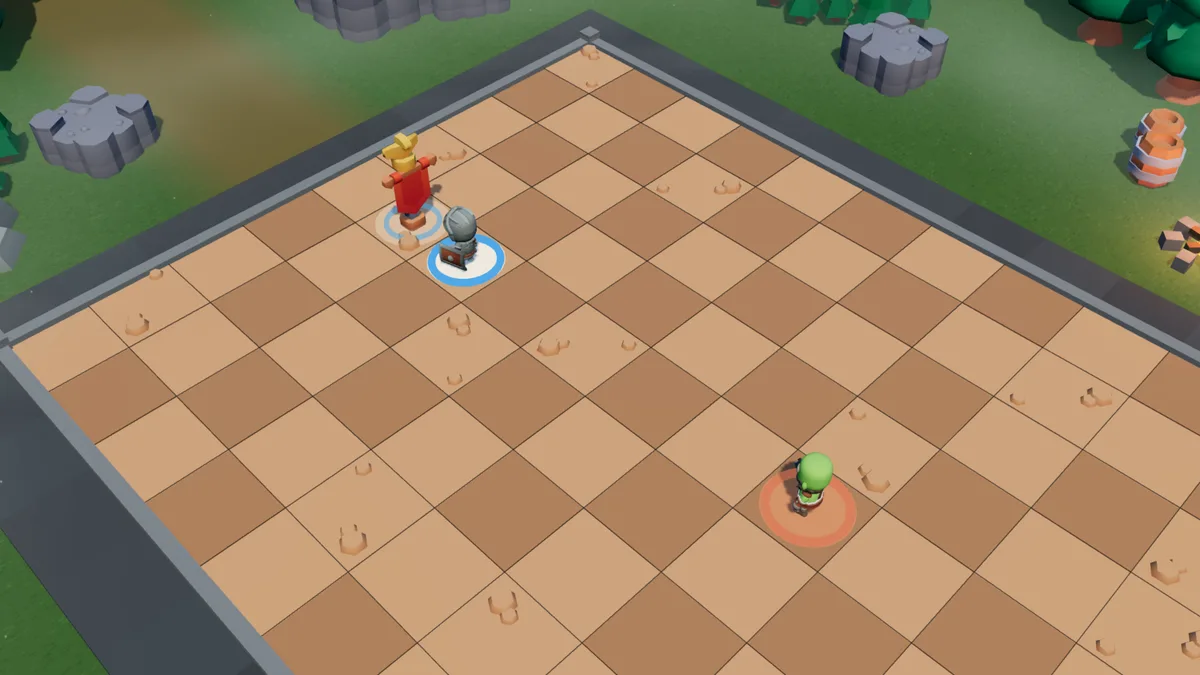
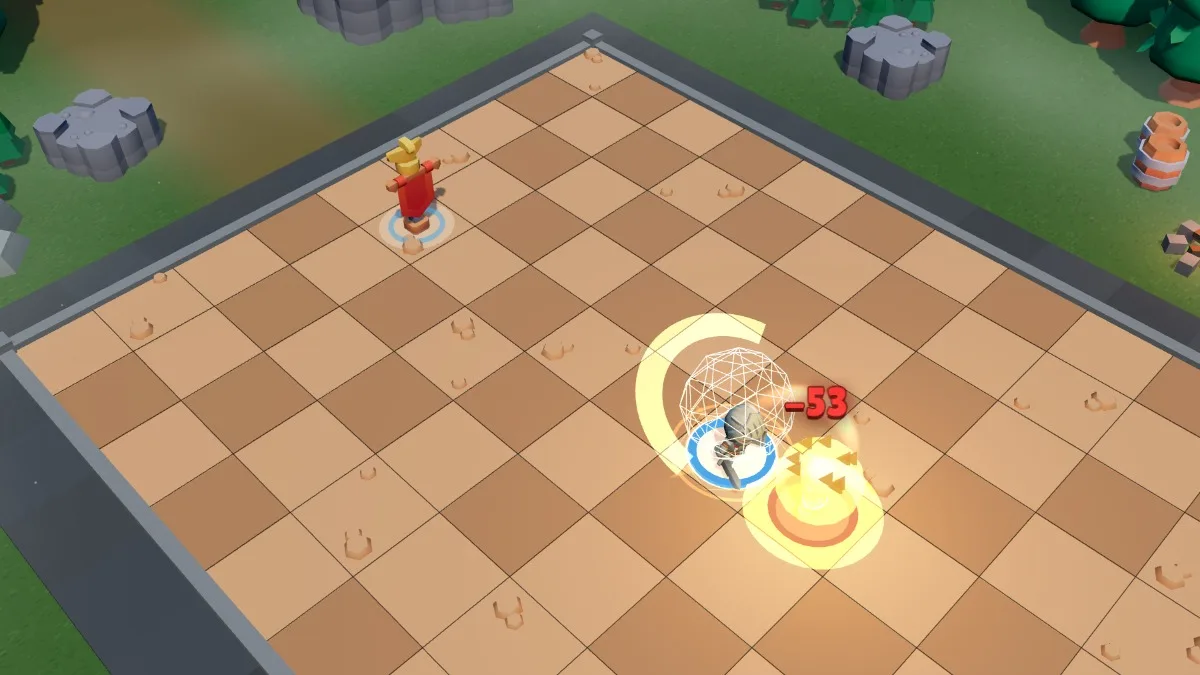
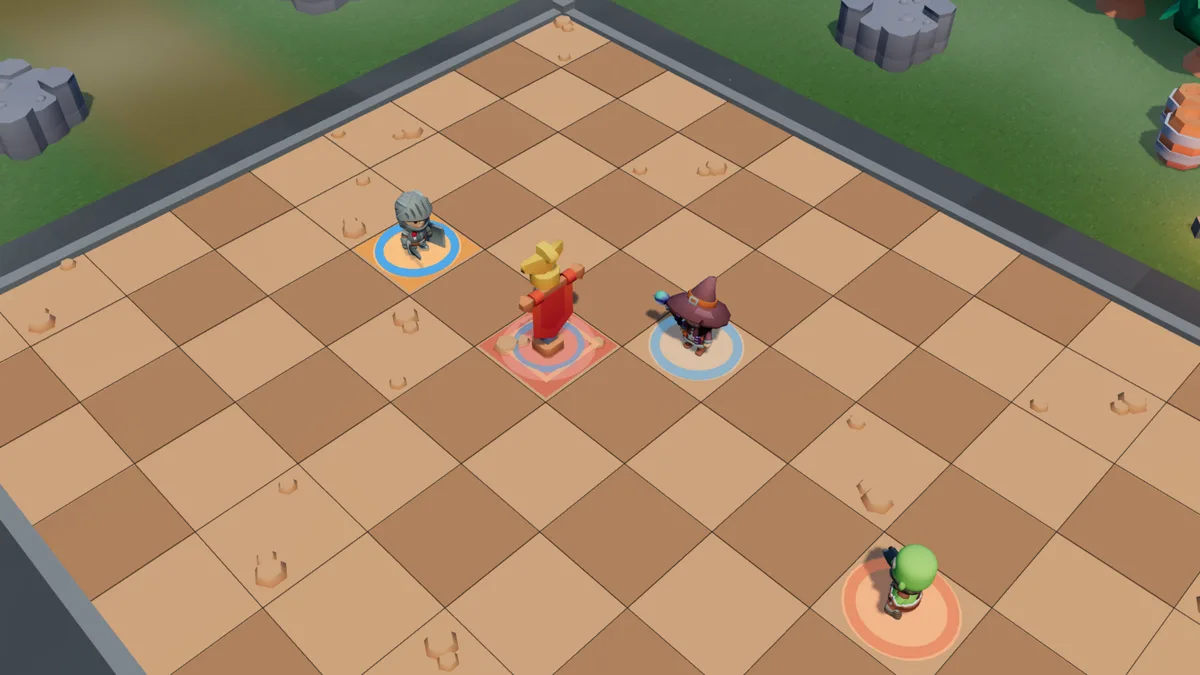
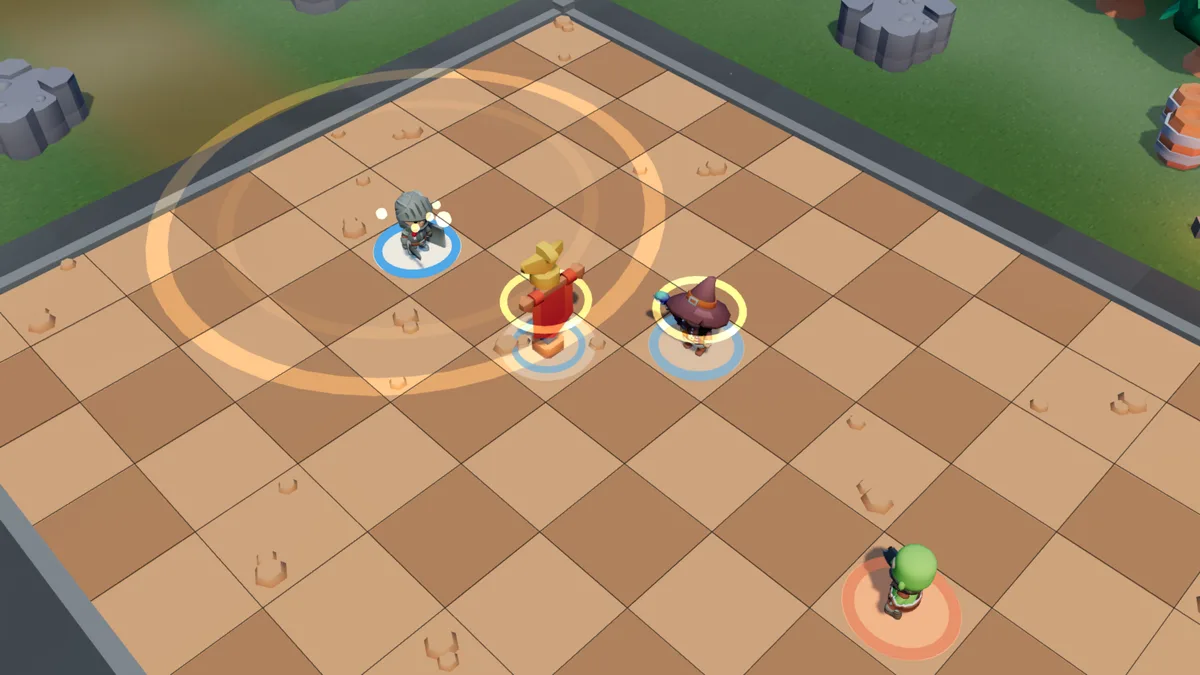
The Warrior takes hits, advances and strikes. They have no range, no invisibility, no traps: their only question is how to get into melee, and how to stay there. In exchange, every attack spell they cast during the turn makes the next ones stronger, and they are the only one with a spell that grows as long as you never let it cool.
In short
Role — the Warrior is the melee class of Solwaris, an attacker with the original kit, a guardian with the variants — no range, no traps, no invisibility: everything happens in melee.
Stats — the Warrior has 940 health, 12 AP and 6 MP per turn, with 30% resistance to both AP and MP removal.
Passive — his Momentum gives +10% damage per attack spell already cast in the turn, up to +30%; Cuirass (16% less damage taken) has become its variant.
Key spell — Warrior’s wrath costs 7 AP, deals 85 to 110 damage on an adjacent tile and has a 3-turn cooldown; recast the very turn it comes back, it hits ×2, then harder still.
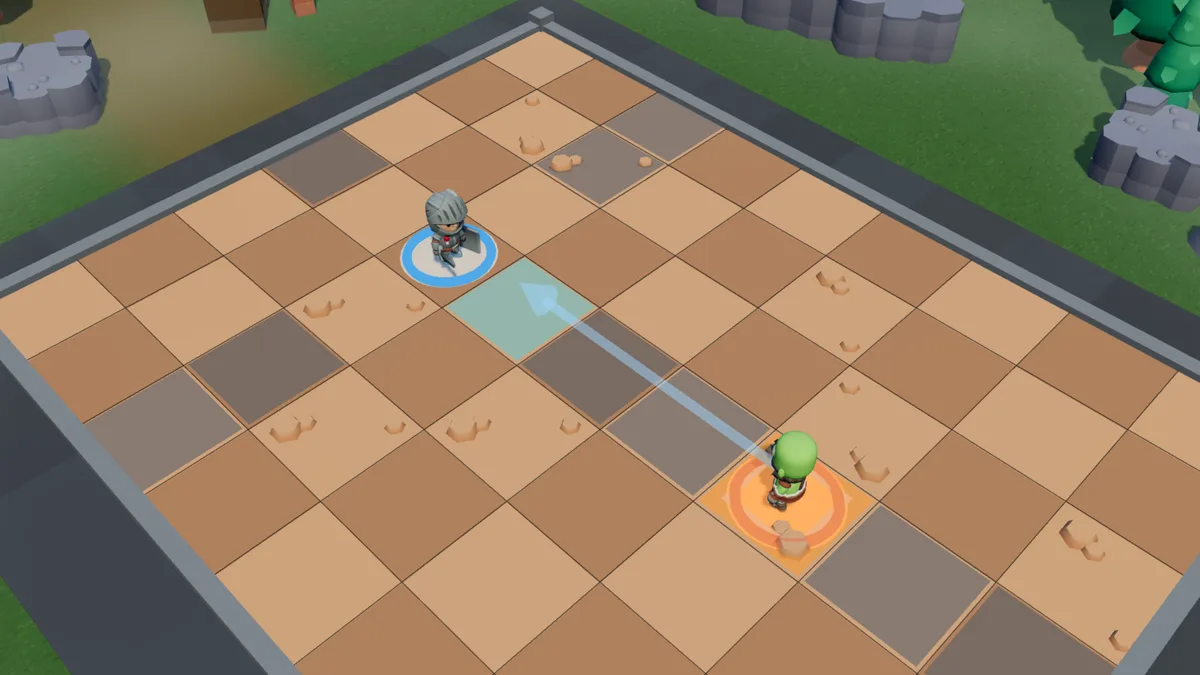
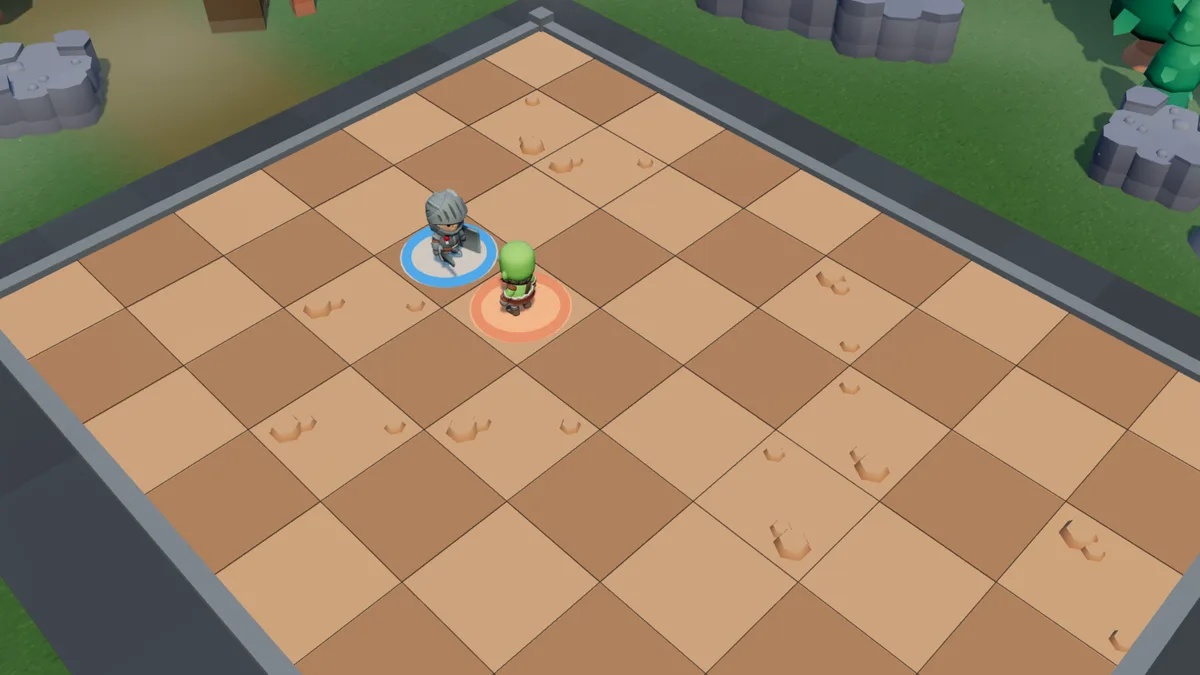
Closing — Warrior’s leap (4 AP, range 2 to 5) and Taunt (3 AP, range 2 to 6, in a straight line) are their only two ways to force melee.
Weakness — with 30% resistance to MP removal, a Warrior stripped of MP and of Leap reaches nobody.
940health
12action points
6movement points
30%resistance to AP removal
30%resistance to MP removal
The passive: Momentum
Momentum
Every attack spell you cast during your turn makes the next ones stronger: +10% damage per attack spell already cast this turn, up to +30%. Any spell that wounds, pulls or burns is an attack spell, even cast at nothing; Warrior’s leap, War cry and War banner do not count. The count starts over each turn.
Momentum rewards busy turns: a Wearing cut, a Celestial blade, then a Lunge that goes off at +20%; or a Wearing cut just before Wrath, which goes off at +10%. Support spells — War cry, Leap, Banner — don’t count, but they don’t break the count either. Cuirass, the old passive (16% less damage taken, permanently), has become its variant: see below.
The Warrior’s eight spells
Lunge
4 AP · range 1 · 2 casts per turn · no cooldown
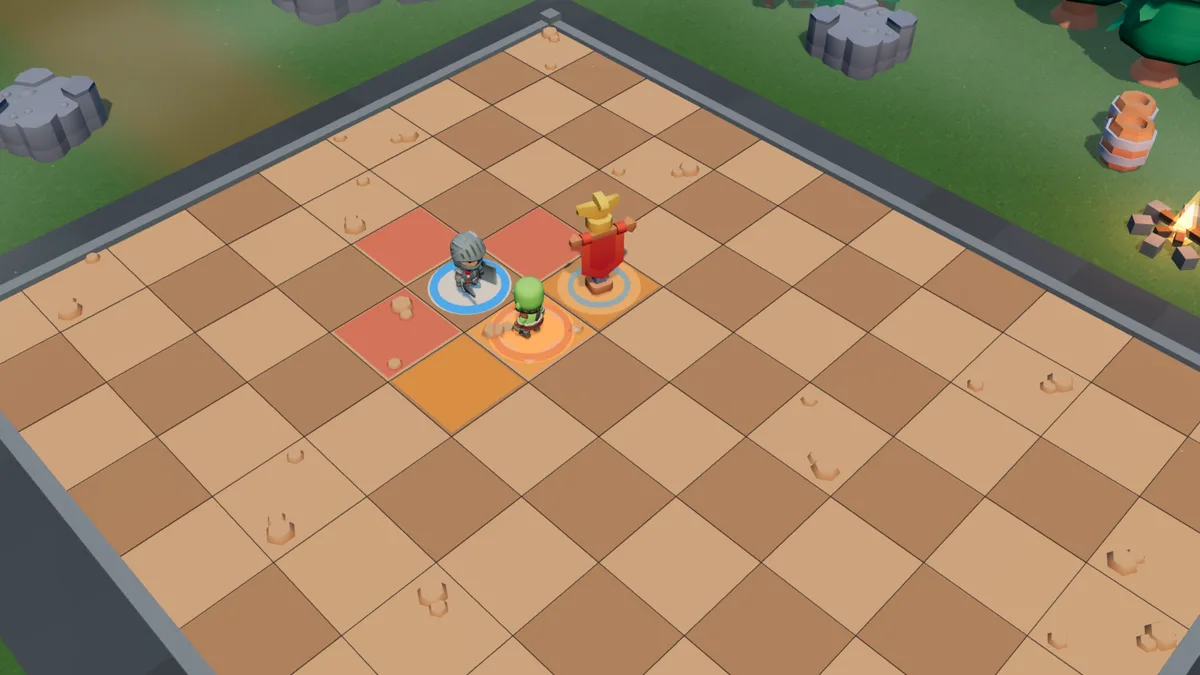
32 to 46 damage on a tile next to you, and on the two tiles on either side: the strike sweeps, it hits everything standing beside the target — allies included in 2 versus 2. It can also be swung into empty space. It is the basic attack: strong, in an area, twice per turn and without cooldown.
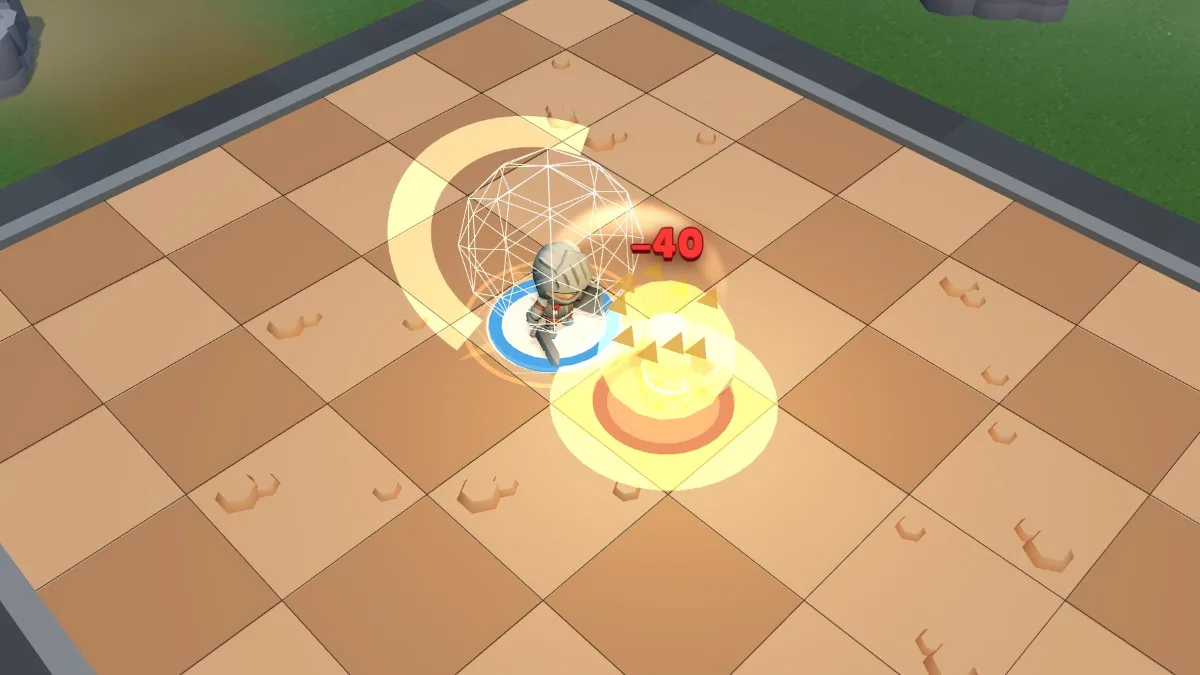
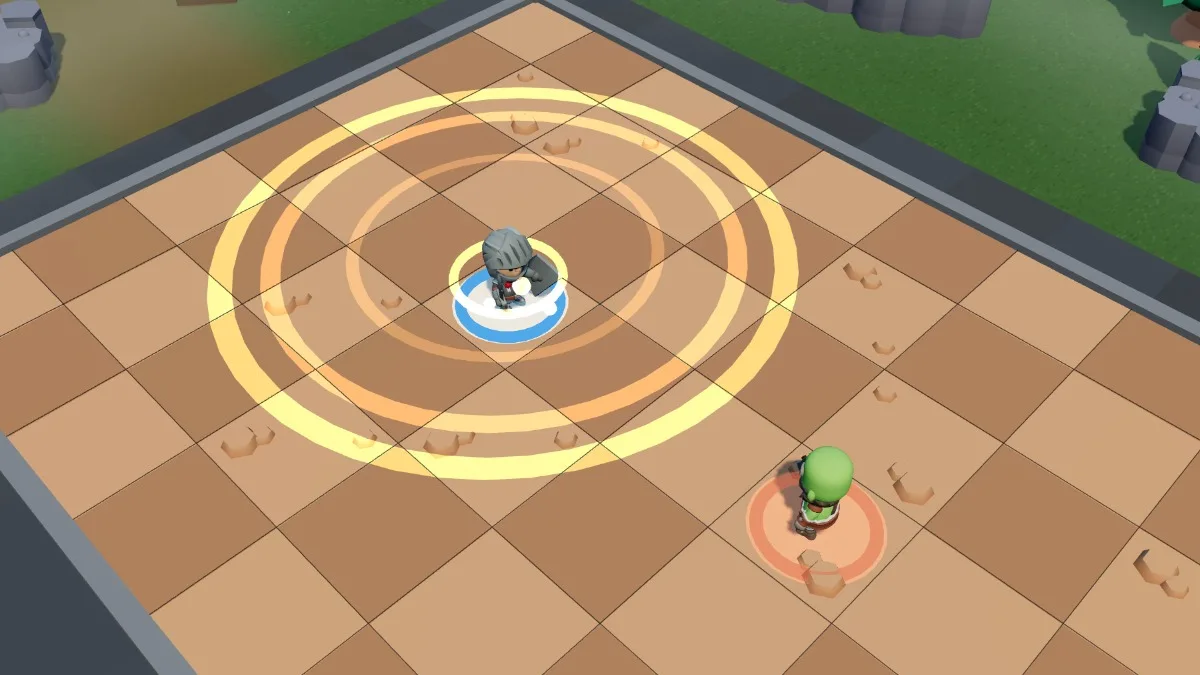
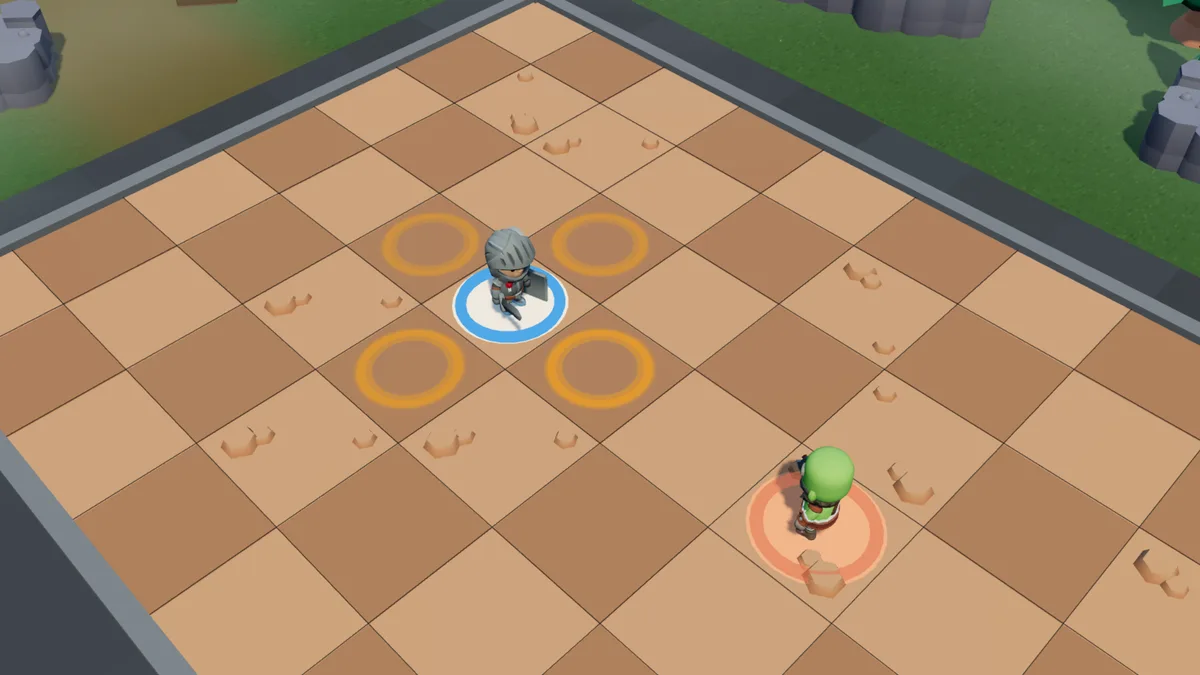
The target tile and its two neighbours, across the swing.40 damage here, on the targeted tile.
Warrior’s wrath
7 AP · range 1 · 1 cast per turn · 3-turn cooldown
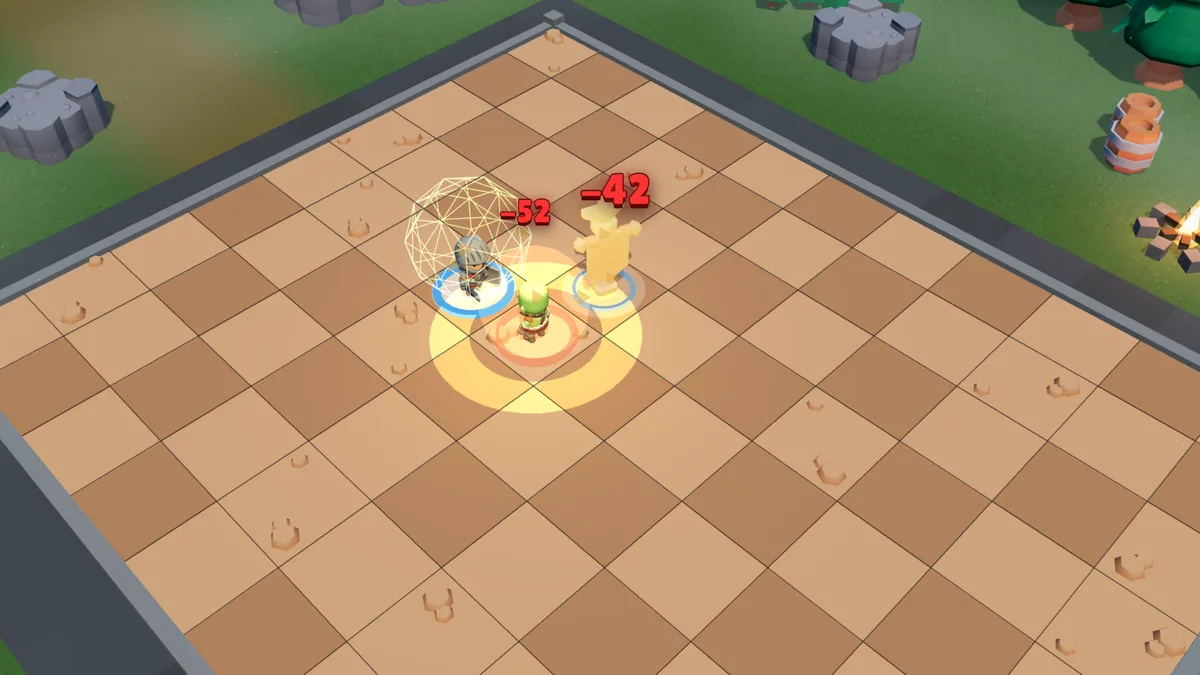
85 to 110 damage on a tile adjacent to you. The spell remembers the exact turn it comes off cooldown: recast on that very turn, it hits ×2; chained again without ever waiting, ×2.5, then ×2.75, closing on a ×3 ceiling without ever reaching it. A single turn late and it drops back to ×1.
It targets a tile, not an enemy: you can cast it into thin air, on a free tile, purely to keep the chain alive. Seven AP spent for nothing is better than a Wrath fallen back to ×1.
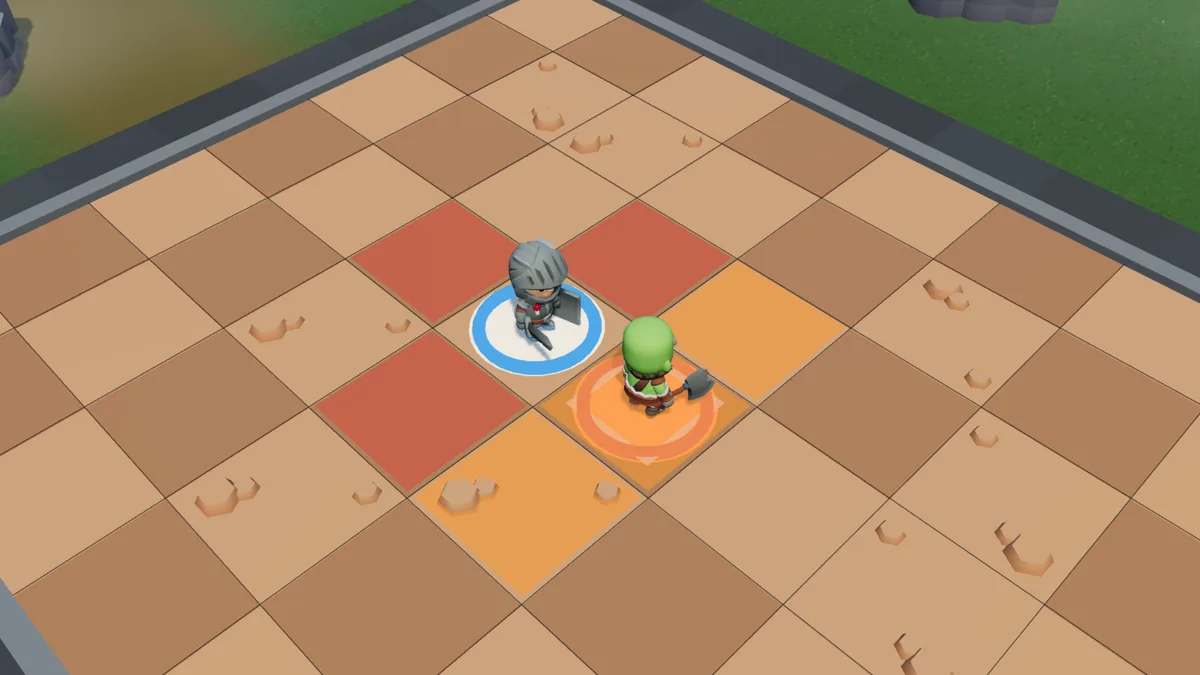
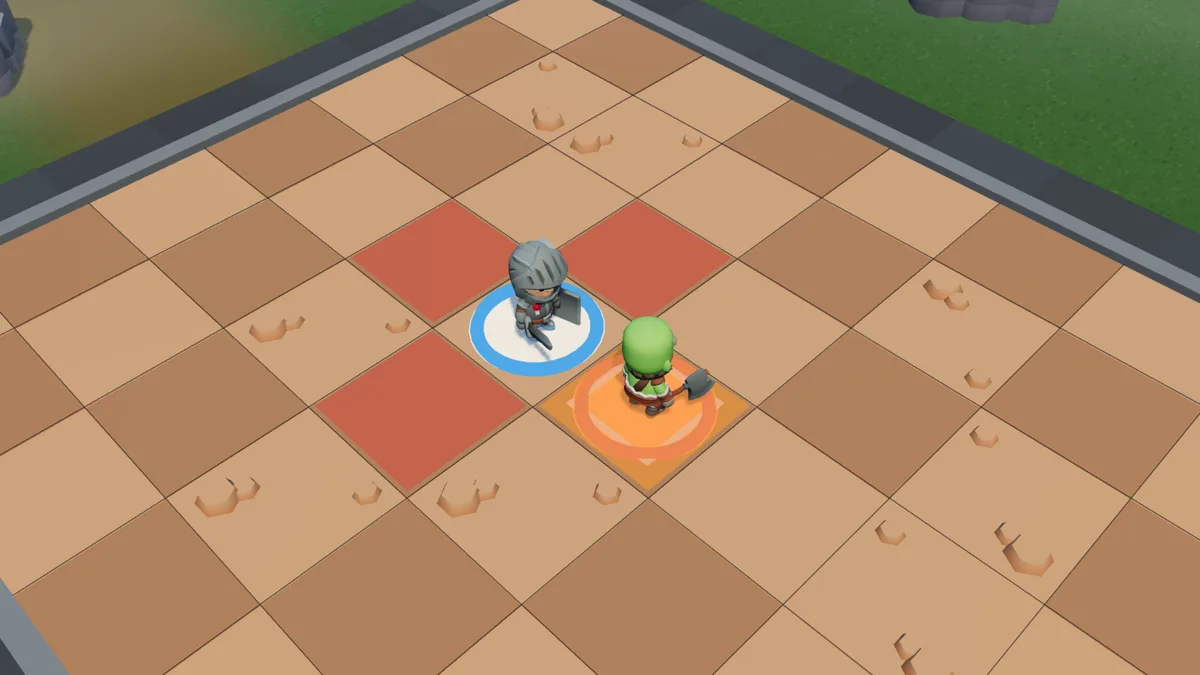
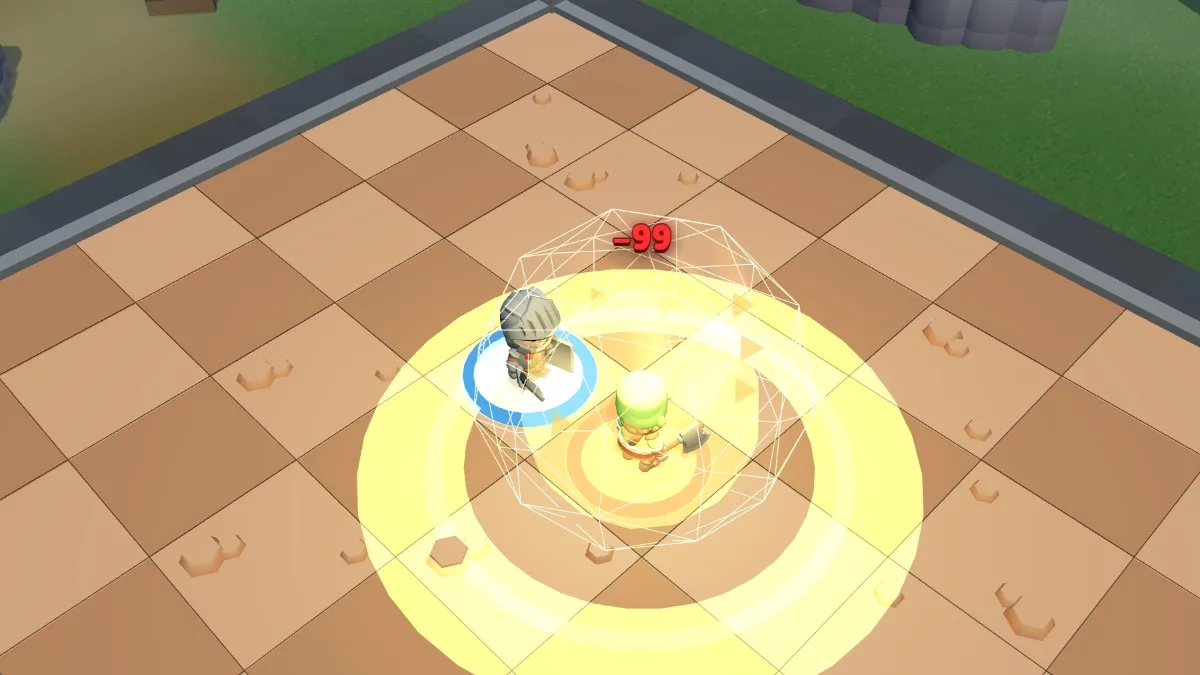
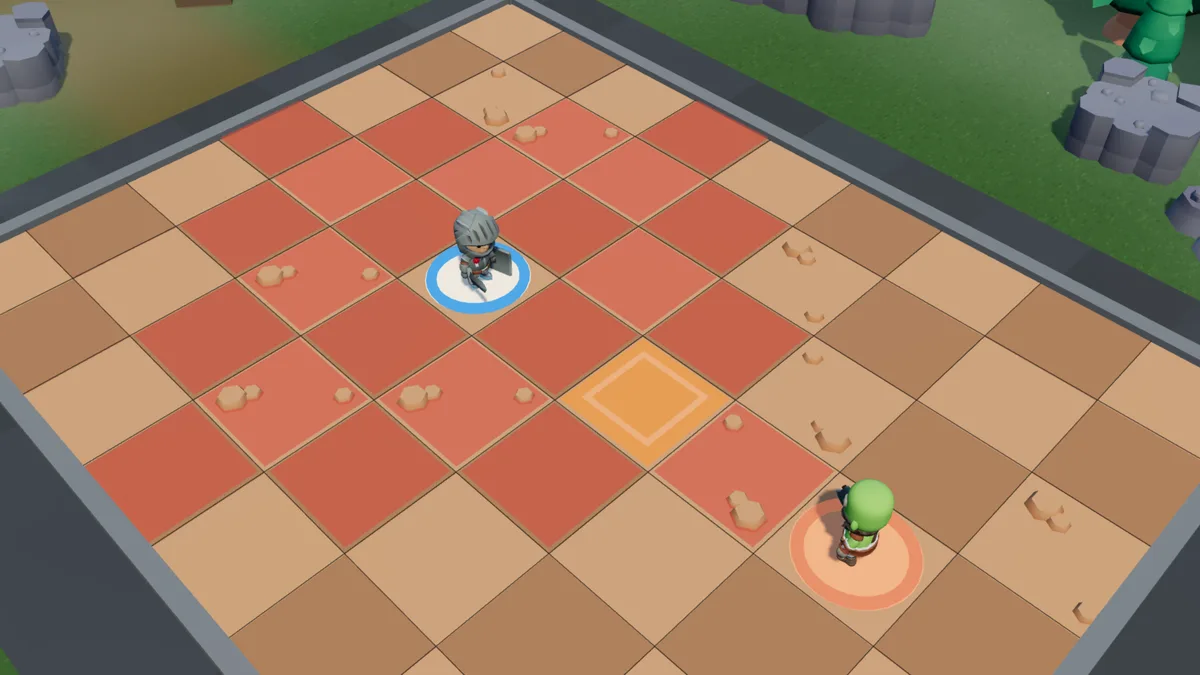
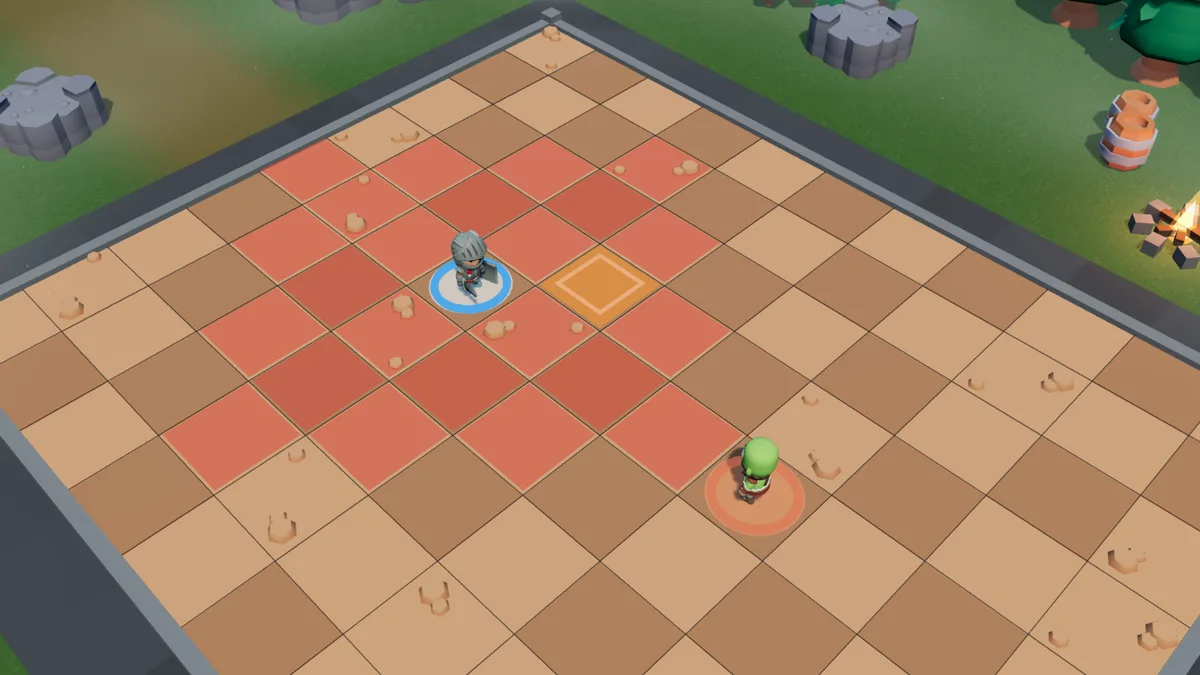
Range 1: a tile adjacent to you, even an empty one.99 damage in a single hit.
Taunt
3 AP · range 2 to 6 · in a straight line only · 2-turn cooldown
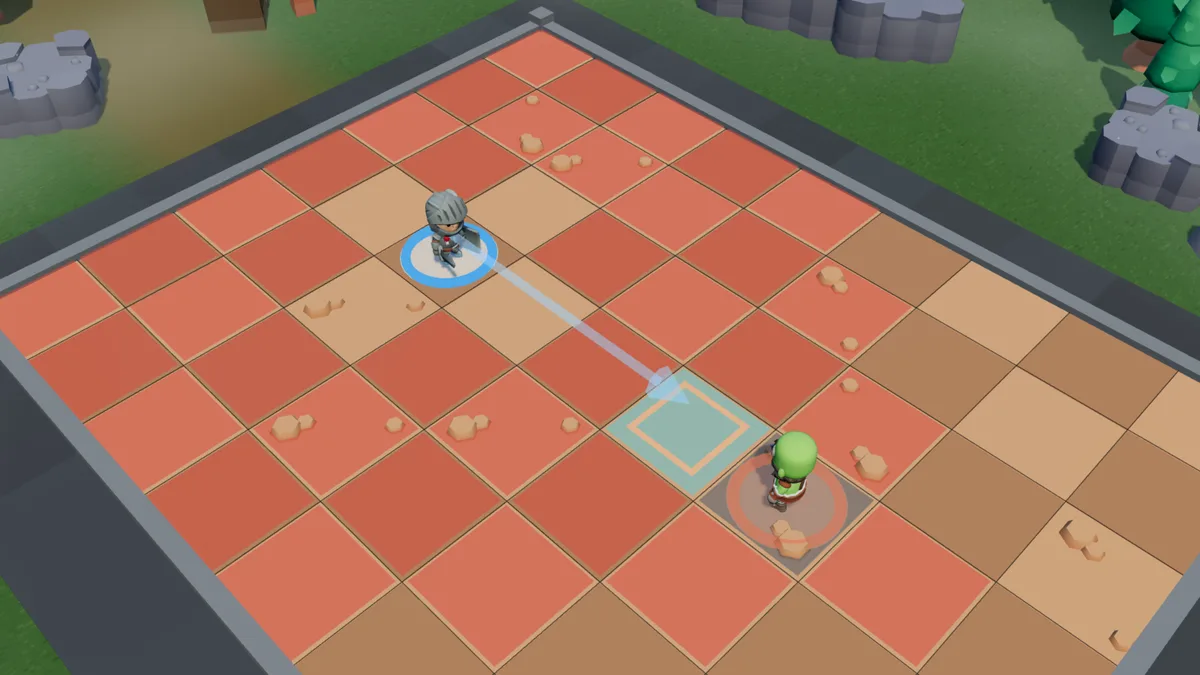
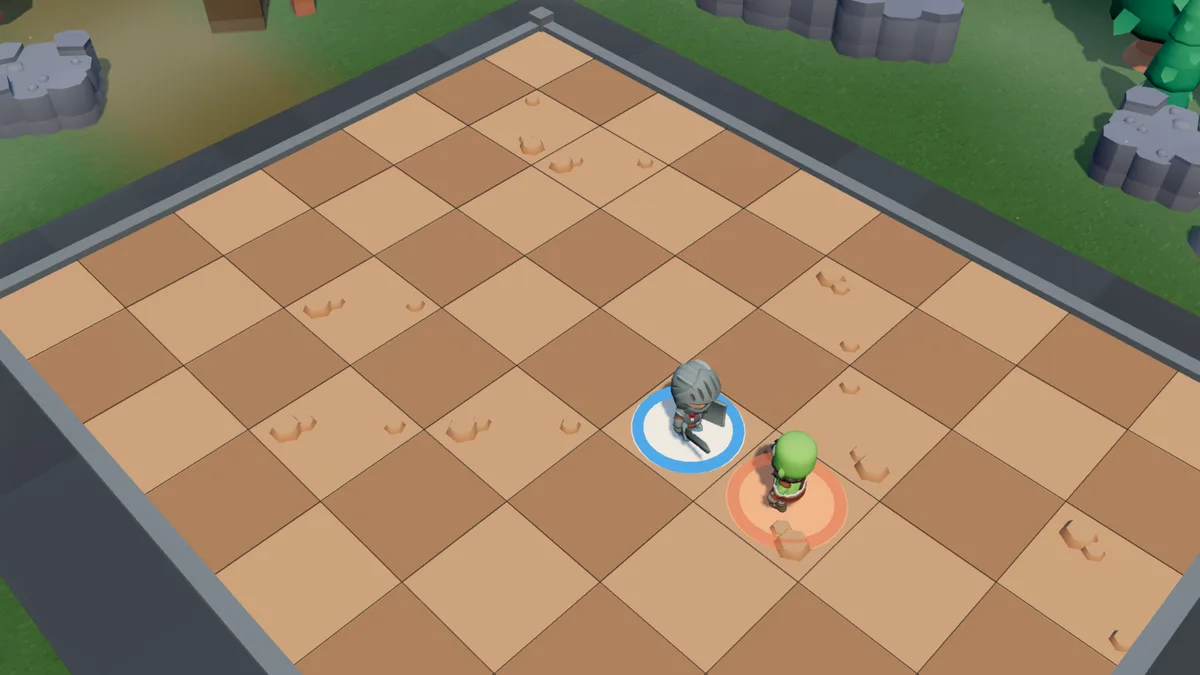
Pulls the enemy into melee, right next to you — they stop short of an entity or the void, and on a trap, which they trigger. During their next turn they deal 15% less damage. The spell can only be cast if the target is on your row or your column: that is the constraint that decides your placement every turn.
In a straight line, from 2 to 6 tiles.The enemy is pulled all the way to you, and will hit 15% softer on their turn.
Warrior’s leap
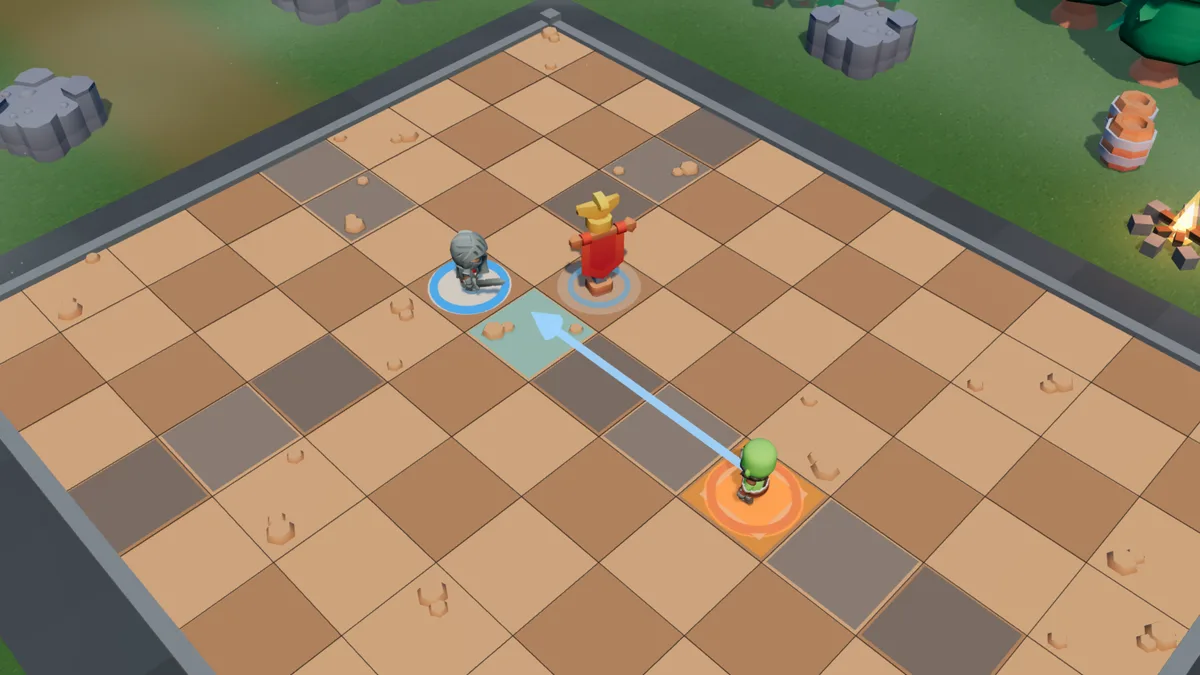
4 AP · range 2 to 5 · free tile in sight · 1-turn cooldown
You jump to a free tile in sight, without spending MP and without following a path: you clear the void and entities, but not an obstacle, high or low, that blocks sight. On landing, the entities next to you — allies included — lose 10% resistance until the end of your turn: leap into melee, then strike. It is also your answer to the 5-tile gap an Arcanist forces on you, and your only way to cross a line of placed charges without walking into it.
A jump of 2 to 5 tiles to a free tile in sight, at no MP cost.On landing, the adjacent enemy loses 10% resistance this turn.
War cry
3 AP · on self · 3-turn cooldown
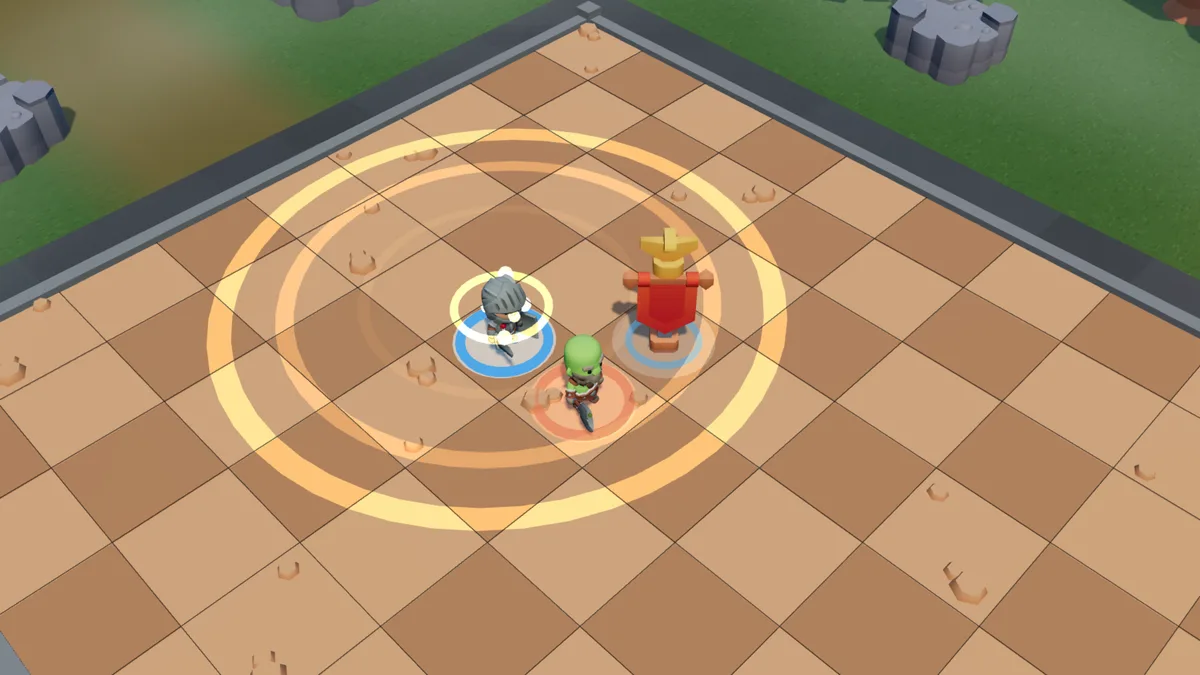
+30% damage dealt this turn and the next. Three well-placed AP are worth more than a Lunge: the bonus applies to everything you cast over two turns, Wrath included.
+30% damage this turn and the next.
Celestial blade
4 AP · range 1 to 2 · area of 1 · 2 per turn
A blade of light falls on the targeted tile, up to 2 tiles away, and on the 4 adjacent tiles: 24 to 32 damage to each. It’s the Warrior’s blow on the way into melee, or for hitting two enemies standing close together.
Wearing cut
3 AP · range 1 to 2 · 2 per turn
28 to 36 damage up to 2 tiles away, and the HP it takes off also becomes erosion: the target loses as much max HP until the end of the fight (what its armour absorbs does not erode). No heal gives it back — not the Brute’s lifesteal, not the field’s heal bonus, not the Clockmaker’s Stillness. At 3 AP, it’s also the spell that rounds out a turn: Wrath and Wearing cut make 10 AP.
War banner
4 AP · range 1 to 3 · free tile · 1 per turn · 4-turn cooldown
A 100 HP banner planted on a free tile: it blocks its tile and gives you +20% damage as long as it stands. It is also a relay: the hits it takes strike the enemies on the 8 tiles around it, and the buffs cast on it cover your allies on those tiles — you included, if you are there. It falls after 4 turns, or when destroyed.
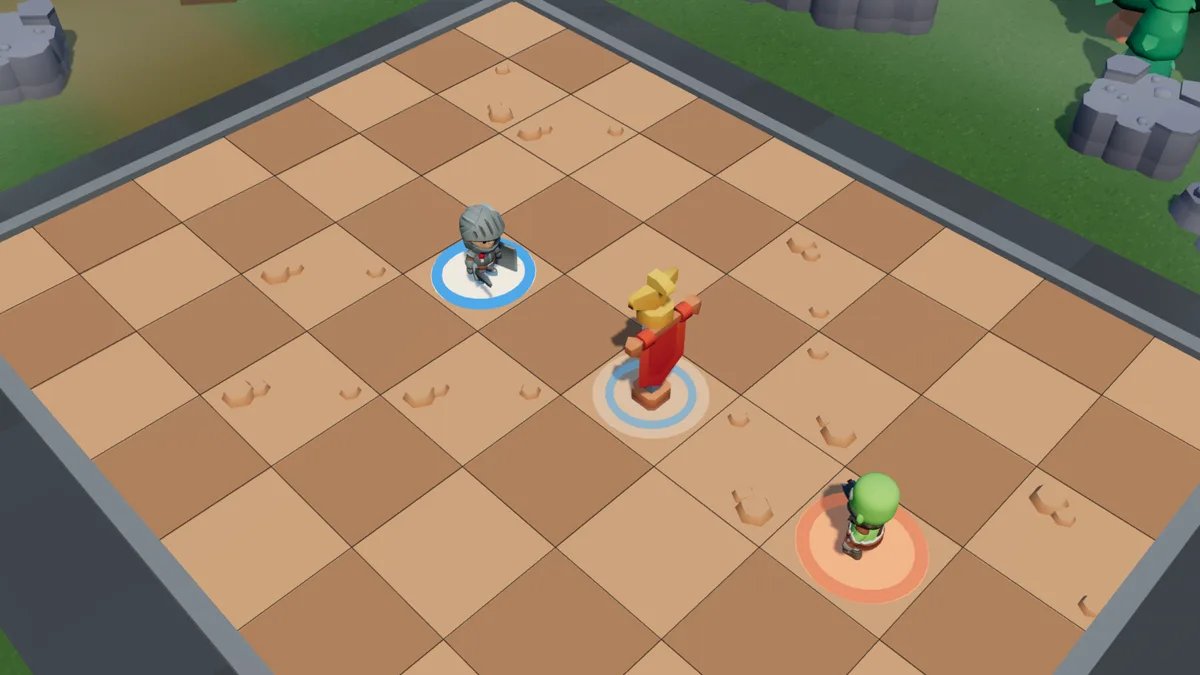
Range 1 to 3: the banner is planted on a free tile.100 HP, +20% damage for you while it stands, and a relay on the 8 tiles around it.
The variants
Every spell slot has a second version, and so does the passive: before the fight, in the grimoire, you pick one version per slot — so you always have eight spells in hand. The Warrior’s variants lean towards protection and glyphs on the ground. The choice is locked when the fight starts, and your opponent sees it. All of them are available, in every mode.
Cuirass (passive variant)
Replaces Momentum.
You take hits better: the damage you take is reduced by 16%, permanently — except poison damage, which ignores resistances.
Shield bash
4 AP · in melee · 2 per turn
Replaces Lunge.
A shield bash on a single adjacent enemy: a little weaker than Lunge (28 to 40), but each cast gives you 22 armour until your next turn — two casts, 44.
Tip. Take it to hold the melee: every cast protects you until your next turn, and it pairs well with Cuirass and Bulwark. Its catch: it hits a single enemy, where Lunge also swept both sides — against several targets, or with a banner to strike, you lose damage.
Bulwark
3 AP · on self · 4-turn cooldown
Replaces Warrior’s wrath.
You gain 100 armour (it absorbs damage before your HP) and 30% damage resistance, for 2 turns.
Tip. The pick for outlasting the enemy: cast it right before their big turn, not after taking it. Its catch: it takes the slot of Warrior’s wrath, your biggest hit — without it, the match is won by attrition, not with one spell.
80 armour and 30% resistance, for 2 turns.
Steel storm
4 AP · on self · area of 3 · no limit per turn
Replaces Celestial blade.
The Warrior whirls: every enemy within 3 tiles of him, even behind an obstacle, takes 22 to 28 damage, then every entity in the area — allies included — is pulled 2 tiles towards him. No cooldown and no limit per turn: as many times as your AP allow.
Tip. Against runners: it pulls everything in its area towards you, and every cast feeds Momentum. Cast it first, then strike in melee. Its catch: it also pulls your allies, and whatever the opponent has placed near you.
Burning glyph
4 AP · range 1 to 5 · area of 3 · 1-turn cooldown
Replaces Wearing cut.
Draws a large glyph on the ground — every tile within 3 tiles of the targeted one — for 2 turns. An enemy starting its turn on it burns: 32 to 44 damage. The glyph hurts no one when it is drawn, but it counts as an attack spell; you only have one at a time.
Tip. Drawn under the enemy, it burns them at the start of their turn; for a second burn the turn after, you have to bring them back — Steel storm, Taunt or a Barrier closing the way out. It counts as an attack spell for Momentum. Its catch: no damage on cast, and a mobile opponent walks out on their first turn.
Holy respite
2 AP · range 0 to 5 · cross of 1 · 5-turn cooldown
Replaces War banner.
Until your next turn, the targeted tile and the 4 adjacent tiles are a sanctuary: nobody takes damage there — not you, not your allies, not the enemy — poison included; penalties still get through. Only if you haven’t cast any attack spell yet this turn, and none afterwards.
Tip. A full turn of respite, for you or for an ally in danger. The price: no attack spell for the whole turn, neither before nor after. Anchor keeps you from being moved out. Its catch: an enemy standing in it is protected too — aim at tiles where they are not.
Barrier
2 AP · range 1 to 5 · free tile · 3-turn cooldown
Replaces Taunt.
Raises a 3-tile wall across the direction you aim, centred on the chosen free tile. For 2 turns — until the start of your second turn after — nobody can step or be pushed into it, and it blocks line of sight. A push against it hits like a push against an obstacle. Tiles already occupied stay free.
Tip. It cuts a line of sight or closes a corridor: against a shooter, put it between you and them while you advance; against a runner, close the way out of a Burning glyph. Its catch: it blocks your own sight too, and without Taunt only Steel storm still brings the enemy back.
Anchor
3 AP · on self · 3-turn cooldown
Replaces Warrior’s leap.
Until your next turn, nothing can move you, or anything next to you — ally, enemy, summon or charge: no push, no pull, no swap, no teleport, no sending back. Walking is still allowed. You also gain 30 armour for the same duration, and every enemy next to you when you cast it loses 1 MP on its next turn (it can resist).
Tip. The answer to everything that moves you — the Clockmaker, the Artificer, traps that pull. Cast it before the enemy turn, right next to the enemy: they lose movement too. Its catch: it replaces Warrior’s leap — no more leap, you have to walk into melee.
Nothing can move you until your next turn, and 20 armour.
Steadfast glyph
2 AP · range 0 to 5 · 3 by 3 square · 3-turn cooldown
Replaces War cry.
Draws a 9-tile glyph on the ground — a 3 by 3 square around the targeted tile — for 2 turns. You and your allies who are standing on it when it is drawn, enter it or start your turn on it take 35% less damage until your next turn, even after leaving it, poison included. Does not add to a spell resistance (Bulwark…): the stronger one counts.
Tip. The protection follows whoever crossed it: draw it on your path, walk through, and you stay covered until your next turn. In a team, aim at the tile where your allies start their turn. Its catch: it does not stack with Bulwark, and it takes the slot of War cry and its damage bonus.
Playing the variants
The variants turn the Warrior into a wall: less damage in a single blow, far more staying power, and glyphs that decide where the fight takes place. Nothing forces you to take them all: each slot is chosen separately, and a kit that keeps Warrior’s wrath alongside two or three defensive variants holds up very well.
The closed glyph (10 AP)
Burning glyph (4 AP) — drawn under the enemy: no damage right away, but it already counts as an attack spell for Momentum.
Barrier (2 AP) — behind them, across their way out.
Steel storm (4 AP) — it hurts them and pulls them back towards you, into the heart of the glyph.
They start their turn inside the glyph and burn. You still have AP left and all your MP to position yourself.
The wall that holds (10 AP)
Steadfast glyph (2 AP) — drawn under your feet: it covers you at once, until your next turn.
Shield bash (4 AP) — on the enemy next to you.
Shield bash (4 AP) — a second time: the armour from both casts adds up.
You end the turn protected twice — by the glyph and by the armour — without ever having stopped hitting. With Cuirass as your passive, this is the hardest Warrior to dent.
Banner combos
The banner isn’t just a damage bonus: it is a relay. Everything it takes — your hits included — strikes the enemies on the 8 tiles around it for the same amount. Striking the banner means striking around it. Every scene is played by the game engine.
One Lunge, two hits
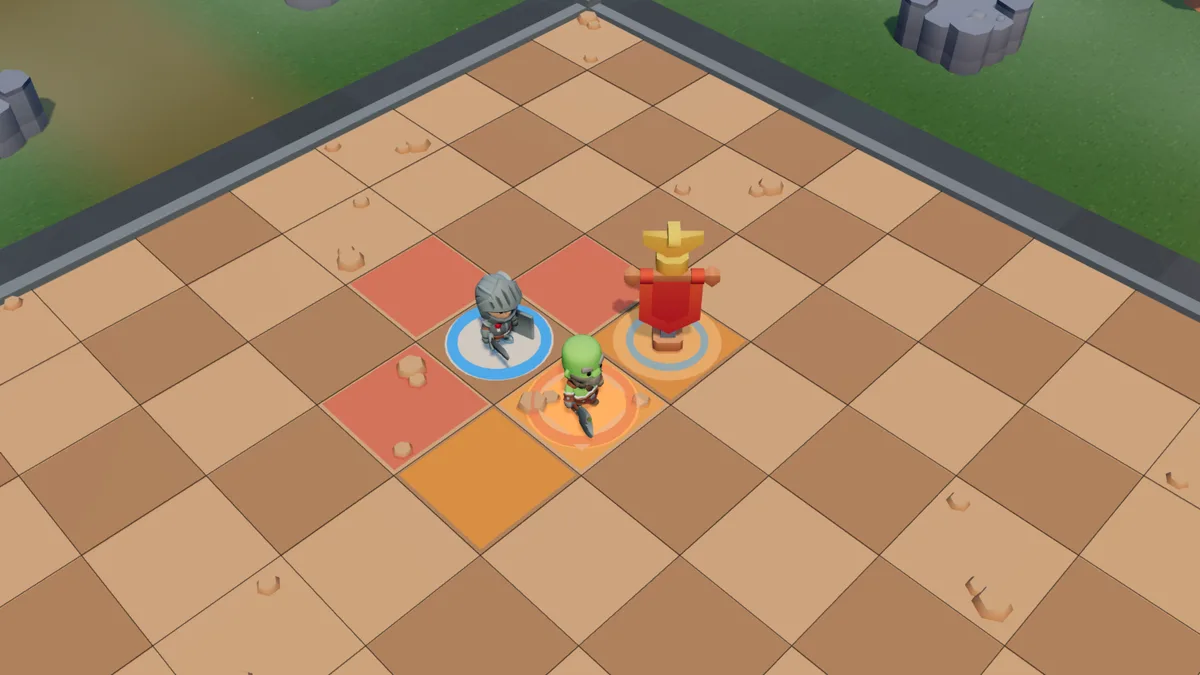
Lunge sweeps the target tile and its two neighbours. If the banner is on one of them, the target takes the Lunge, then the banner’s relay.
The Brute in melee, the banner beside them: the Lunge sweeps both.
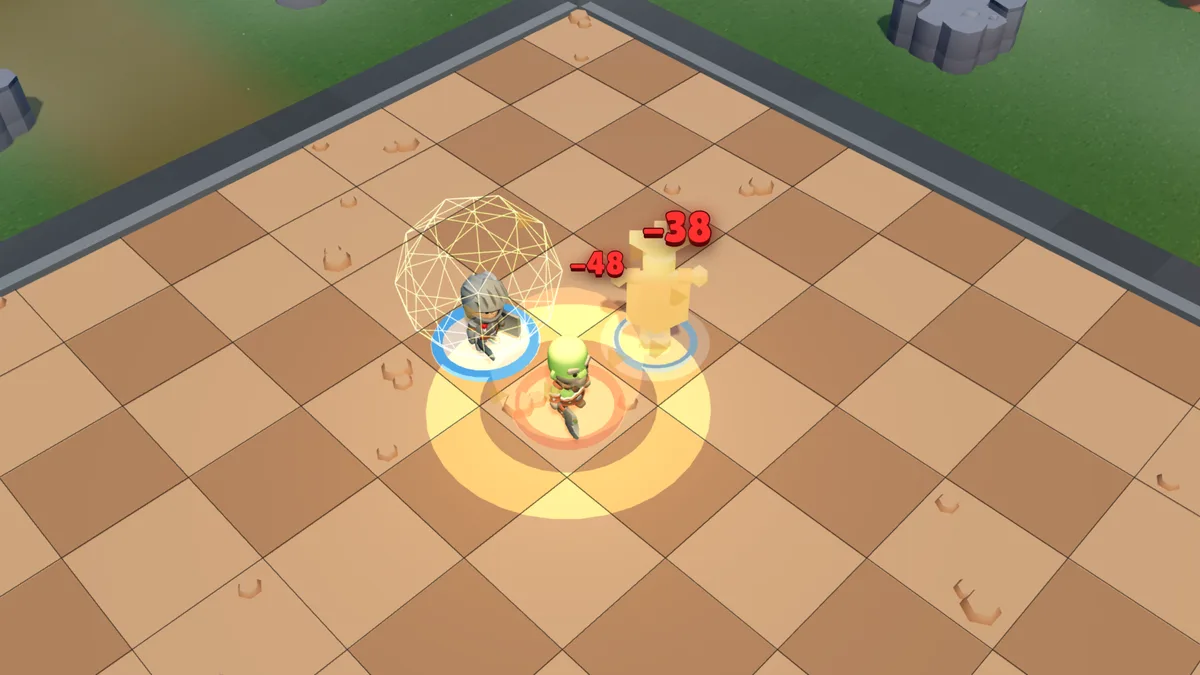
The Brute takes the Lunge, then the 38 damage relayed by the banner.
86 damage instead of 40 for a Lunge alone: the banner doubles the hit, and its +20% comes on top.
The opener: plant, pull, strike (11 AP)
War banner (4 AP), next to you.
Taunt (3 AP): the Brute, in line 4 tiles away…
…arrives right next to you and the banner. Lunge (4 AP) on them.
The sweep hits the Brute and the banner, which relays the blow.
94 damage from the very first turn, and the Brute will hit 15% softer on theirs.
The strike turn: War cry and two Lunges (11 AP)
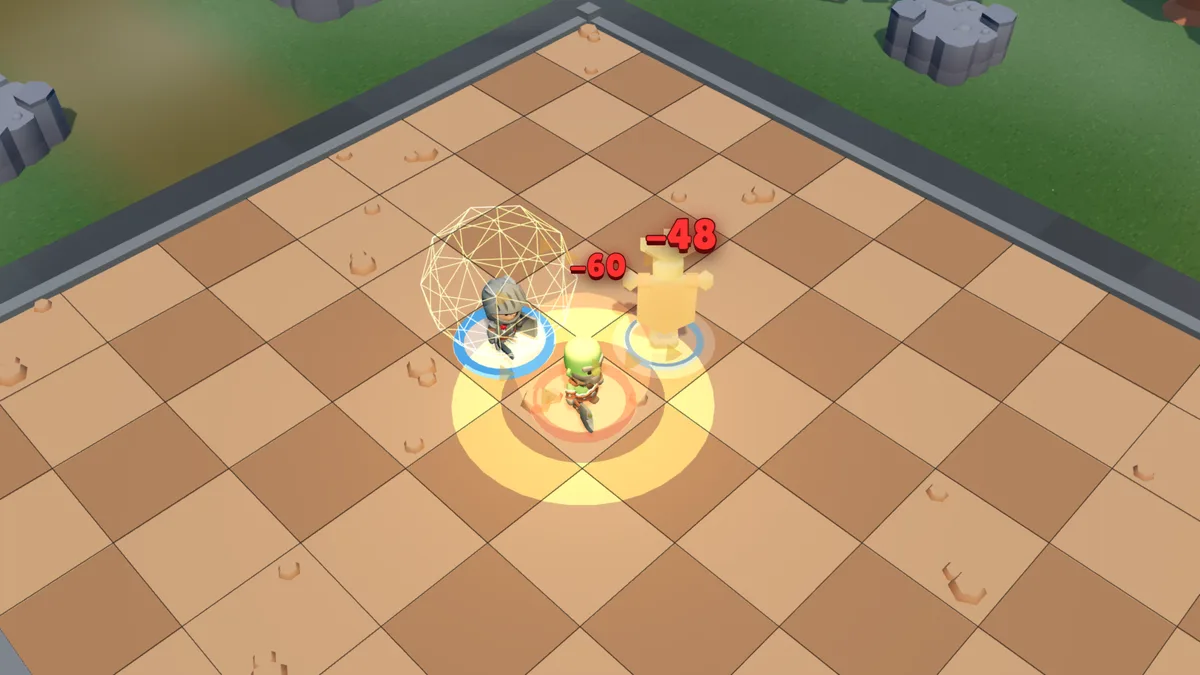
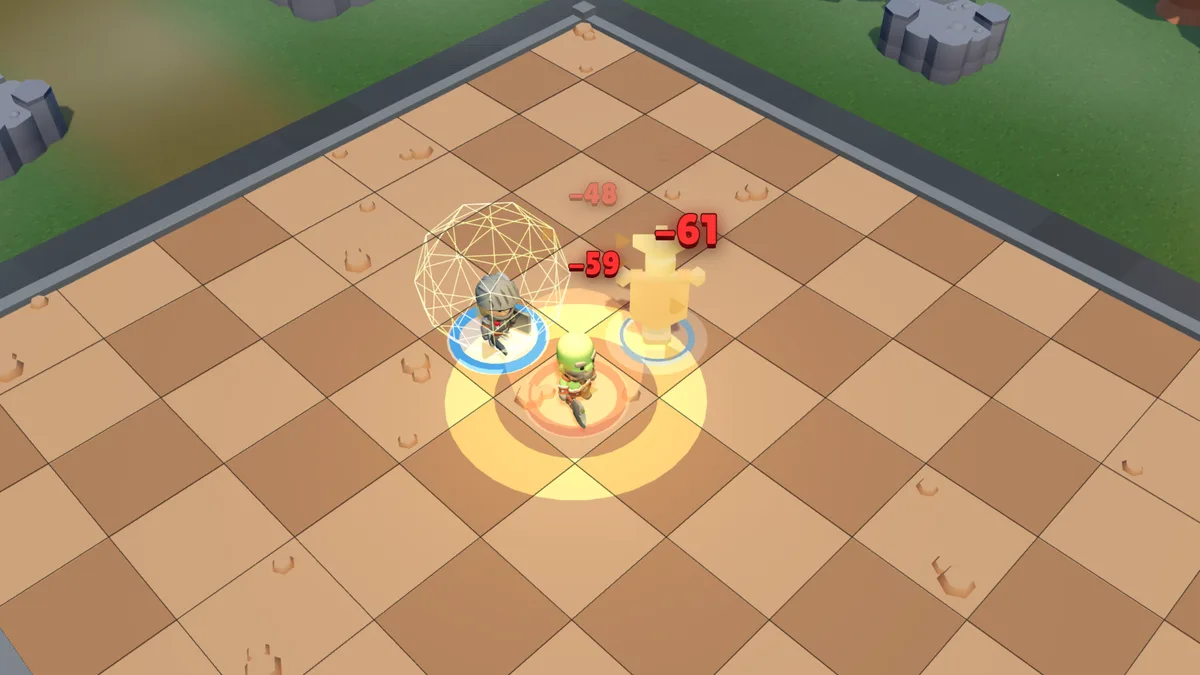
War cry (3 AP): +30% on everything that follows.
Lunge (4 AP): 60 damage, plus 48 relayed.
Lunge (4 AP): 59 and 59 — the banner falls, and still relays the blow that brings it down.
226 damage in one turn on the Brute: nearly a quarter of their 980 HP.
The relayed Wrath
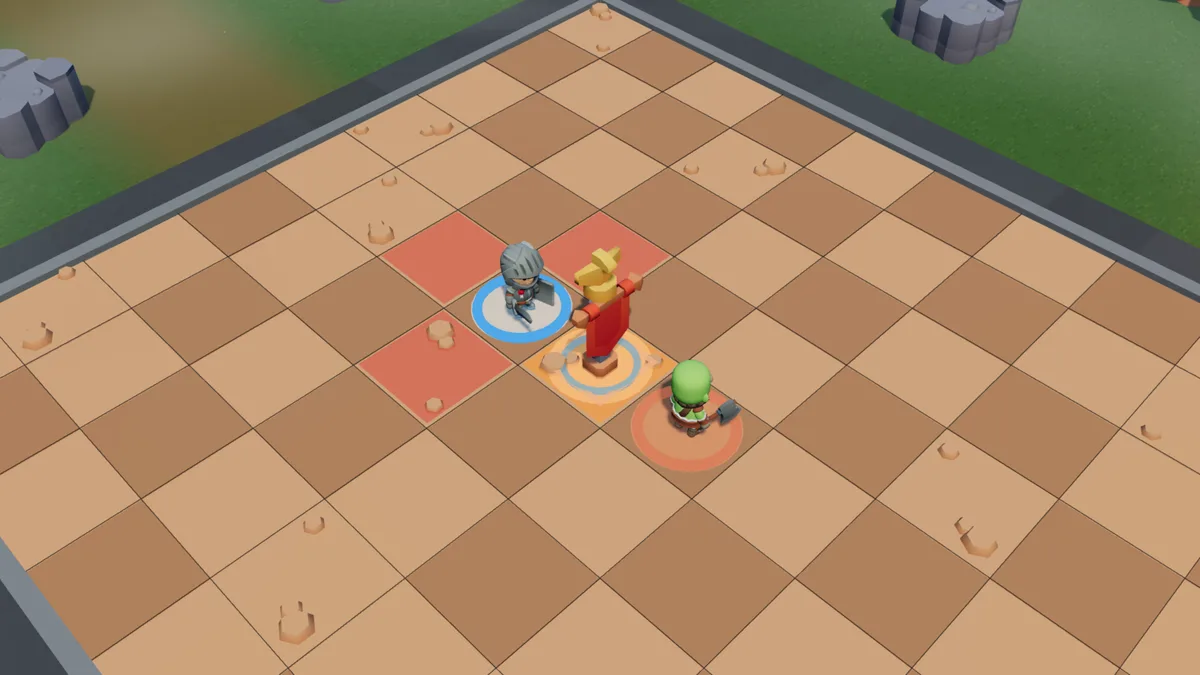
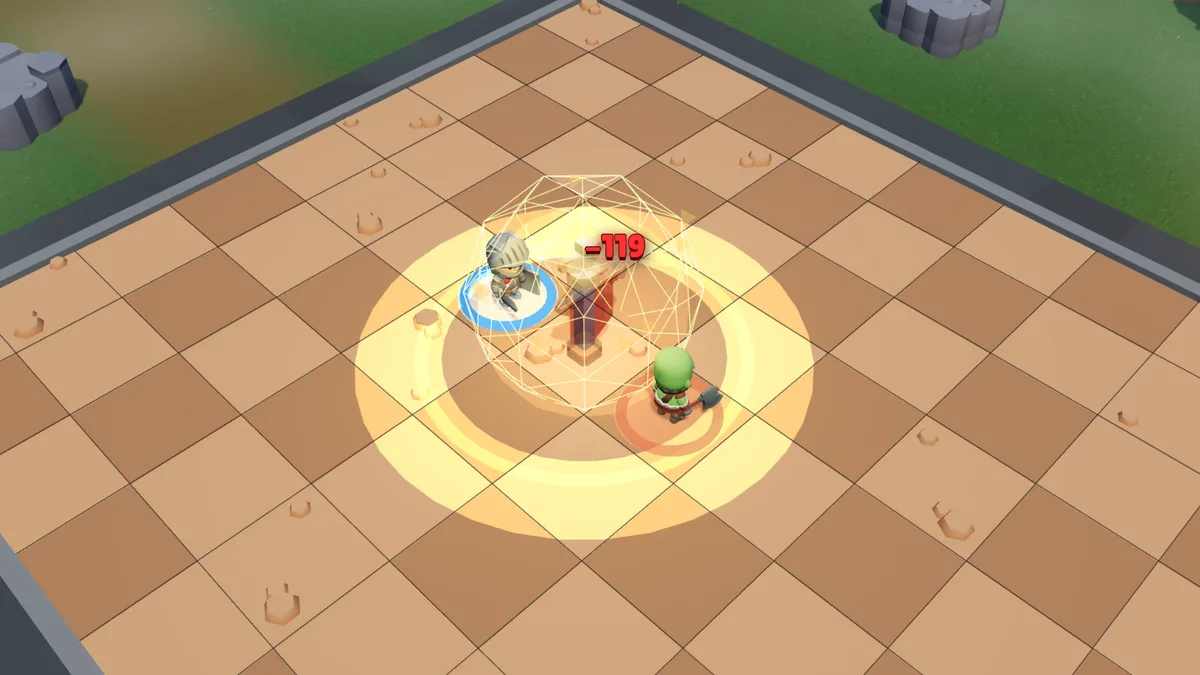
Wrath only hits in melee. Struck into the banner, it hits an enemy standing on one of the 8 tiles around the banner, even if they are not next to you.
The Brute is next to the banner, not the Warrior: aim at the banner.
The banner takes the Wrath — and so does the Brute, in full.
119 damage relayed, against 99 for a direct Wrath without a banner: its +20% counts too.
The banner out of reach
Its +20% works everywhere, not only around it. Planted behind you, out of your opponent’s reach, it lasts its 4 turns and boosts every one of your hits. It has only 100 HP: against a Warrior under Bulwark, destroying it often pays more than hitting the Warrior — do not leave it within reach when you do not need its relay.
War banner (4 AP), planted behind you: your opponent will have to go around you to reach it.
Leap, then Lunge: 53 damage instead of 44, with the banner five tiles away.
In 2v2: plant a buff
War cry can also be planted in the banner, if it is within 4 tiles: it then hands it out to your allies on the 8 tiles around it. Careful: planted this way, it only reaches you if you are standing on one of those tiles yourself. The variants Bulwark and Anchor, if you play them, are planted the same way.
War cry aimed at the banner, with your ally on one of its 8 tiles.
Your Arcanist ally gets the +30% damage.
The charged Wrath
Recast on the very turn it becomes available again, Wrath goes up a notch; one turn late, and it drops back to ×1. It can also be cast into empty space: if the target is not next to you that turn, cast it anyway on an empty tile — 7 AP to keep the chain. It thus approaches ×3 without ever reaching it:
Turn
1
5
9
13
17
Multiplier
×1
×2
×2,5
×2,75
×2,88
Damage
85–110
170–220
213–275
234–303
245–317
Prepare, then Leap and Wrath (11 AP)
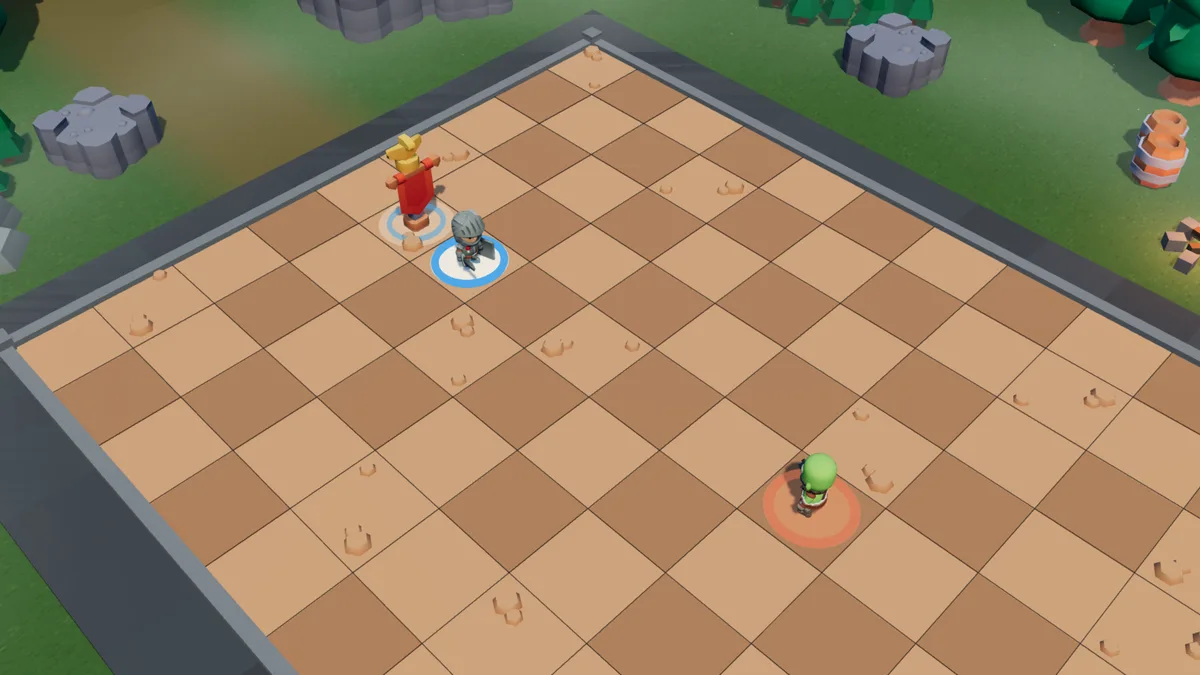
On the turn before Wrath comes back, get ready: banner out of reach, then War cry. On the next turn, the Leap puts you next to the target, and the charged Wrath goes off with every bonus.
Turn 1 — the target is far away: Wrath (7 AP) into empty space. No damage, but the chain has started: ×2 on turn 5.
Turn 4 — banner out of reach (4 AP), then War cry (3 AP): +50% damage for next turn’s Wrath.
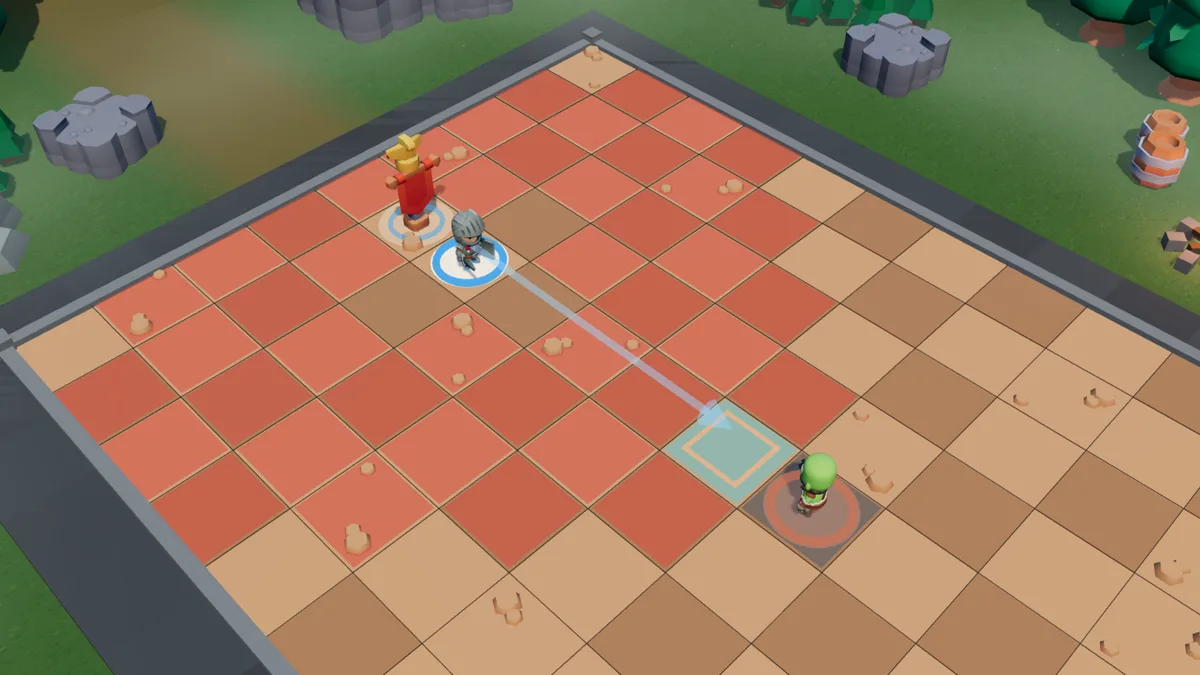
Turn 5 — Warrior’s leap (4 AP) into melee: the Brute also loses 10% resistance until the end of your turn…
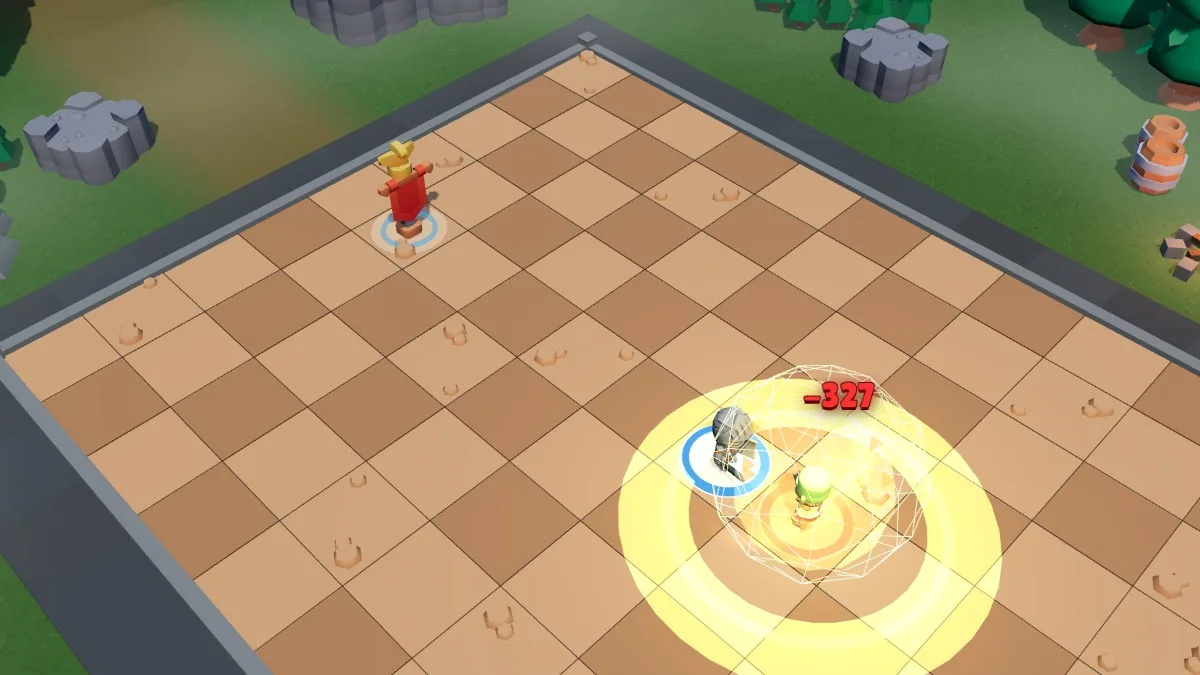
…and Wrath (7 AP) ×2, with the War cry and the banner.
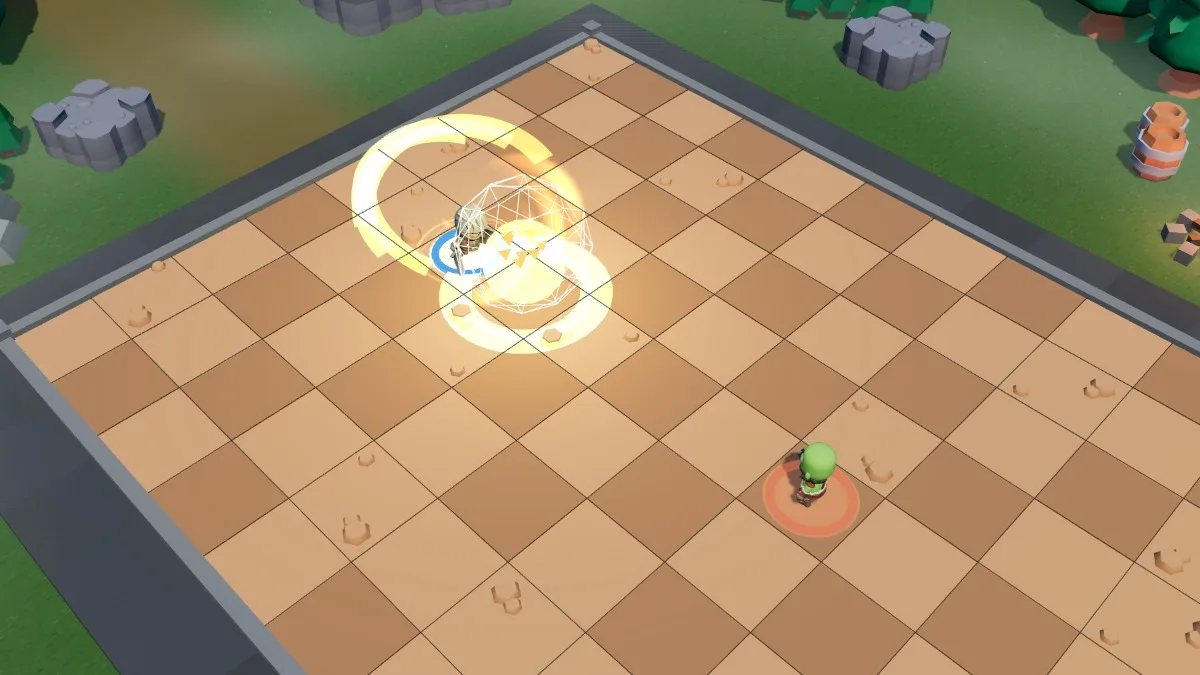
327 damage in a single blow — a third of a Brute’s HP. The same Wrath, without chain or preparation, does 109.
Three combos
Melee opener (11 AP out of 12)
War cry (3 AP): +30% on everything that follows, this turn and the next.
Warrior’s leap (4 AP) to land adjacent, without touching your MP.
Lunge (4 AP): the damage goes out boosted, on the target and its two sides.
You have 1 AP left and your 6 MP intact — enough to step back one tile out of minimum range, or on the contrary to put yourself back on your opponent’s line for next turn’s Taunt.
Drag back and punish (10 AP out of 12)
Taunt (3 AP): the enemy arrives adjacent to you and will hit 15% softer on their turn.
Warrior’s wrath (7 AP) straight after, on the tile they have just landed on.
Order matters: Taunt requires a straight line, Wrath requires melee. Put yourself on your opponent’s row or column with your MP first, then cast, and keep your last MP so you do not end the turn out in the open.
Keeping Wrath alive
Wrath costs 7 AP and comes back 3 turns later. The chain therefore means recasting it on exactly the fourth turn, every time — ×2, then ×2.5, then ×2.75. Each recast adds half as much as the one before: a Warrior who holds the chain over three cycles hits for 234 to 303 points with one spell, and will never go past ×3. A Warrior who lets it drop even once starts again from 85.
That is why the spell accepts an empty tile. If your opponent is out of melee on the turn Wrath comes back, cast it into thin air anyway: you lose 7 AP, you keep the multiplier.
Combos that work
These lines are the ones that come up most often, and pay off most, across several thousand training matches played by the game’s automatic opponents at their best level. For each one: the spells in order, what you need, what you get out of it, the most common follow-up, and when to do without it. A sequence missing from this list is not necessarily a bad one.
The wall that hits (11 AP)
Shield bash (4 AP)
Shield bash (4 AP)
Wearing cut (3 AP)
Conditions. In melee from the start of the turn, or one move away from the enemy. You need Shield bash, the variant of Lunge.
Result. Three clean hits, and you end up covered: each Shield bash leaves you armour until your next turn. Wearing cut, kept for last, takes that much max HP off them for the whole match.
The line. I play Shield bash twice, then Wearing cut; they answer by hitting in melee — Lunge and Wearing cut for a Warrior, Mace smash for a Brute — or they move away; then I have the same line if they stayed — or, when War cry is ready, it first and then Shield bash twice, without Wearing cut.
When not to play it. When you have too little HP left to take their reply: you end up next to them, and they hit harder than after an ordinary turn. Against a shooter who backs off: with no leap or pull, these three hits cannot be cast.
Wear down, then cover up (10 AP)
Wearing cut (3 AP)
Wearing cut (3 AP)
Shield bash (4 AP)
Conditions. In melee, or one move away. Wearing cut reaches a little farther than the shield: open with it if you still have to move up.
Result. Two cuts that eat into their max HP, one Shield bash for the armour, and you still have AP left: enough to raise a Barrier before their reply.
The line. I play Wearing cut twice, then Shield bash; they answer with Lunge twice and one Wearing cut, or with their Warrior’s wrath; then I have the same line — or, when War cry is available, it first, Wearing cut twice, then a Barrier instead of Shield bash.
When not to play it. Against an opponent who deals more damage than you in melee: this line wears down, it does not kill. Keep it for long matches, where the lost max HP ends up counting.
Pull in, then hit (12 AP)
Steel storm (4 AP)
Shield bash (4 AP)
Shield bash (4 AP)
Conditions. The enemy is in the area of Steel storm after your move, but not yet next to you. All your AP go into it.
Result.Steel storm hurts them and pulls them back against you; the two Shield bash casts follow in melee and cover you in armour. A runner ends up right where you wanted them.
The line. I play Steel storm, then Shield bash twice; they answer by hitting up close — a Warrior’s wrath — or by breaking away, like the Arcanist with Blink; then I have the same line to pull them back again.
When not to play it. When an ally, or something the opponent has placed, is in the area: Steel storm pulls everything. Against an anchored target, it moves nothing.
Wearing down in melee (10 AP)
Wearing cut (3 AP)
Wearing cut (3 AP)
Lunge (4 AP)
Conditions. Next to the enemy, or close enough to get there on foot: the Lunge that ends the line only works in melee.
Result.Wearing cut twice to take max HP off them, then Lunge, carried by the Momentum from both cuts. You have a little AP left.
The line. I play Wearing cut twice, then Lunge; they answer by planting their War banner before casting Celestial blade, or, for a Brute, with Stomp and Mace smash; then I have the same line, or Wearing cut followed by Warrior’s wrath when it is ready.
When not to play it. If your MP cannot bring you into melee: Lunge does not go off. And when your HP is low: this is the line after which the enemy’s reply is heaviest.
Wrath and wear (10 AP)
Wearing cut (3 AP)
Warrior’s wrath (7 AP)
Conditions. In melee, with Warrior’s wrath available — cast on the very turn it comes back, it hits double.
Result. Your biggest hit, boosted by the Momentum from the Wearing cut cast just before. The cut itself turns its damage into lost max HP.
The line. I play Wearing cut, then Warrior’s wrath; they answer with the same thing if they are a Warrior, or by backing off behind their War banner; then, with Wrath on cooldown, I have Wearing cut twice and one Lunge.
When not to play it. When their reply can finish you: you have almost no AP left, and you are in melee. If the enemy is out of range on the turn Wrath comes back, cast it into thin air anyway: its chain carries on.
The executioner’s leap (11 AP)
Warrior’s leap (4 AP)
Warrior’s wrath (7 AP)
Conditions. The enemy is within range of Warrior’s leap, with a free tile next to them, and Warrior’s wrath is ready.
Result. The leap puts you against them without spending MP and cuts into their resistance until the end of the turn; Wrath lands right after. This is the line that decides the most Warrior matches.
The line. I play Warrior’s leap, then Warrior’s wrath; they answer by laying traps around themselves if they are a Shade, or by shooting from afar through their rifts if they are a Clockmaker; then I have War cry and Wearing cut while Wrath comes back.
When not to play it. Against a Shade: she dodges, vanishes, and you have leapt into the middle of her traps. And when the next turn would find you with no answer: the leap and Wrath are both on cooldown.
The Jean Phil skin
In October 2026 the Warrior has an event skin: Jean Phil, a boxer in a tweed jacket. It changes nothing about his spells or numbers: when equipped, it puts his weapon away and gives him his own moves — jab, hook and uppercut. It is found in staked matches during the event: the chances are on the Loot page.
Their weaknesses
What beats a Warrior
Distance. Leap has a 1-turn cooldown and Taunt 2: between the two, an Arcanist who backs off 3 tiles a turn makes you cross the arena under their Fire bolts. Never spend Leap to gain a single tile.
MP removal. With only 30% resistance, the Brute’s Roar and Stomp nail you to the ground. A Warrior with no MP and no Leap has no game left.
Invisible traps. You always advance in a straight line towards your target: that is exactly what the Shade is waiting for to place their crosses on the way. Leap goes over — provided you have the 4 AP.
Wrath is readable. An attentive opponent knows to the turn when it comes back and steps out of melee on that turn. Taunt and Leap are there to deny them that choice; if both are on cooldown, the chain breaks.
What beats the variants
Less damage.Bulwark takes the slot of Warrior’s wrath, Shield bash that of Lunge: an all-variant Warrior lasts a long time but finishes nobody quickly.
No more leap or pull. With Anchor and Barrier, Warrior’s leap and Taunt are gone: an opponent who backs off is only caught on foot, or by Steel storm.
Glyphs you can walk out of.Burning glyph only burns whoever starts their turn in it: a mobile opponent walks out before burning a second time.
Who you face, and how
Against the Arcanist and the Shade, everything comes down to closing in: keep Warrior’s leap for a long jump, and Taunt for the turn they think they are safe. Against the Brute, do not dawdle: her Rage makes her more dangerous as she loses HP. Keep Warrior’s wrath charged and finish in one blow; if you would rather outlast her, the variants Bulwark and Cuirass hold longer than her Stoneskin.
Against the Clockmaker and the Artificer, the Anchor variant, in place of Warrior’s leap, is the safest pick: it cancels their whole displacement plan for a turn. Cast it before you commit, not after you have been swapped. Without it, keep Warrior’s leap to get back into melee after every forced move.
Enemy variants change your choices too. Against the Brute’s beasts, Steel storm pulls them all within reach of Lunge, which sweeps several tiles. Against the Shade and her gambles, Bulwark or a Steadfast glyph set before her turn take the edge off her big hits. Against the Clockmaker’s rifts, stick to the caster: you are then under the minimum range of their direct shots. Against the Artificer’s turrets, a Barrier blocks their sight while you advance.
Frequently asked questions
How do you play the Warrior in Solwaris?
The Warrior is played in melee: you close the distance with Warrior’s leap (4 AP) or Taunt (3 AP), then strike with Lunge, twice a turn. The passive, Momentum, adds 10% damage per attack spell already cast this turn, up to 30%: open with the small hits and finish with the biggest. Always keep enough to recast Warrior’s wrath on the exact turn it comes back.
How much HP does the Warrior have?
The Warrior has 940 health, 12 action points and 6 movement points. That’s the second-largest pool in the game, behind the Brute’s 980 health. His passive variant, Cuirass, adds a permanent 16% damage reduction on top.
What is the Warrior’s best spell?
Warrior’s wrath: 7 AP for 85 to 110 damage on an adjacent tile, with a 3-turn cooldown. Recast on the very turn it comes back, it hits ×2, and the chain keeps climbing as long as you never let it cool; a single turn late and it drops back to ×1. It targets a tile and not an enemy, which lets you cast it into thin air to keep the chain alive.
Is the Warrior good against the Arcanist?
Yes, provided you close the distance without wasting Warrior’s leap. The Arcanist has only 700 health and loses all of their Focus bonus in melee, but their 14 AP and 9-tile range punish every turn spent walking. Keep Leap for a long jump and Taunt for the turn they think they are safe.
Which Warrior spell should you use against the Clockmaker and the Artificer?
Anchor, the variant of Warrior’s leap, for 3 AP. Until your next turn nothing can move you: no push, no pull, no position swap, and you gain 30 armour. Cast it before you commit, not after you have been swapped.
Which Warrior variants should you pick?
Against a class that moves you around, take Anchor; against a class that hits in big turns, Bulwark and Cuirass; against a class that runs, Steel storm and Burning glyph. Each slot is chosen separately, before the match: the variant takes the place of the original spell, and the choice no longer changes once the match has started.
The Warrior is the easiest class to pick up: plenty of health, and spells that do what they say.