Turn-Based PvP: Why It Is the Purest Skill Test, and How to Get Better
In a shooter, you can lose to a faster hand. In turn-based PvP, you lose to a better idea. Here is why the format rewards thinking above everything else, the mistakes that cost most games, and a practical way to improve, illustrated with the mechanics of a real tactical duel.
Every competitive game claims to reward skill. Turn-based PvP is one of the few formats where the claim holds up almost completely. There is no aim to train, no reaction time, no ping. There are two players, the same rules, and the time to think. When you lose, it is because your opponent saw something you did not.
That is exactly what makes it so satisfying, and so humbling. This article looks at why turn-based PvP measures skill so cleanly, then at the mistakes that decide most games, using the mechanics of Solwaris, a 1v1 tactical duel, as concrete examples. The lessons carry over to any turn-based game.
Why turn-based PvP is the purest skill test
No reflexes: time to think is part of the rules
In real-time games, the same decision is worth less if you make it half a second late. In turn-based games, speed buys you almost nothing. Each player gets a turn, and a clock long enough to think. In Solwaris a turn lasts at most 40 seconds, which is short enough to keep the pace up and long enough that no decision is lost to a slow hand.
What remains is the quality of the decision itself.
Information: what you know, and what you do not
Chess is a game of perfect information: everything is on the board. Many modern games deliberately hide some of it, and that changes the skill being tested. Into the Breach, a single-player game, goes the other way and shows you every enemy attack in advance, turning each turn into a puzzle.
Solwaris sits in between. You see your opponent’s hero, health, action points and movement points. What you do not see are their traps: a trap is only visible to the side that placed it. And the Shade can turn invisible until their next turn. That hidden layer adds a skill of its own: reading intentions. Why did they walk there? What tile are they avoiding?
Planning: a budget, not a button
Most turn-based tactics games give you a budget per turn. In Solwaris, it is 12 action points for spells and 6 movement points for tiles, reset at the start of every turn. Nothing carries over: what you do not spend is lost. Every turn is a small optimisation problem. Which spells, in which order, from which tile, and where do you end up?
Then there are cooldowns, ranges and summons that act on their own turn. The Clockmaker gains action points back each time they swap two entities; the Artificer places charges one turn and detonates them later. Good players plan the next turn while playing the current one.
Luck, kept at the edges
A skill test tolerates only a little luck. Solwaris keeps it to damage ranges on spells and a 10% chance of a critical hit. Over a match, those even out. A plan that needs a critical hit to work was not a plan.
The mistakes that lose most games
1. Ending your turn on the wrong tile
The single most expensive mistake. The Solwaris guide puts it bluntly: almost every defeat comes from a badly chosen tile, out in the open facing an Arcanist, next to a Brute, lined up with two Artificer charges, or within reach of an invisible trap. The last move of the turn often counts for more than the last spell.
The fix: before you end a turn, ask one question. What is the best thing my opponent can do to me from here? If the answer is “a lot”, spend your last movement points on a better tile.
2. Leaving resources on the table
Unspent action points are wasted. A turn where you finish with points left over and nothing to show for them is a turn your opponent got for free. The exception is deliberate: keeping exactly enough for an escape spell.
The fix: count your points before you move. Moving first and then discovering you cannot cast what you wanted is the classic beginner loop.
3. Misreading line of sight
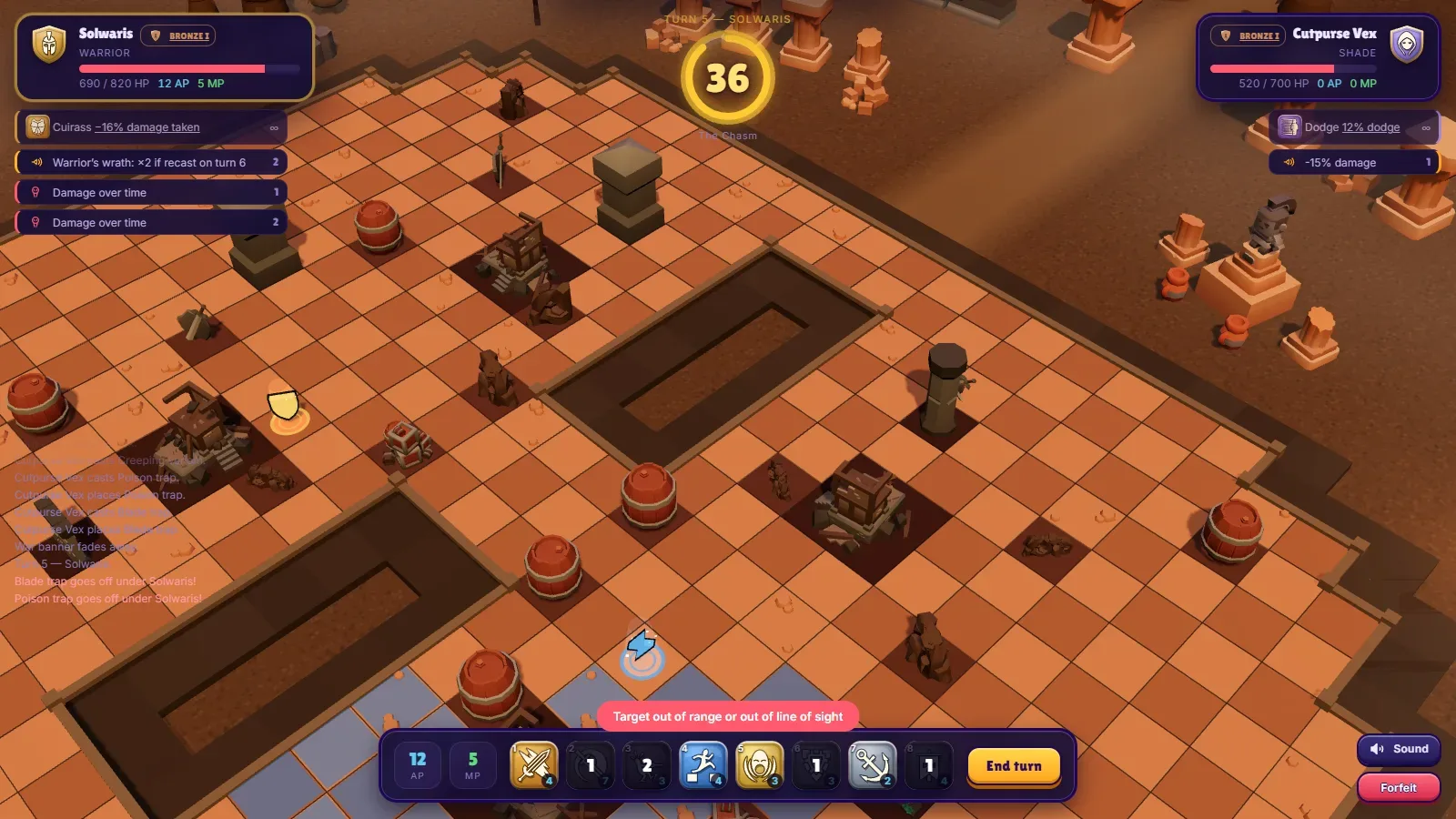
Most spells need line of sight. In Solwaris, it is a straight segment from the centre of your tile to the centre of the target’s, and only the scenery blocks it, whether a wall, a crate or a rock. The void does not: you can see across it. Fighters and summons never block sight, but they do block movement. Players new to the game hide behind a summon and get hit anyway.
The fix: learn which obstacles block, then use them. Ending a turn behind a wall against an Arcanist is often worth more than any damage you could have dealt.
4. Forgetting that things can be moved
Pushes, pulls and swaps are some of the strongest tools in tactical games, because they change the board. In Solwaris, a push blocked by a wall or another entity stops dead and deals extra collision damage; pushing someone onto a trap is better still. The Warrior’s Anchor is the only direct answer: while it holds, nothing moves them.
The fix: when you check your end tile, check the tiles around it too. Standing with your back to a wall facing a class that pushes is an invitation.
5. Chasing damage instead of control
Beginners count damage. Experienced players count options. Removing two movement points from an opponent who needs to flee can win a game that raw damage would not. In Solwaris, AP and MP removal is a form of attack in their own right, and against classes that rely on a precise chain of spells, it often matters more than damage.
6. Treating the first turn as automatic
Solwaris opens with an initiative bid: after the draw, the other player can buy the first turn with Waris earned by playing, and the last bidder starts. Playing first is not always good. A class that places traps or charges often prefers to let the other come forward. Decide before the match which you want.
How to actually improve
- Review your losses. Find the one turn where the game slipped. It is usually earlier than you think, and it is usually a tile, not a spell.
- Think one turn ahead of your opponent. Before ending your turn, play their turn in your head.
- Master one class or one matchup first. In Solwaris, each class has its own Elo rating, so you can focus on one without dragging the others down. The Shade, Clockmaker and Artificer reward planning; the Warrior and Brute forgive more mistakes while you learn.
- Know how the game ends. A Solwaris match has no turn limit: it only ends when a hero falls or a player forfeits. A losing position is not saved by running away; you turn it around by playing better.
- Play rated games against people. Training against the AI is good for learning a class, but it is unranked for a reason: people bluff, adapt and punish patterns. If you want to understand how the rating itself works, our guide to ranked turn-based strategy and Elo explains it simply.
Where to test yourself
Any turn-based game with a rated queue will do. Chess on Lichess is the purest version, Go on Online-Go.com the deepest, and Advance Wars By Web the best if you like commanding armies. If you want heroes, spells and a grid in matches of a few minutes, Solwaris is free in the browser with no download, and a free wallet is all you need to sign up. It is a young game with a small community, so try it at peak hours if you want a human opponent quickly.
The rules page of the Solwaris guide is a ten-minute read, and it doubles as a checklist of everything this article asked you to watch.
A turn-based tactical duel, live in seconds
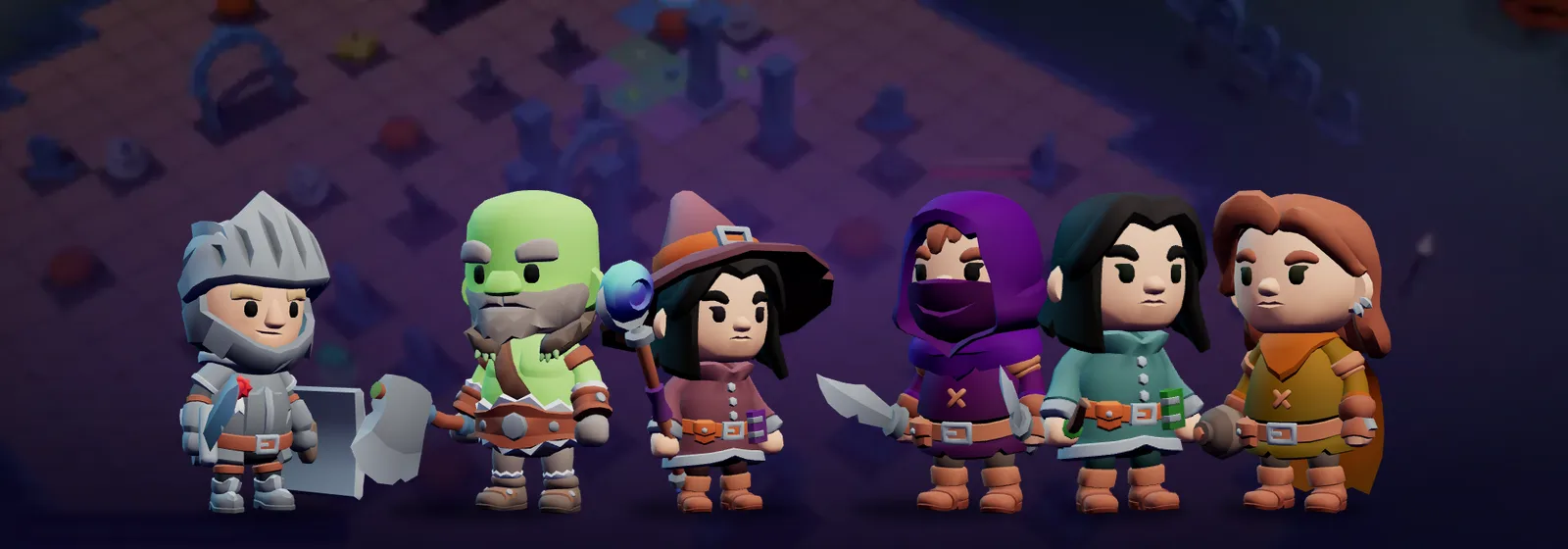
Pick a hero, take your position and beat another player — or an AI — turn by turn. Nothing to install: it plays right here.
Frequently asked questions
Why is turn-based PvP considered a pure skill test?
Because reaction speed plays no part. Each player gets the time to think, so the winner is the one who reads the board better, plans further ahead and wastes fewer resources, not the one with faster hands.
How do I get better at turn-based PvP?
Review your losses, find the turn where the game slipped, and ask what your opponent could do on their next turn before ending yours. Most games are lost by one badly chosen tile at the end of a turn.
Is there luck in turn-based PvP games?
It depends on the game. Chess and Go have none. Card games have the draw. Tactical games often keep a small amount, such as critical hits or damage ranges, which good players plan around.
What is a good turn-based PvP game to play in a browser?
Lichess for chess, Online-Go.com for Go, Advance Wars By Web for wargames, and Solwaris for 1v1 tactical duels with classes and spells. All of them are free and need no download.