Strategy Games Without Pay to Win: How to Spot It, and Which Ones to Play
Pay to win is the moment money decides the game for you. Here is a precise definition, a method to spot it before you sink hours into a game, strategy games that avoid it, and exactly what Solwaris sells.
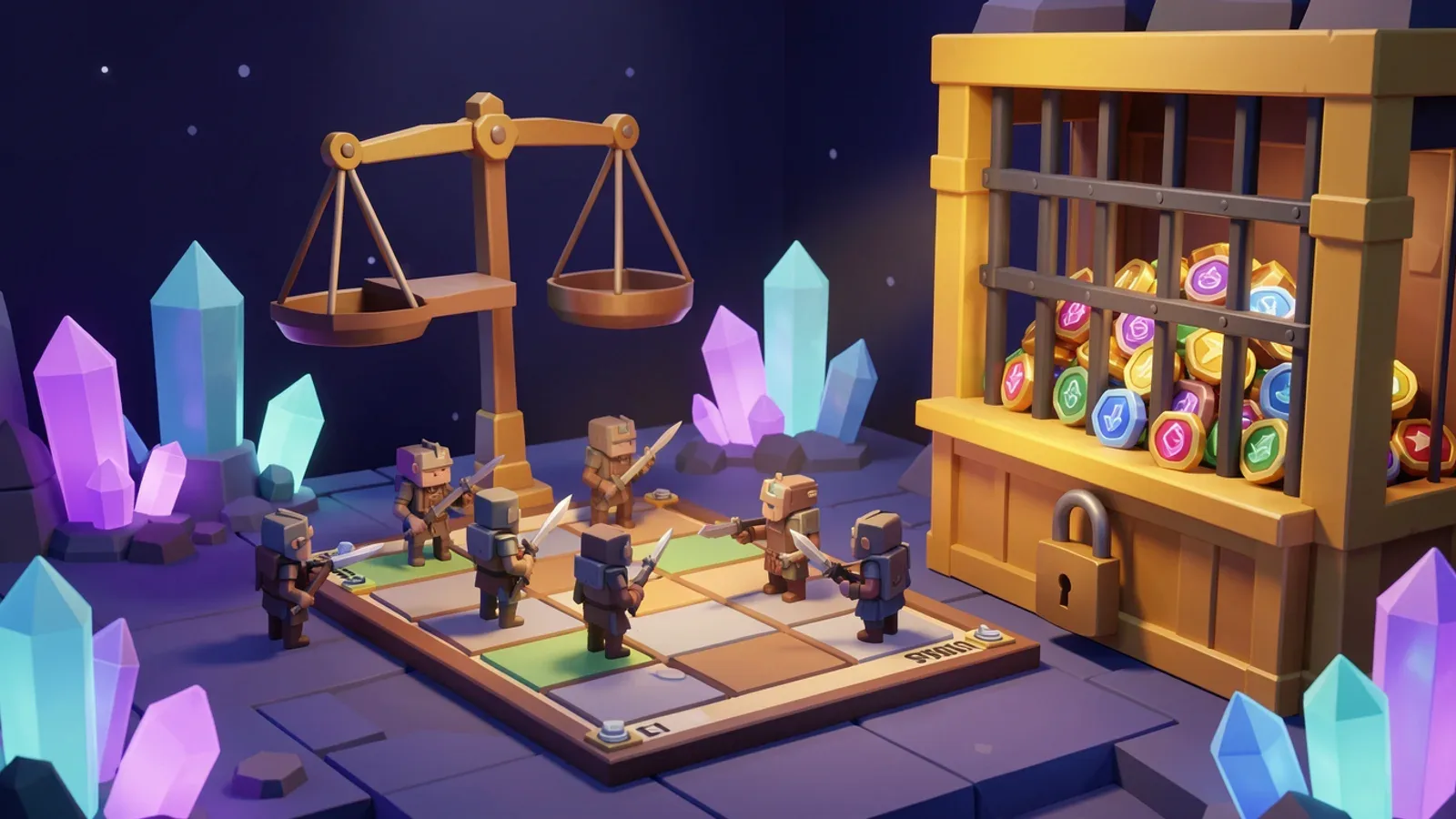
Every strategy player has been there: a well-played game, a solid plan, and an opponent fielding units you cannot get without paying. The defeat taught you nothing, except that a credit card was a better general than you. Looking for strategy games without pay to win means looking for the opposite: a game where you lose because the other player played better.
You still need to know what “pay to win” means exactly. The term is often thrown around loosely, at any game with a shop. It deserves a more precise definition.
Pay to win: a precise definition
A game is pay to win when money buys a competitive advantage over other players: better weapons, stats, resources, or items you cannot get any other way. Conversely, purely cosmetic purchases (skins, animations, decorations) are not pay to win: they change how you look, not the result.
Between these two poles there are several models worth telling apart:
| What money buys | Example | Pay to win? |
|---|---|---|
| Cosmetics with no effect | Items in the Dota 2 store | No |
| The game itself, once | XCOM 2, Into the Breach | No |
| Extra content (expansions) | Dominion Online expansions | Not in itself, if matches stay balanced |
| Time (speeding up construction) | Travian gold, Forge of Empires diamonds | Yes, as soon as you face other players |
| Production or power | Travian production bonuses | Yes |
| A collection, faster | Hearthstone card packs | Grey area: packs can also be bought with gold earned by playing, only more slowly |
The dividing line is simple: does what I buy count against the other player? If so, it is pay to win, however it is packaged.
The textbook case: Star Wars Battlefront II (2017)
The most cited example remains Electronic Arts’ Star Wars Battlefront II, in November 2017. The game sold at full price, but its paid loot crates contained “Star Cards” that raised characters’ stats according to their rarity. Players calculated that unlocking some heroes without paying took dozens of hours of play, and the anger spread across social media.
The day before the official launch, EA switched off all in-game purchases. The studio later moved to a model selling only cosmetic items. The story was covered well beyond the gaming press, all the way to the business press.
It is not a strategy game, but the lesson applies to every competitive genre.
How to spot pay to win before you invest
Pay to win rarely shows up in the first hour. It appears when you start facing more advanced players. A few checks before you get attached:
One more clue: the game’s genre. Persistent worlds (where you build a city over weeks) find it easy to sell time. Games with short matches, where everyone starts from zero each time, have much less to sell without breaking fairness. We applied this checklist to a selection of free strategy browser games.
Strategy games that avoid pay to win
Free, with nothing to buy that matters
- Lichess: chess, entirely free and ad-free, run by a non-profit that lives on donations.
- Freeciv-web: the open-source Civilization clone, in the browser. Free software, nothing to buy.
- Advance Wars By Web: tactical warfare on a free fan site, running since 2004.
Free, with a cosmetic shop
- Dota 2 (Valve): not a turn-based game, but a frequently cited example. All heroes are free, and Valve announced from the start that the store would sell only cosmetic items, so no one could buy a competitive advantage.
Buy once, with no shop weighing on play
The oldest model is still the simplest: you buy the game (and sometimes content expansions), and everyone plays by the same rules. XCOM 2, Into the Breach and Heroes of Might and Magic III fall into this category (their place in the genre is told in our history of turn-based strategy games). In an online duel, fairness is then a matter between players, not between wallets. If the duel is what draws you, we compared 1v1 games online from a fairness angle.
The Solwaris model, plainly
Solwaris is a free turn-based tactical duel, in the browser. Since we are discussing it here, this is exactly what you pay for and what you do not, as described in the economy guide.
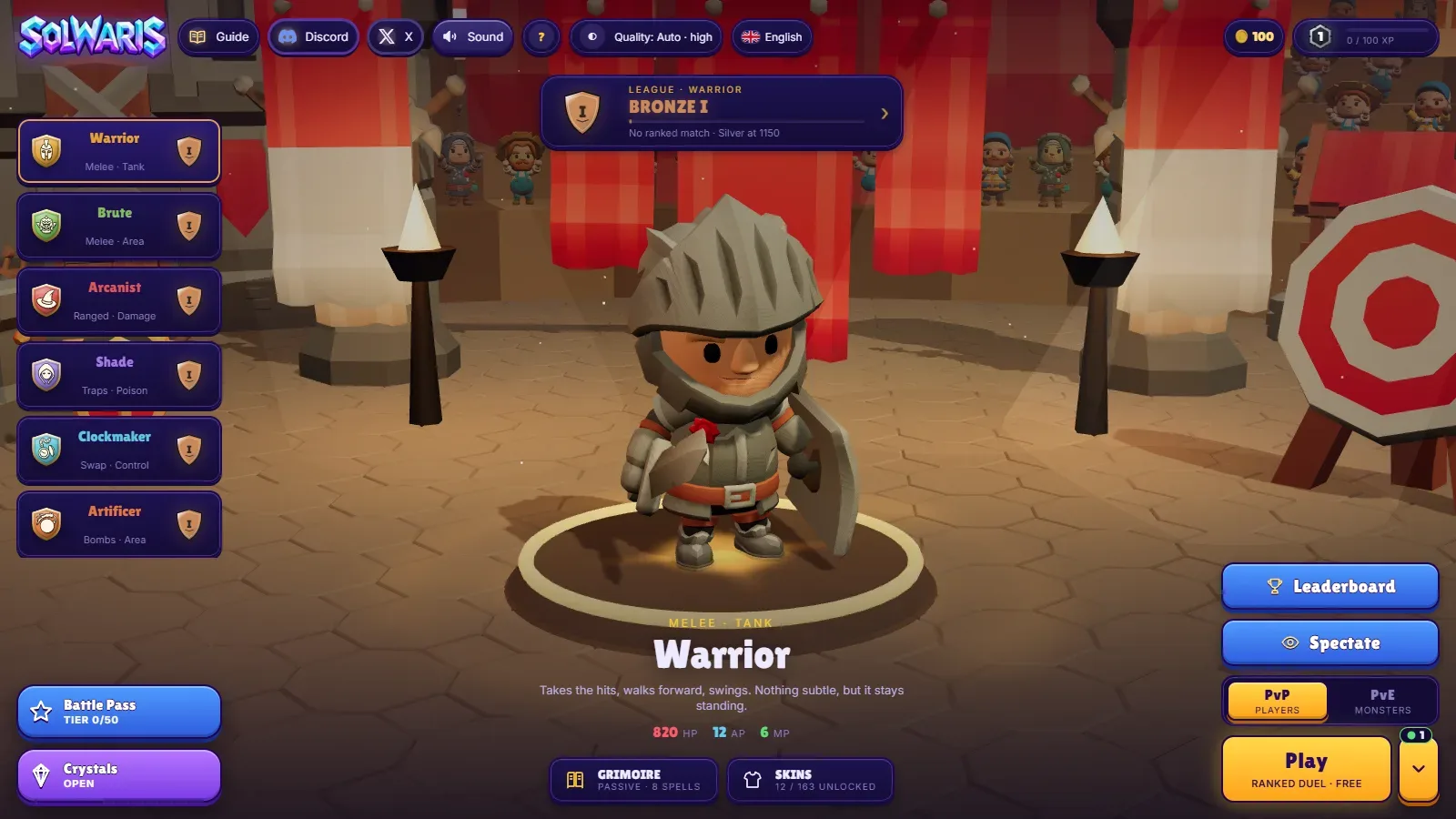
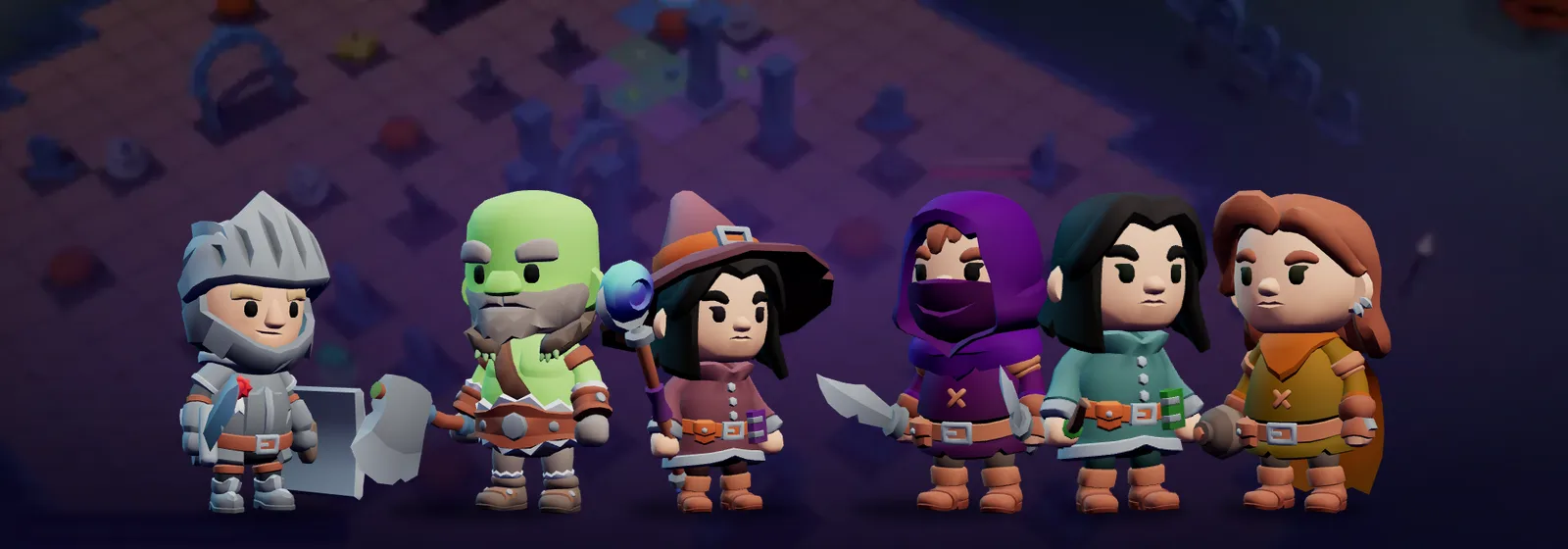
What is free: the whole game. The 6 classes and their 48 spells, ranked duels, leagues, training against the AI, spectator mode. A free wallet is all you need to sign up, with no transaction.
What is sold: cosmetic items. Skins, (visual) weapons and auras, plus a premium track of the Battle Pass. Common items can be bought with Waris earned by playing.
What these items do not change: combat. No purchased item alters damage, range, action or movement points, or anything else that decides a duel. Two Shades, one in a legendary skin and the other in its starting outfit, have exactly the same spells and numbers.
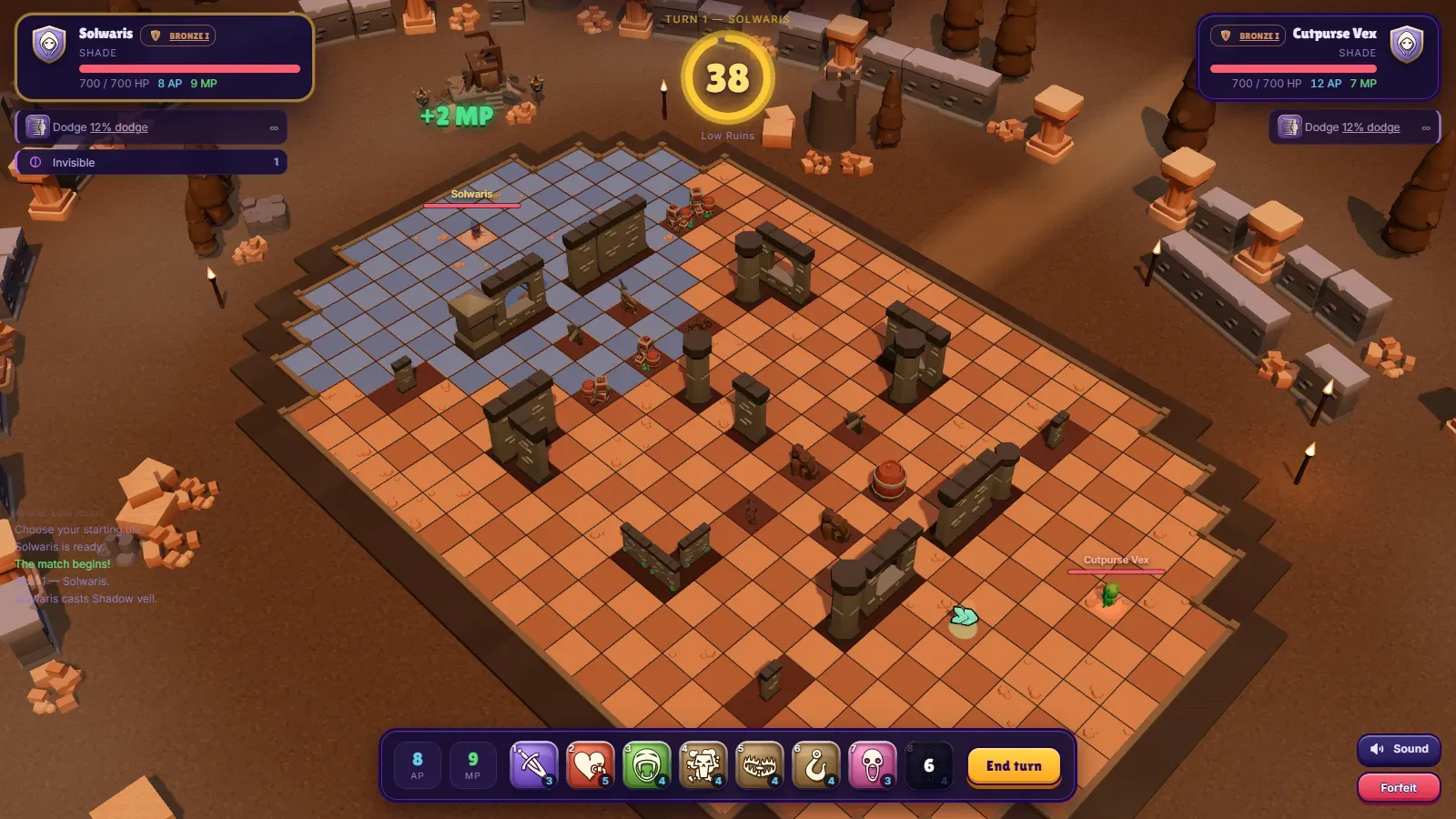
What is not sold at all. No hidden odds: skins come from crystals with random contents, but every chance is published before you open one, and no skin makes you stronger. No NFT, no item trading between players, and the game’s one token, the Waris, is not tradable. And the initiative (the right to play first) is contested in an auction with Waris, never with real money.
We believe a duel game only holds up if the loser can say: “they played better.” That is the one rule the shop is not allowed to touch.
In short: the question to ask
Before investing in a strategy game, ask its shop one question: “if I buy this, do I win more often?” If the answer is no, play with peace of mind. If it is yes, or if the shop does everything to keep the question vague, you already know who will win the close games.
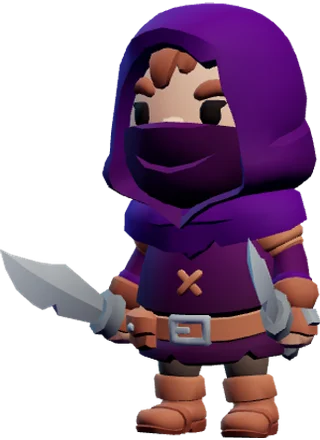 ShadeMid-range · Traps / Chance
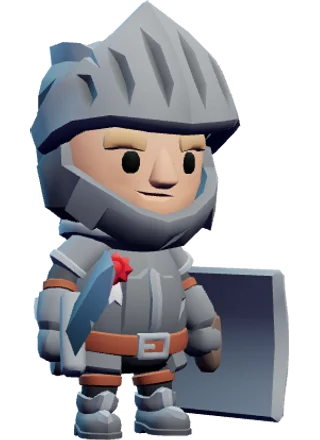 WarriorMelee · Assault / Guardian
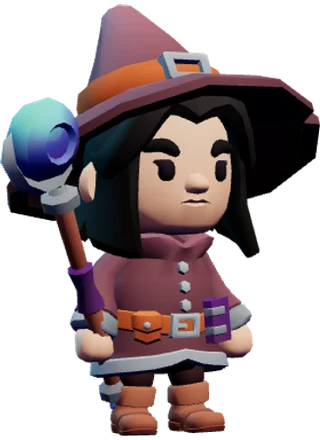 ArcanistRanged · Assault / Heal
A turn-based tactical duel, live in seconds
Pick a hero, take your position and beat another player — or an AI — turn by turn. Nothing to install: it plays right here.
Frequently asked questions
What does pay to win mean?
A game is called pay to win when money buys a competitive advantage over other players, such as better weapons, stats or production. Purely cosmetic purchases, like skins, do not count.
How can you tell if a game is pay to win?
Read the shop before you play. If money buys something that matters against other players, such as power, speed or resources, the advantage is for sale. Also check whether the same items can be earned by playing, and how long that takes.
Which strategy games are not pay to win?
Lichess, Freeciv-web and Advance Wars By Web are free, with nothing to buy that matters in a match. Dota 2 sells only cosmetic items. Buy-once games like XCOM 2 or Into the Breach have no shop that affects play.
Is Solwaris pay to win?
No. The whole game is free to play, and no purchased item changes damage, range or action points. The premium track of the Battle Pass gives extra Waris, which are used among other things in the initiative bid.