P2E Games Explained: The Four Models, and Who Actually Pays the Winners
Every P2E game answers one question, whether it says so or not: when a player earns, whose money is it? Token rewards, NFT rentals, paid entries and skill stakes answer it very differently. Learn to spot the model and you understand the game’s economy in two minutes.
P2E games (play-to-earn games) are games where playing can earn you something with real-world value: a crypto token, an NFT, or a share of a prize. That definition is easy. What newcomers usually miss is that “earn” hides very different machines. In some games the reward is freshly printed; in others it comes straight out of another player’s pocket. This guide sorts P2E games into four models so you can tell, in a couple of minutes, who is paying when someone wins.
P2E in one sentence, and the question that matters
Every economy needs money coming in to pay money going out. In a P2E game, the money going out is what players “earn”. So the only question that really matters is: where does the money coming in come from?
There are four common answers:
- New buyers of a token the game creates (token emissions).
- Owners of NFTs, who lend them to players and take a share (rentals and scholarships).
- Players who pay an entry fee into a prize pool (pay-to-enter).
- Your opponent, who put up the same stake as you (skill stakes).
The four P2E models at a glance
| Model | Who pays the winner? | What you need to start | Main risk | Example |
|---|---|---|---|---|
| Token emissions | Whoever buys the token later | Often an NFT or a starter pack | The token price collapses when buyers dry up | Axie Infinity’s SLP (2021-2022) |
| NFT rentals and scholarships | The NFT owner, from the token rewards | Nothing, but you give up part of what you earn | Your share shrinks with the token | Yield Guild Games scholarships |
| Pay-to-enter | Players who paid in and lost | The entry fee | The house cut; paid perks for some players | BR1: Infinite, paid Axie tournaments |
| Skill stakes | Your direct opponent | The stake | Losing to a better player | Solwaris stake servers |
Read the second column carefully. In the first model, rewards come from people who are not in the match at all. In the last two, the money is already on the table before anyone plays.
Model 1: token emissions
This is the model that made P2E famous. You play, the game mints a reward token, you sell it. The game can print as much as it likes, so the rewards look generous. The catch is that printing a token does not create buyers for it.
Axie Infinity is the textbook case. In early 2022, according to CoinDesk, more than four times as much SLP was being handed out each day as was being burned, and the token had fallen about 93% from its July 2021 high of $0.39. The team cut the SLP emitted by adventure mode and daily quests to zero, reducing daily supply by 56%, and warned that without drastic action the economy risked collapse. In January 2026, Sky Mavis went further and stopped SLP rewards in Axie Origins’ ranked mode altogether, citing bots. Axie Origins now pays its season rewards in bAXS, a non-transferable token backed by AXS.
Token emission is not automatically a scam. Some games publish a fixed, decreasing emission schedule: Splinterlands, for instance, reserves 60% of its SPS supply for rewards and releases it on a declining curve over 65 months. That is honest disclosure. It does not change the underlying fact: the value of what you earn depends on someone else wanting to buy it.
Model 2: NFT rentals and scholarships
When entry NFTs became expensive, a second layer appeared. Owners lent their NFTs to players who could not afford them, and the two split the rewards. These were called scholarships.
The best known organiser, Yield Guild Games, reported 20,700 scholars in February 2022, with rewards split 70% to the player, 20% to the manager who recruited and trained them, and 10% to the guild, according to Cointelegraph.
The model has one structural weakness: it sits on top of model 1. The scholar is paid in the emitted token, so when that token falls, everyone’s share falls with it. As the SLP collapsed, scholarships lost most of their appeal.
Model 3: pay-to-enter
Here nobody prints anything. Players pay an entry fee, the fees form a prize pool, and the organiser takes a cut. It works like a paid tournament.
BR1: Infinite on Solana is a clear example: you pay $1 in USDC to spawn and earn $1 for each elimination, and the studio keeps between 10% and 25% depending on which of its NFTs you hold. Axie itself ran a playtest competition in 2026, the Trial of Eight, with a 1 AXS entry fee.
This model is more sustainable, because the money exists before the match starts. Two things to check: the size of the house cut, and whether buying something improves your share or your odds. In BR1, NFT holders keep a larger share of their winnings, which is a perk, not a gameplay advantage, but it is still worth knowing.
Model 4: skill stakes between players
The simplest model of all: two players put up the same amount, the better player takes the pot, and the platform takes a fee. Nothing is minted. The money comes from your opponent, and yours goes to them if you lose.
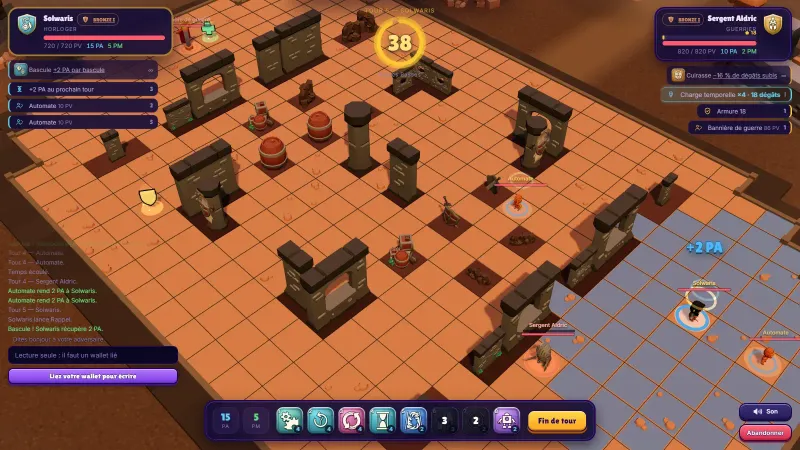
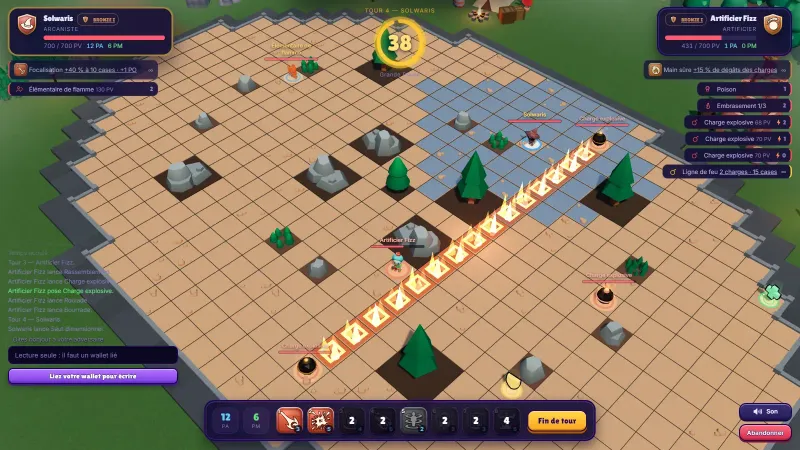
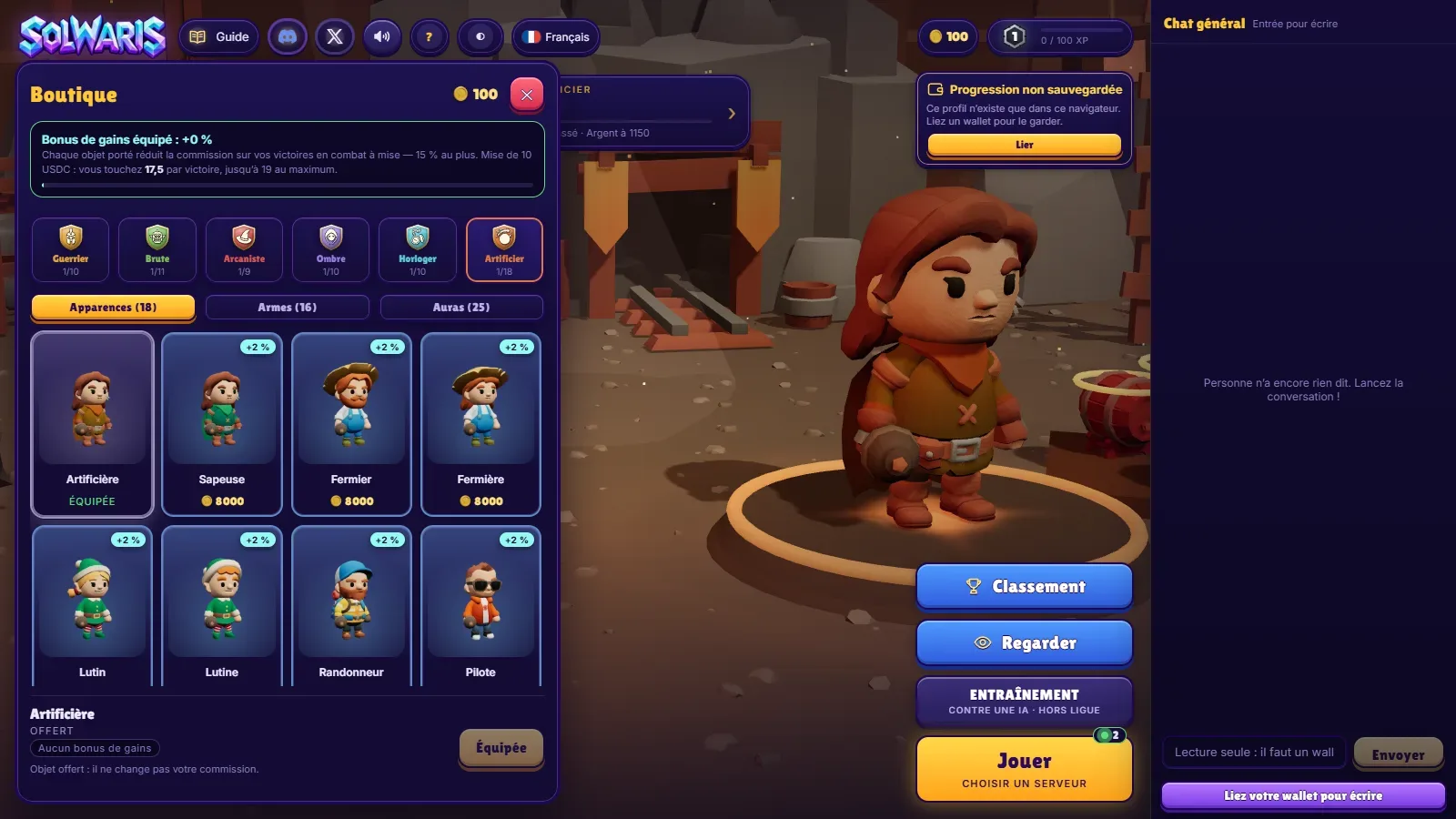
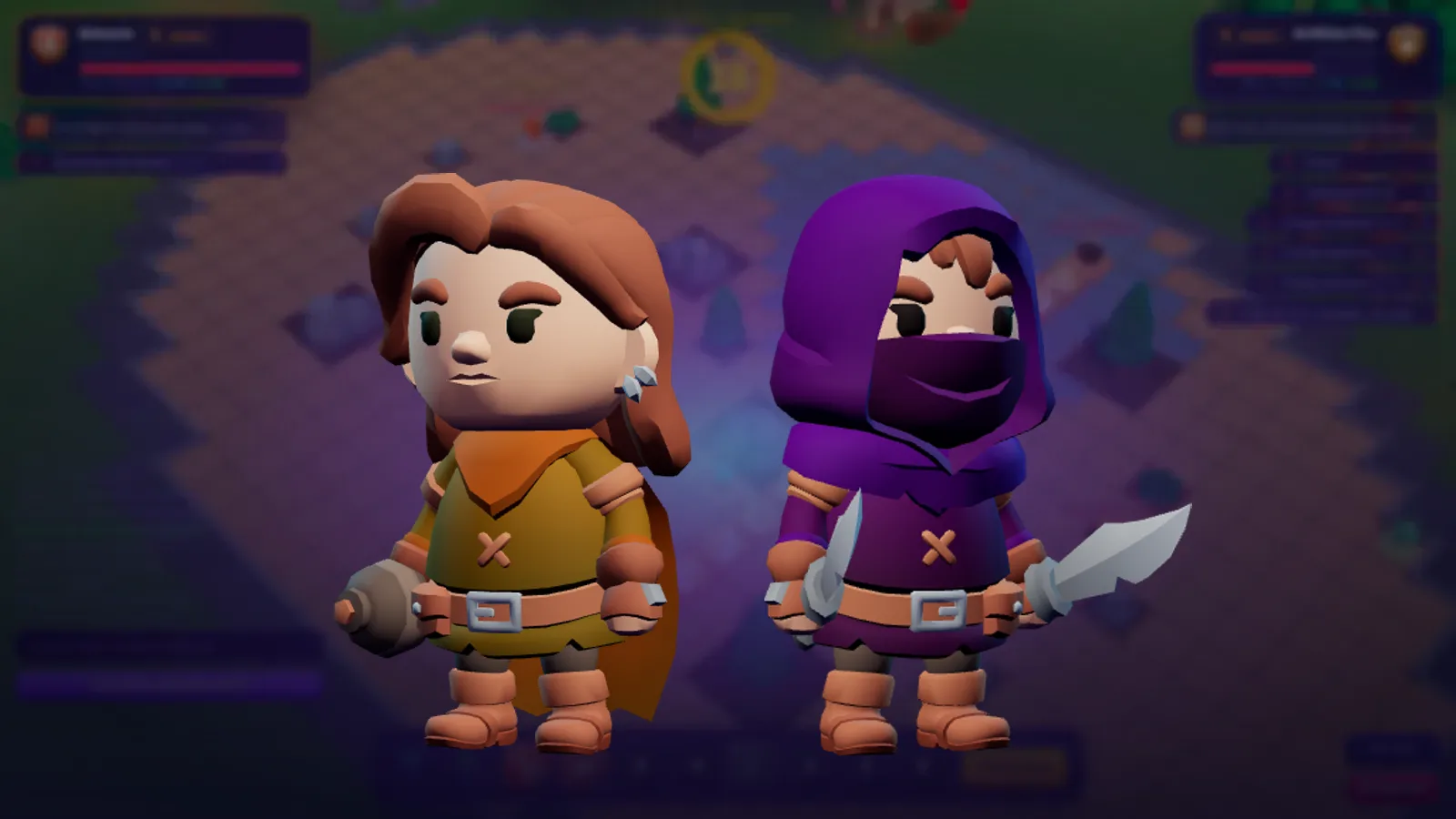
That is how Solwaris works. It is a 1v1 turn-based tactics game in the browser, with 6 classes and 48 spells, where the only randomness is critical hits (10%).
- The whole game is free and needs no wallet: ranked leagues, AI training, spectating.
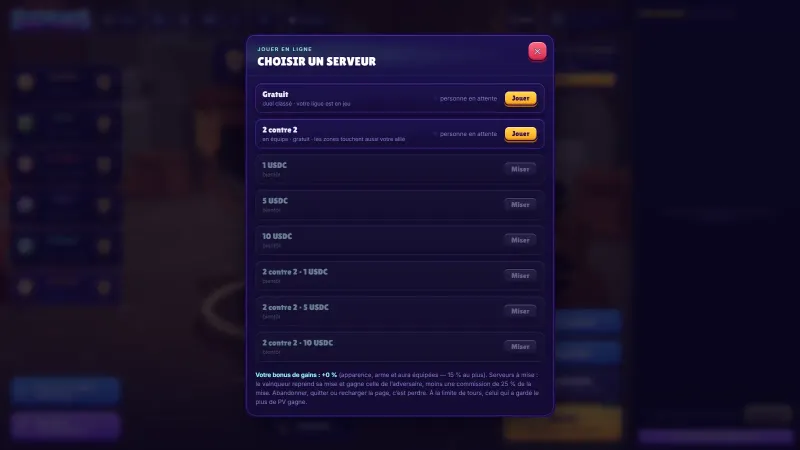
- Optional stake servers run at 1, 5 or 10 USDC. Both stakes move to an address dedicated to that match.
- The winner takes the pot minus a 12.5% fee: 17.50 USDC on a 10 USDC duel.
- Cosmetics lower that fee but never change damage, range or any rule. The economy guide lists every number.
Skill stakes have their own risk, and it is the obvious one: across all players, the stakes won equal the stakes lost, minus the fee, which means that breaking even requires winning more than half your matches. It rewards being better than your opponents, not showing up. Real-money competitions between players are also restricted in some countries, so check your local law.
How to tell which model a P2E game uses
Many games mix models: a token and a paid tournament, rentals and a prize pool. Work out which one pays most of the rewards, and judge the game by that one.
The bottom line
P2E is not one thing. Token emissions pay you with money that does not exist yet. Rentals split that same money with an owner. Pay-to-enter and skill stakes pay you with money other players already put on the table, and you can lose yours just as easily. None of them is a salary.
If you want to check a specific game before you connect a wallet, use our red-flag checklist for play-to-earn games. For what is left of the market in 2026, see play-to-earn games in 2026.
This article is not financial advice. Anything you stake can be lost.
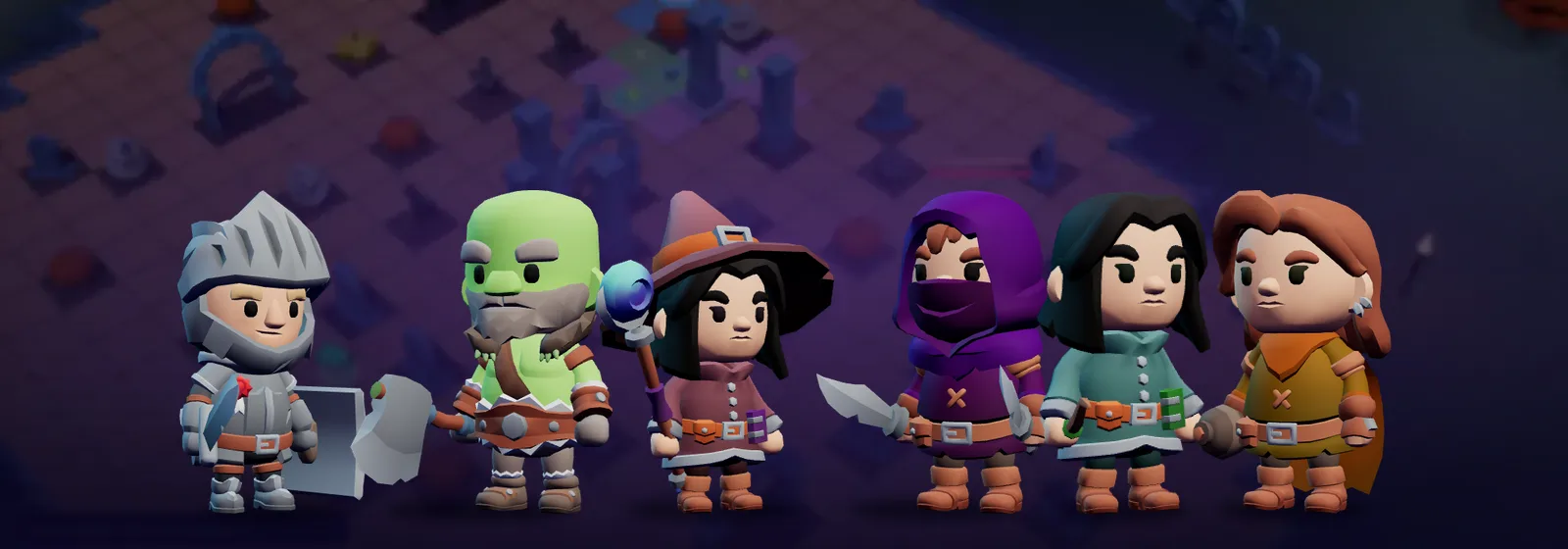
Six classes. One duel. Your strategy.
Pick a hero, take your position and beat another player — or an AI — turn by turn. Nothing to install: it plays right here.
Frequently asked questions
What does P2E mean in gaming?
P2E stands for play to earn. It describes games where players can receive something with real-world value, usually a crypto token, an NFT or a share of a prize pool, as a result of playing.
How do P2E games make money for players?
Through one of four models: rewards in a token the game creates, rented NFTs shared with an owner, prize pools funded by entry fees, or stakes won directly from an opponent. Only the last three are funded by money that already exists, and all of them can lose you money.
What is a P2E scholarship?
A scholarship is an arrangement where an NFT owner lends game assets to a player, who plays and shares the rewards with the owner and often a manager. It was common in Axie Infinity in 2021 and 2022 and faded as the reward token collapsed.
Are P2E games free to play?
Some are. Many require an NFT or a token before you can earn, which means you pay first. A few, like Solwaris, are fully free and only involve money in optional modes where you stake against another player.