The History of Turn-Based Strategy Games: Origins, Classics and How to Get Started
Before it was a video game genre, turn-based strategy was a training tool for Prussian officers. Here is how the genre was born, the games that shaped it, and where to start if you have never played one.
A turn-based strategy game rests on an old promise: each side decides in turn, with all the time it needs to think, and the best plan wins. That promise is older than computing. It trained general staffs before it kept generations of players up late for “one more turn”.
This article traces the history of the genre, with its sources, presents the must-plays of each era, then offers a method for getting started without losing heart.
Before video games: from the board to the sandbox
Chess is the most famous turn-based strategy game, but it remains abstract: a rook does not look like any real unit. The genre’s true ancestor is military.
In 1824, the Prussian lieutenant Georg von Reisswitz published Kriegsspiel, generally considered the first modern war game. He was building on his father’s work, who had swapped the chessboard for a sandbox where the terrain was modelled by hand; the son replaced the sand with real topographic maps, and blocks stood for regiments. Shown to the king and his generals, the game was recommended to the army as a tool for training officers. The chief of staff of the time is said to have declared that it was not a game at all, but a school of war.
Everything that defines the genre is already there: a map, terrain that matters, units with different abilities, and decisions made step by step.
1988 to 1995: the genre is born on screen
The late 1980s saw the two great branches of turn-based strategy appear almost at the same time.
The tactical branch, of squads and grids:
- 1988 – Famicom Wars (Nintendo and Intelligent Systems): two armies on a tiled map. The series would not leave Japan until 2001, under the name Advance Wars.
- 1988 – Laser Squad (Julian Gollop, Mythos Games): a squad tactics game, whose follow-up by Gollop was originally meant to be its sequel.
- 1990 – Fire Emblem (Intelligent Systems, Famicom): the first game in the series, which laid the foundations of the console tactical RPG and of permanent death for units that fall in battle.
- 1994 – UFO: Enemy Unknown (X-COM: UFO Defense in the United States): Mythos Games and MicroProse blend defending the Earth with tactical missions, where each soldier spends “time units”. It is the template for the XCOM series.
- 1995 – Tactics Ogre (Quest): a tactical RPG whose team later joined Square to create Final Fantasy Tactics (1997).
The strategic branch, of empires:
- 1991 – Civilization (Sid Meier and Bruce Shelley, MicroProse): “build an empire to stand the test of time”. It is recognised as a pioneer of turn-based strategy.
- 1993 – the word “4X”: in his review of Master of Orion for Computer Gaming World, Alan Emrich sums up the genre in four verbs: eXplore, eXpand, eXploit, eXterminate. The label stuck.
1999 to 2025: maturity and revival
The genre then settled in, carried by a few series that span the decades.
| Year | Game | What it brought |
|---|---|---|
| 1999 | Heroes of Might and Magic III | A strategic map and tactical battles on a hex grid, in one game |
| 2001 | Advance Wars | Famicom Wars’ tactical warfare finally exported, on Game Boy Advance |
| 2012 | XCOM: Enemy Unknown | Firaxis reinvents the 1994 X-COM |
| 2016 | XCOM 2 | Two actions per soldier, and an online 1v1 mode |
| 2017 | Divinity: Original Sin 2 | An action point budget that carries over from one turn to the next |
| 2018 | Into the Breach | An 8 × 8 grid where the enemy announces its moves in advance |
| 2023 | Baldur’s Gate 3 | Turn-based combat under Dungeons & Dragons rules, at the heart of a big RPG |
| 2025 | Civilization VII | The founding series, still going |
Meanwhile, the browser became a platform in its own right: Advance Wars By Web has kept Nintendo’s series alive since 2004, Freeciv-web offers the open-source Civilization clone, and new games are born directly for the web.
The must-plays, for anyone who wants to understand the genre
Rather than a ranking, here are five games that, played in this order, show everything the genre can do. (We have also published a reasoned top pick by category.)
- Into the Breach, for readability: everything is visible, luck almost absent. You learn to read a board.
- Advance Wars or Advance Wars By Web, for frontline war: a whole army to command on a tiled map.
- XCOM 2, for risk: every shot has a displayed probability, and you learn to play with uncertainty.
- Heroes of Might and Magic III, for the double scale: run a kingdom, then fight battles.
- Civilization (VII or an older entry), for pure grand strategy, over dozens of turns.
How to get started without losing heart
Turn-based strategy has a reputation as a hard genre. It often comes from a bad first choice: a campaign lasting dozens of hours, tackled with no prior knowledge. A few simple rules avoid that trap.
Start short. A ten-minute game forgives everything: you lose, you understand, you go again. A game where you discover your mistake six hours in is disheartening.
Start readable. Choose a game where you can see what the opponent can do. The core mechanics (action budget, range, line of sight, area effects, pushes) are explained in our article what is a tactics game.
Play against an AI before humans. The AI is forgiving, and you can test an idea there without pressure.
Start free if you are unsure. You do not need to buy a game to find out whether the genre suits you: Freeciv-web gives a taste of Civilization-style grand strategy, and Advance Wars By Web of tactical war, both in the browser and without paying anything.
Review your losses. In turn-based games, a loss almost always has an identifiable cause: a unit pushed forward too early, a turn where you wasted points, a threat you did not see.
Strategy and tactics: two scales of the same genre
“Turn-based strategy” covers very different games. Strategy plays out over time: economy, diplomacy, world map. Tactics play out inside the fight: placement, range, order of actions. Civilization is above all strategic; Into the Breach is purely tactical; Heroes III and XCOM combine the two.
Knowing which of the two scales draws you in is the best way to find your game. If it is the empire, start with Polytopia, then Civilization. If it is the fight, start with a tactical duel or Into the Breach, then XCOM.
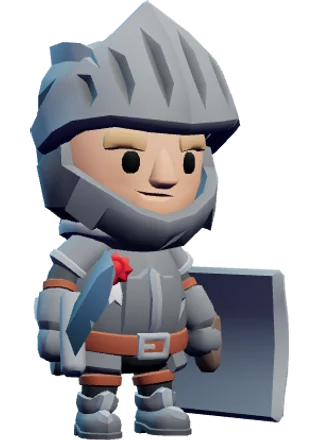 WarriorMelee · Tank
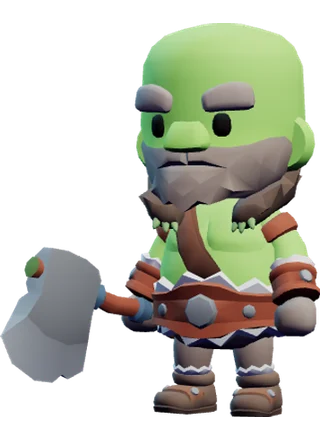 BruteMelee · Area
 ArcanistRanged · Damage
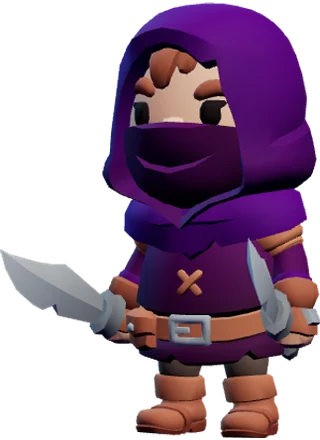 ShadeTraps · Poison
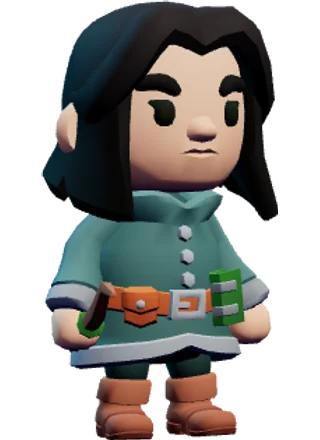 ClockmakerSwap · Control
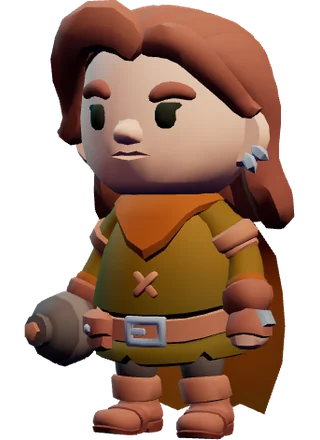 ArtificerBombs · Area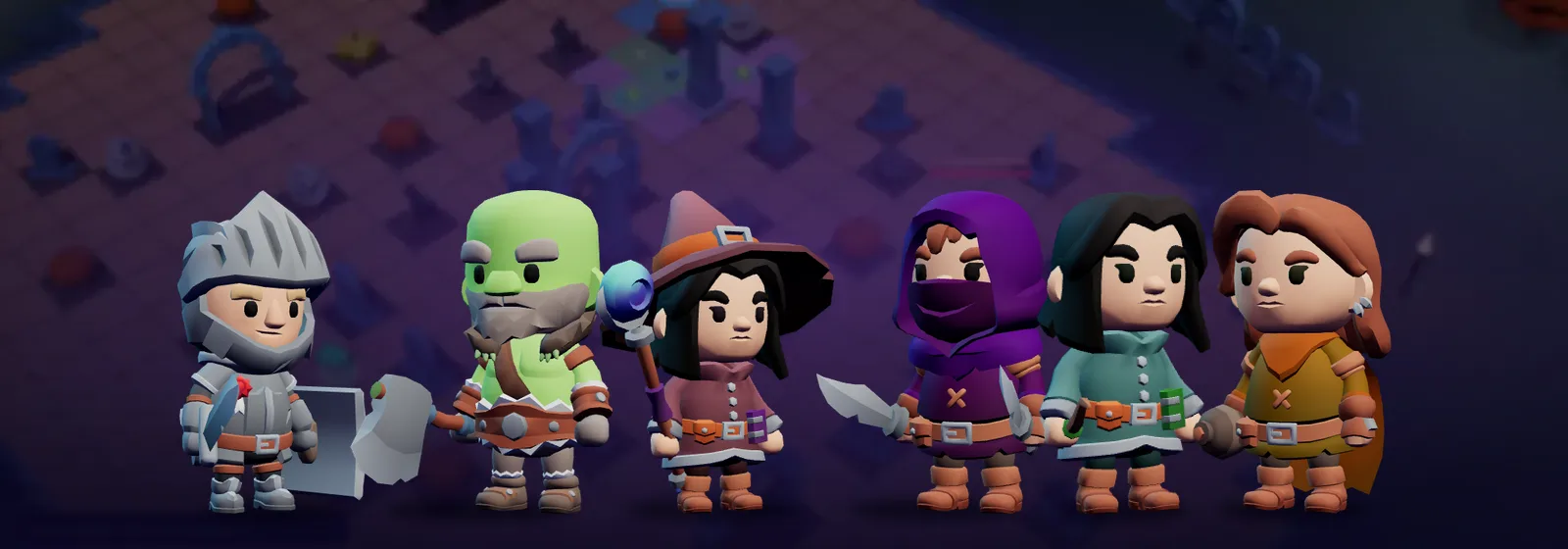
Six classes. One duel. Your strategy.
Pick a hero, take your position and beat another player — or an AI — turn by turn. Nothing to install: it plays right here.
Frequently asked questions
What was the first turn-based strategy game?
Chess is far older, but the first modern war game is generally considered to be Kriegsspiel, published in Prussia in 1824 by Georg von Reisswitz. In video games, Civilization, released in 1991, is recognised as a pioneer of turn-based strategy.
What does 4X mean?
4X stands for explore, expand, exploit, exterminate. The term was coined by Alan Emrich in 1993, in his review of Master of Orion for Computer Gaming World magazine.
What turn-based strategy game should a beginner start with?
A short, readable game is best: Into the Breach, The Battle of Polytopia, or a free tactical duel in a browser. Big campaigns like Civilization come next, once you have the basic reflexes.
Are there free turn-based strategy games?
Yes. Freeciv-web brings Civilization to the browser, Advance Wars By Web does the same for tactical war, and Solwaris offers free tactical duels with no sign-up.