BR1: INFINITE Explained: Pay-to-Spawn Shooter vs Turn-Based Skill Stakes
BR1: INFINITE is a real-money shooter on Solana where every life costs a dollar and every kill pays one. Here is how it actually works, what the studio keeps, and how it compares with a slower, turn-based way of putting skill on the line.
BR1: INFINITE is one of the few crypto games people search for by name in 2026. It has a simple pitch that is easy to repeat: pay a dollar to spawn, earn a dollar for every kill. This article explains how that model works, from the studio's own pages, and compares it with a very different way of competing for money: a turn-based duel where nothing happens in real time.
Both approaches have their fans. The point here is not to crown one, but to help you see which one fits the way you play.
What BR1: INFINITE is
BR1 is developed by BRAVO READY, a studio based in Montreal. It raised a $3 million seed round in July 2022, with Solana Ventures and 6th Man Ventures among the investors, and press coverage in 2026 also lists Krafton, the publisher of PUBG, among its backers. In July 2025, BRAVO READY bought Honeyland, another Solana game, and its portfolio now includes BR1, Bonk Arena and Honeyland.
The game itself is a third-person shooter. For a long time it was described as a battle royale, and many players still search for it as BR1 Infinite Royale. The current presentation, on the Phantom wallet's app page, calls it "the worlds first real-money extraction shooter". In an extraction shooter you do not just survive: you loot the map and try to get out alive with what you picked up. According to 80.lv, BR1 lets players loot hidden cash drops and extract them.
As for platforms, BRAVO READY sends players to br1game.com, and Phantom lists BR1 among its apps. In August 2026, coverage by 80.lv and Insider Gaming described an invite-based PC playtest, with limited spots opened each week. That tells you where the game stands: playable, but still being tested.
How pay-to-spawn and kill-to-earn work
The studio sums up its model in one sentence: players pay $1 to enter the game, and as they eliminate opponents, they earn $1. On each elimination, BRAVO READY keeps between 10% and 25% as a service fee.
The Phantom page lists the stake levels:
- a free mode;
- tables at $0.10, $0.25 and $1;
- custom games.
80.lv also reports risk modes going up to $10. Press coverage relays the studio's claim that players had already won more than $100,000 by July 2026. That figure comes from the studio and has not been independently checked.
The model has an honest logic: the money comes from other players, not from a token printed out of thin air. But it cuts both ways. Every death costs you. If you die more often than you kill, the session ends with a bill, as Insider Gaming put it bluntly.
The NFT tiers
BR1 sells NFT characters called BR1: Operatives, plus item NFTs called BR1: Loot. Owning an Operative changes the share of each win you keep:
| Profile | Share of winnings you keep | Fee kept by the studio |
|---|---|---|
| Ape Operative holder | 90% | 10% |
| Droid Operative holder | 85% | 15% |
| No Operative | 75% | 25% |
No NFT is needed to play. The Operatives do not make your aim better; they change what you keep from each win. The Phantom page also mentions a $READY token powering the ecosystem.
Reflexes vs planning: two ways to put skill on the line
BR1 and a turn-based duel like Solwaris both say the same thing: you get paid for beating other players, not for grinding. After that, almost everything is different.
In a shooter, skill means reaction time, aim, map knowledge and nerves under pressure. A match is dozens of short fights, and each one has a price. Your hardware and your connection play a part too: frame rate, ping and input lag are part of the game.
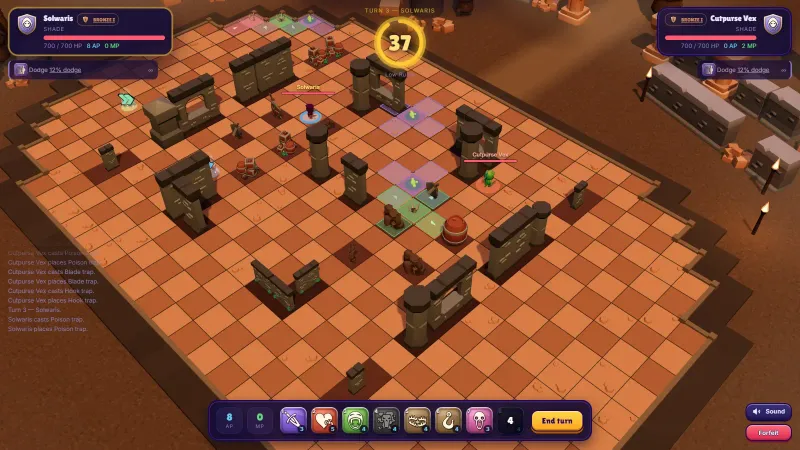
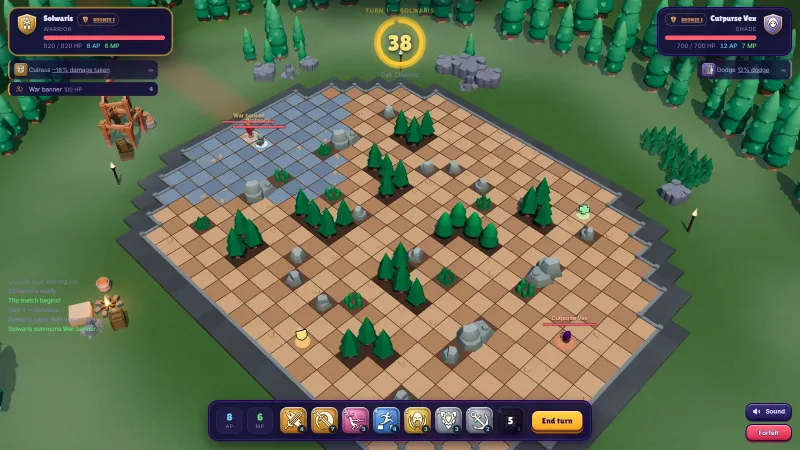
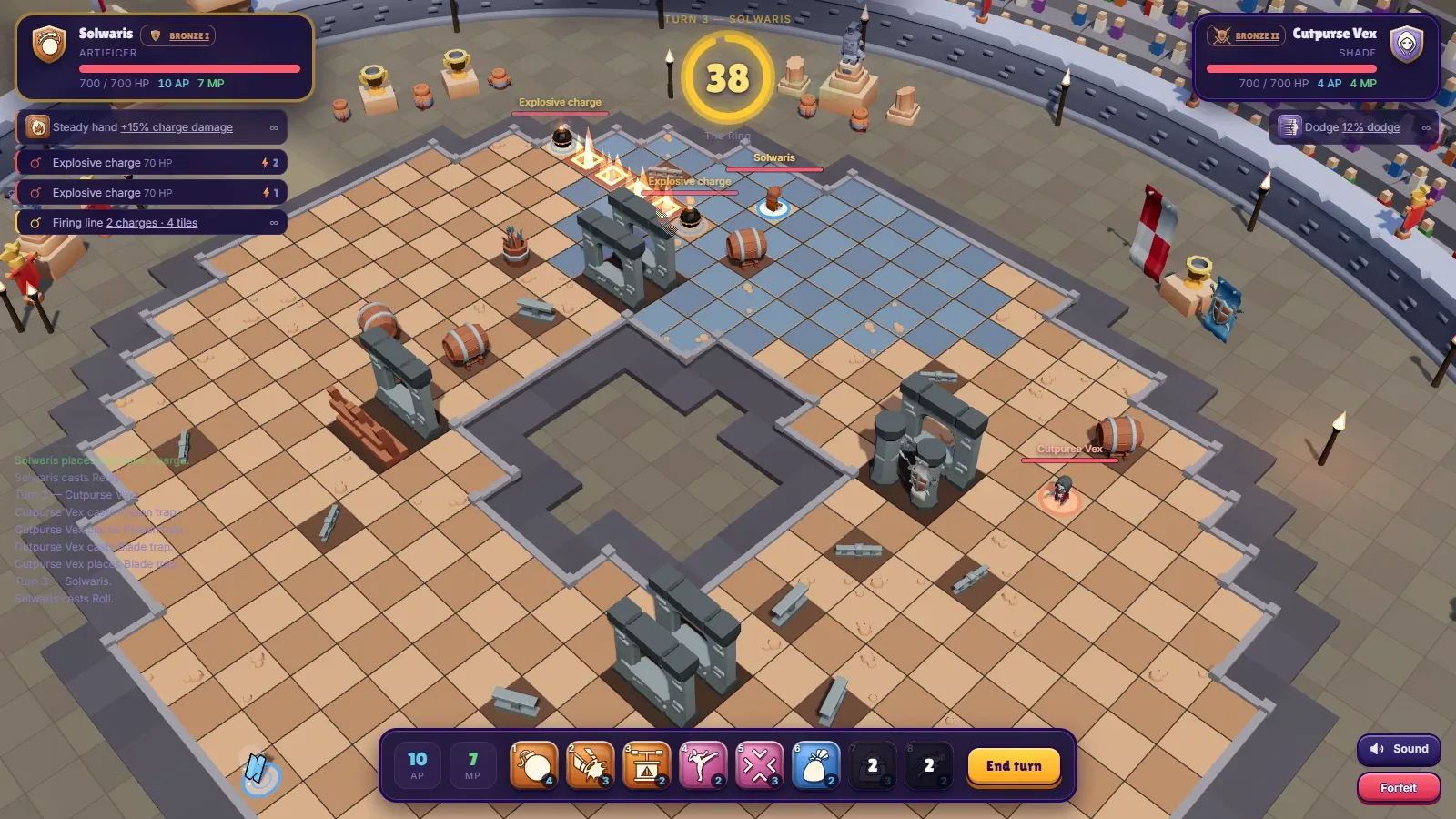
In a turn-based duel, skill means planning. In Solwaris, each turn you have 12 action points and 6 movement points to spend, and up to 40 seconds to decide. Range, line of sight, pushes and invisible traps decide who wins. The only random element is critical hits, at 10%. There is no aiming and no reflex test: a slower player with a better plan wins.
| BR1: INFINITE | Solwaris | |
|---|---|---|
| Genre | Third-person extraction shooter | 1v1 turn-based tactics |
| Main skill | Aim, reflexes, map control | Planning, positioning, reading the opponent |
| Platform | PC (invite-based playtest in 2026), Phantom app | Browser, desktop or phone, no install |
| Free mode | Yes | Yes, the whole game, with no wallet |
| Paid entry | $0.10 to $1 per spawn (up to $10 reported) | 1, 5 or 10 USDC per match, same stake for both players |
| How you earn | $1 per elimination (standard table) | The opponent's stake, minus a fee |
| Fee | 10% to 25% of winnings, depending on NFTs | 12.5% of the pot, lowered by cosmetics |
| NFT or token | Optional Operatives and Loot NFTs; $READY token | None |
| One bad moment costs | A spawn fee | The whole match stake |
The last line matters. In BR1, losses come in small pieces, one spawn at a time, and a good player recovers during the same session. In a Solwaris stake match, your whole stake rides on one match you play yourself: you either take the pot or lose your stake. There is less variance inside a match, but each result counts more.
How Solwaris pays, and what it does not do
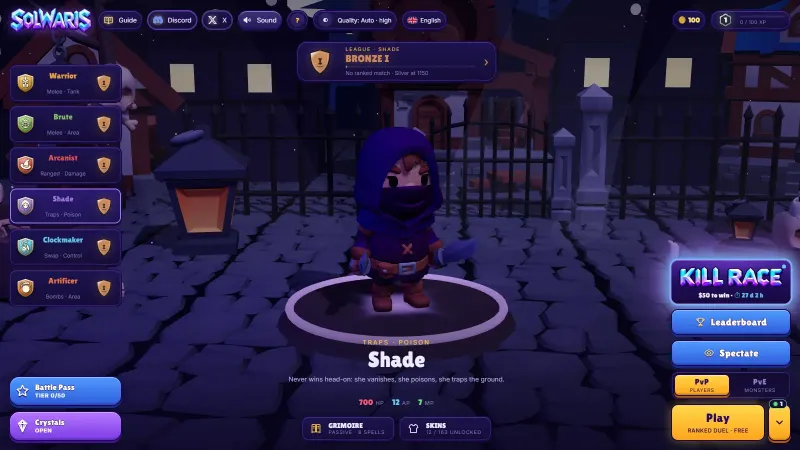
Solwaris is free: all 6 classes, the ranked leagues with an Elo rating per class, training against the AI, spectating and 2v2 need no wallet. Stakes only exist on dedicated servers, at 1, 5 or 10 USDC.
- Both players stake the same amount, and both stakes go to an address dedicated to that single match.
- The winner takes the pot minus a 12.5% fee: on a 10 USDC duel, that is 17.50 USDC.
- To stake, you sign a capped delegation from your own Solana wallet. Your USDC stays in your wallet, and you can revoke the delegation at any time.
- There is no NFT and no token. Cosmetics lower the fee, but they never change damage, range or any rule. The economy page lists every number.
This is not a better deal by default. It is a different trade-off. Solwaris is young, its community is small, and at off-peak hours the queue can stay empty for a while; training against the AI fills the wait. BR1 has a studio with funding, a known name, and a genre millions of people already play.
Which one suits you?
BR1: INFINITE is probably for you if:
- you already play shooters and trust your aim;
- you like fast sessions made of many short fights;
- you have a PC that runs a modern shooter well, and you do not mind a playtest;
- you are comfortable with a fee that depends on which NFT you hold.
A turn-based duel like Solwaris is probably for you if:
- you prefer to think before you act, as in chess or tactics RPGs;
- you want to play in a browser, on a laptop or a phone, with nothing to install;
- you want to learn for free for as long as you like, with no wallet;
- you want the same fee rules for everyone, with no NFT to buy.
The bottom line
BR1: INFINITE is an honest version of real-money PvP in one respect: the money comes from players, and the studio says exactly how much it keeps. Its pay-to-spawn model rewards players with fast hands and punishes the others quickly. A turn-based duel asks for something else: patience, planning and a clear head, one turn at a time.
If that second kind of fight appeals to you, play Solwaris for free and learn the rules before thinking about stakes. For a wider look at the genre, read our guide to play-to-earn games in 2026.
BR1: INFINITE is a trademark of BRAVO READY. Solwaris is an independent game with no connection to BRAVO READY. This article is not financial advice.
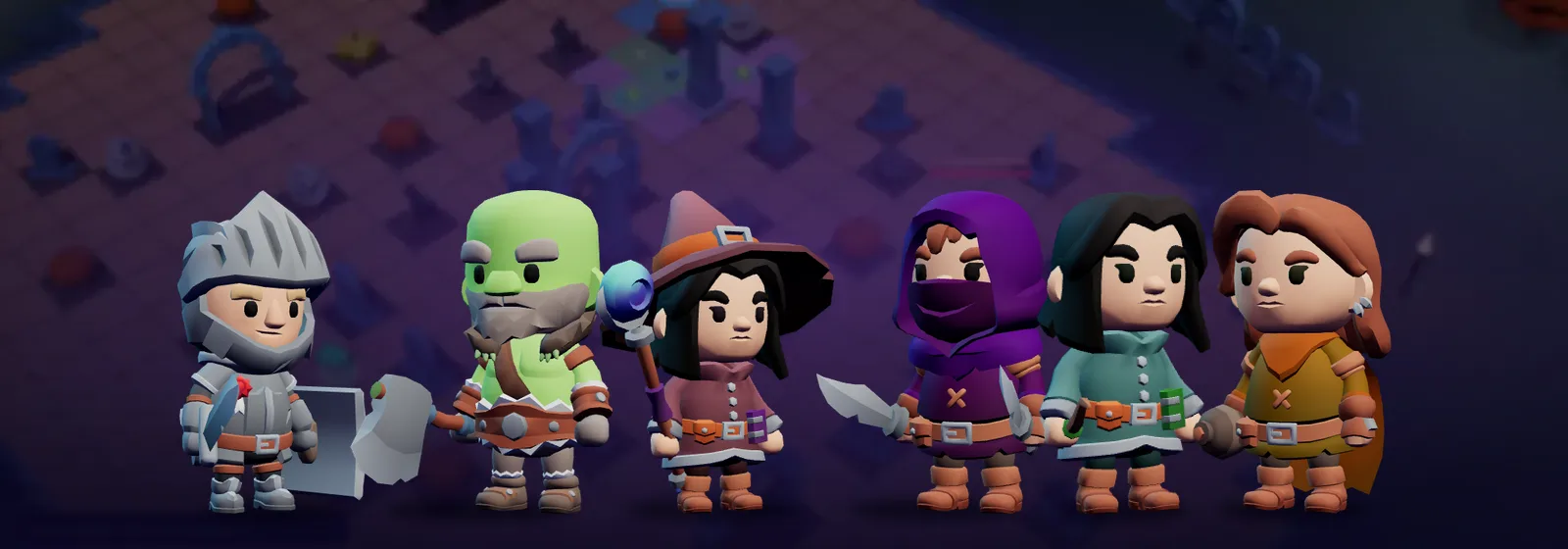
Six classes. One duel. Your strategy.
Pick a hero, take your position and beat another player — or an AI — turn by turn. Nothing to install: it plays right here.
Frequently asked questions
How does BR1 Infinite work?
BR1 INFINITE is a third-person shooter on Solana built on a pay-to-spawn, kill-to-earn model. You pay to enter the match, and each opponent you eliminate pays you, minus a service fee kept by the studio, BRAVO READY.
How much does it cost to play BR1 Infinite?
The standard price is 1 dollar in USDC to spawn and 1 dollar per elimination. Phantom lists a free mode and lower tiers at 0.10 and 0.25 dollars, and there are custom games. Losing lives costs money, so a weak session can end in a loss.
Do you need an NFT to play BR1 Infinite?
No. The NFTs, called Operatives, are optional. They change the share of winnings you keep, 90 or 85 percent for holders against 75 percent without one, but you can play without them.
Is BR1 Infinite the same as BR1 Infinite Royale?
It is the same project. The game was long described as a battle royale under the name BR1 Infinite Royale; it is now presented as BR1 INFINITE, a real-money extraction shooter.