Earn Crypto Playing Games: Skill, Luck or Grind, and What Is Realistic
Every week a new game promises to pay you in crypto for playing. Some pay through luck, some through hours of grinding, a few through skill. Here is how each model really works, what a normal player can expect, and the risks nobody puts in the trailer.
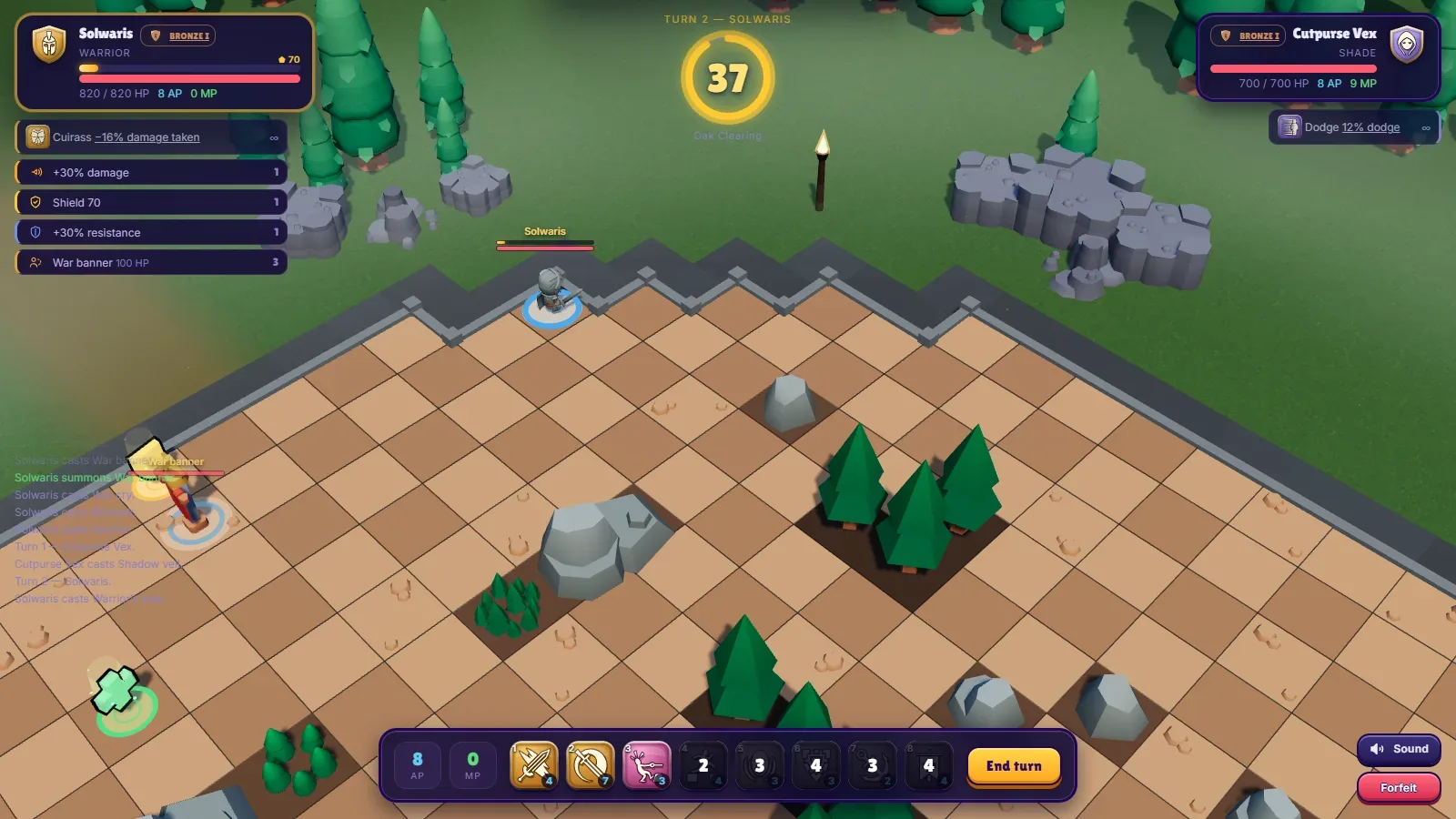
Search for ways to earn crypto playing games and you will find hundreds of lists, most of them written by sites that earn a commission when you sign up. This guide takes the opposite approach. It explains where the money in crypto games actually comes from, what a regular player can realistically expect, and what can go wrong. It also describes how our own game, Solwaris, handles it, including the parts that are less flattering.
Three ways a game can pay you crypto
Nearly every game that pays in crypto falls into one of three families. Knowing which one you are looking at tells you most of what you need to know.
| Model | What decides your earnings | Where the money comes from | Typical examples |
|---|---|---|---|
| Luck | Chance: spins, draws, loot boxes | The house edge and other players’ losses | Crypto casinos, lottery-style mini games |
| Grind | Time spent farming a reward token | New tokens created by the game, sold to other players | Axie Infinity’s SLP, many token-reward games |
| Skill | How well you play against another person | Your opponent’s entry fee or stake | Pay-to-enter matches, head-to-head stakes |
Luck games are gambling with a crypto wallet attached. Over time, the house wins. If a game’s result is mostly random and you pay to play, you are not earning, you are betting.
Grind games were the heart of the 2021 play-to-earn boom. You play, you receive a token, you sell it. The catch is that the game creates those tokens out of nothing, so their value depends on new buyers. Axie Infinity is the textbook case: its SLP token lost more than 99% of its peak value in the February 2022 crash, daily players fell from a peak of 2.7 million to about 250,000 by April 2023, and in January 2026 the game stopped paying SLP in its ranked mode altogether, citing bots.
Skill games work differently: nothing is printed. Two players put up money, the better one takes it, and the platform keeps a fee. That is more sustainable, but it cuts both ways. For every winner there is a loser.
What is realistic
The honest answer is less exciting than the marketing:
- In grind games, your hourly rate follows the token price. When the token falls, your time is worth less, and entry costs (NFTs, starter packs) can take months to recover, if ever.
- In skill games, most players break even or lose. After the platform fee, the average player loses slightly by design. Only players who are clearly above their opponents come out ahead over many matches.
- In luck games, the expected result is negative. That is how the business works.
- Games shut down. In 2025 alone, at least around twenty crypto games closed or left the blockchain, including Nyan Heroes on Solana, whose token had fallen about 98% from its peak when the studio announced it could not fund the game.
There is also a cost that rarely shows up in the pitch: your time. A few dollars’ worth of tokens after an evening of farming can look like money, but divided by the hours spent, it is usually far below any minimum wage, and that is before entry costs, transaction fees and the risk that the token drops before you sell. Skill-based stakes do not change this arithmetic much for an average player: a coin flip between equals, minus a fee, loses a little every time. The players who come out ahead are the ones who would beat most opponents anyway, and they are, by definition, a minority.
If you want to know whether a crypto game can pay you, ask a simpler question first: would you play it if it paid nothing? If the answer is no, the money is the only thing keeping you there, and it is the part most likely to disappear.
The risks nobody puts in the trailer
- You can lose your stake or your entry fee. In any real-money competition, losing costs money.
- Token and NFT prices collapse. Rewards paid in a game token can lose most of their value between the day you earn them and the day you sell.
- Security. Wallet drainers, fake sites and phishing links target crypto gamers. Bridges have been hacked too: the Ronin bridge behind Axie lost about $625 million in March 2022.
- Pay-to-win disguised as earning. If buying an NFT raises your share of the winnings or your chances of winning, the game is selling an advantage.
How Solwaris handles it
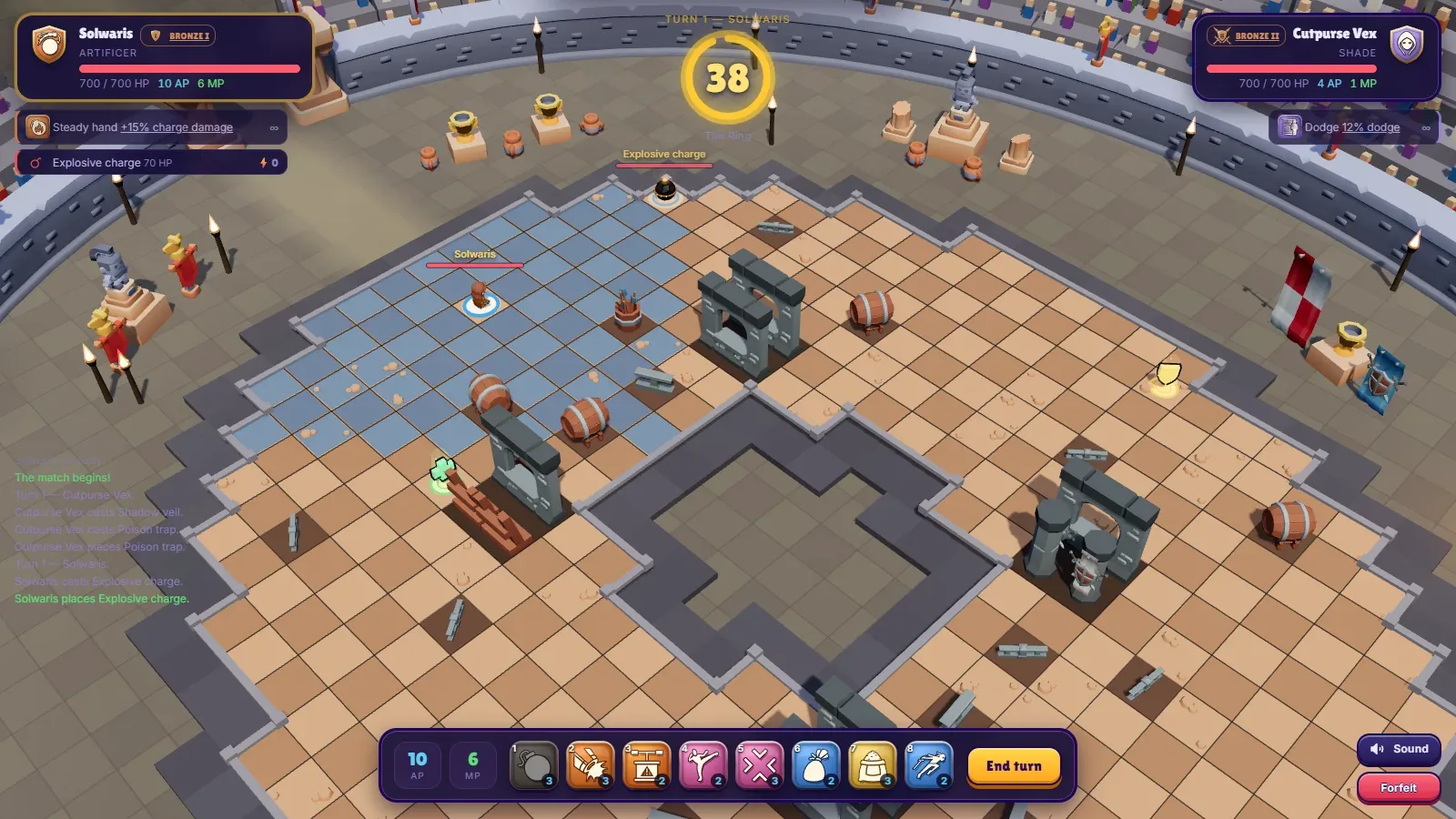
Solwaris is a 1v1 turn-based tactics game played in the browser. Each turn you spend 12 action points and 6 movement points on spells and moves, with range, line of sight, pushes and hidden traps. There are 6 classes and 48 spells. Chance is limited to small things: damage rolls between a spell’s minimum and maximum, a 10% critical hit chance, the Shade’s Dodge, the first-turn draw and where bonus tiles appear. No dice decide who wins.
- The whole game is free, and a free wallet is all you need to sign up: every class, the ranked leagues with an Elo rating per class, AI training, spectating and 2v2.
- Stakes are optional, on separate servers at 1, 5 or 10 USDC on Solana. Both players stake the same amount, and both stakes go to an address dedicated to that single match.
- The winner takes the pot minus a 12.5% fee: 17.50 USDC on a 10 USDC duel.
- You can lose your stake. Lose the match and your opponent takes it. There is no refund for a bad day.
- No NFT, no deposit. The game’s one token, the Waris, is earned by playing, never needed to start, and not tradable. For stakes, you sign a capped spending approval that you can revoke from your wallet at any time; nothing is taken without a match you started.
- Cosmetics never touch the rules. Skins, weapons and auras lower the fee on your winnings, but they change no damage, range or action point.
The full breakdown, including every fee, is on the economy page.
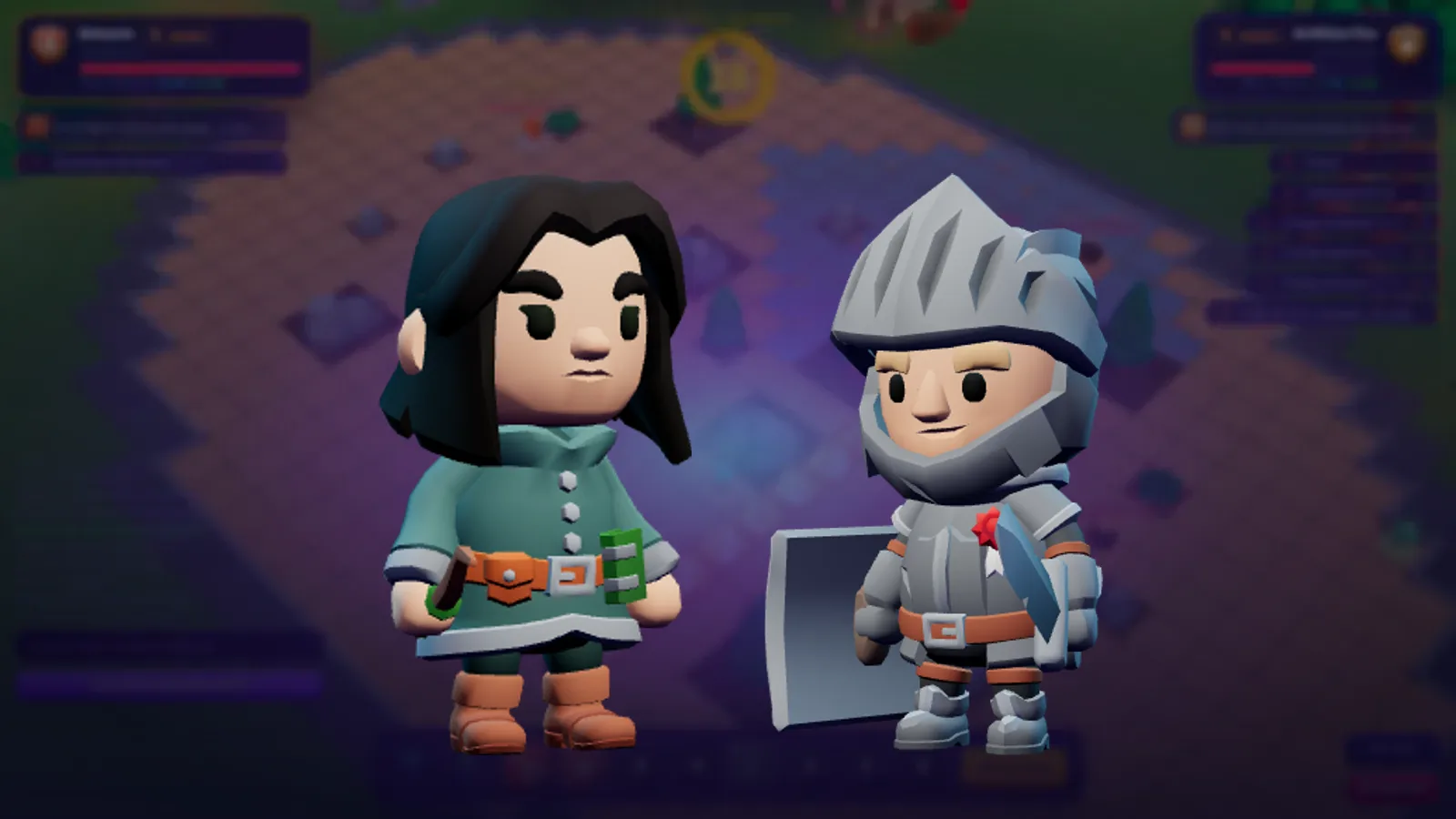
Two honest limits. Solwaris is a young game with a small community, so at quiet hours you may wait for an opponent, or train against the AI instead. And a skill-based model does not make winning easy: it makes it fair. If you are new to turn-based tactics, play the free ranked leagues for a while before you even think about stakes.
A realistic checklist before you play for crypto
For a wider look at the market, including Axie, Splinterlands, Gods Unchained and BR1, read our guide to play-to-earn games in 2026.
Staked matches can be lost; only stake what you can afford to lose. Axie Infinity is a trademark of Sky Mavis; Solwaris is not affiliated with it.
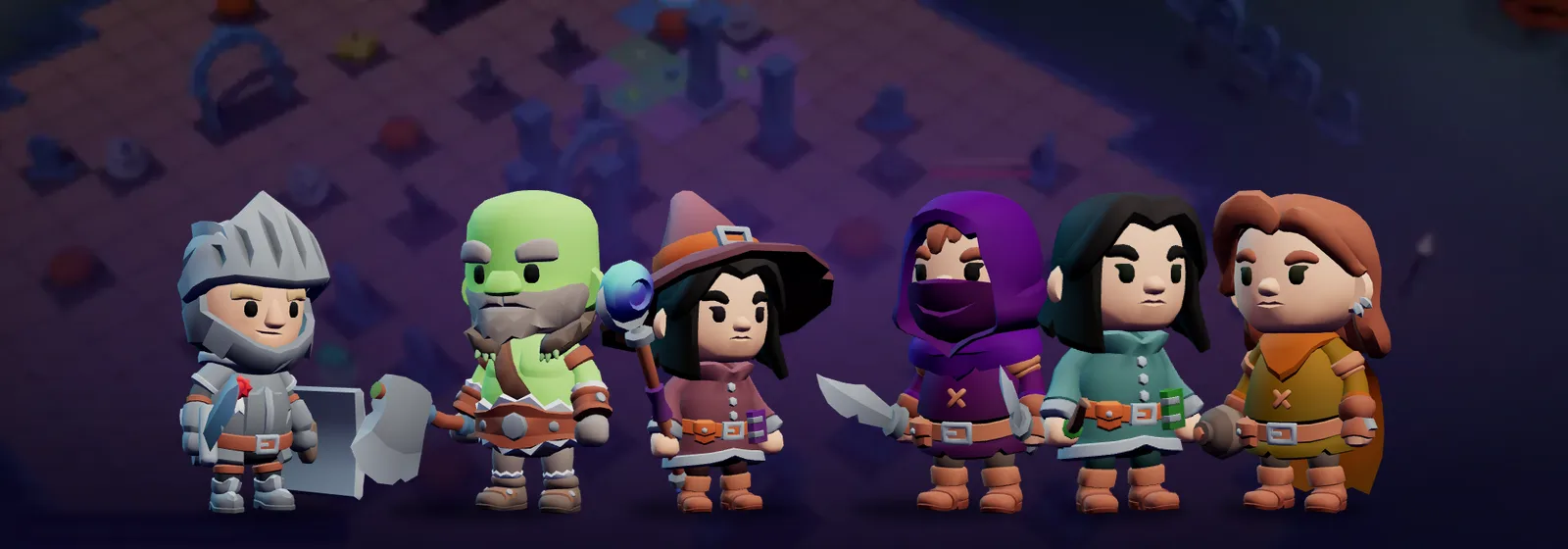
A play-to-earn game where your skill pays
Pick a hero, take your position and beat another player — or an AI — turn by turn. Nothing to install: it plays right here.
Frequently asked questions
Can you really earn crypto by playing games?
Yes, but for most players the amounts are small, irregular and uncertain. Rewards paid in a game’s own token depend on that token’s price, and skill-based stakes only pay the players who win more than they lose. Treat it as a possible bonus, never as income.
What is the difference between skill-based and luck-based crypto games?
In a luck-based game, chance decides the result, as in a casino. In a grind-based game, you earn by spending time, usually in a token. In a skill-based game, the better player wins, and the money comes from the opponent’s stake rather than from a token.
Do I have to pay taxes on crypto earned from games?
Often, yes. In the United States, the IRS says income received in digital assets, including rewards, is taxable and must be reported.
Can I play Solwaris without crypto?
Yes, with no crypto and no transaction, but with a free wallet: it creates your account with one signature. The whole game, all six classes, ranked leagues, AI training and spectating, is free. Stakes are optional and only apply on dedicated servers.