What Is Play to Earn, and Is It a Scam?
Play to earn promised to pay you for playing. A few years on, the numbers mostly tell a story of crashed tokens, departed players and closed games. Here is what the term really covers, why the model so often disappointed, and the questions to ask before putting a single dollar into a game.
“Earn money by playing”: that promise made play to earn explode in 2021, then brought it down just as fast. Yet the term keeps coming back, often with a fair question attached: is it a scam? The honest answer is nuanced. The model is not fraudulent in itself, but most games that claimed it ended up costing the majority of their players more than they paid out. This article explains the mechanism, the documented failures and the risks, without selling you a token.
Play to earn: the simple definition
A play-to-earn game (often shortened to P2E) lets you obtain, by playing, assets that have a market value outside the game. In most cases these are:
- tokens, cryptocurrencies created by the game itself and tradeable on exchanges;
- NFTs, unique digital items (characters, land, cards) recorded on a blockchain and resellable between players.
The difference from a regular game comes down to one point: an item earned in an ordinary game never leaves it. In a P2E game, it can be sold for money. And that is exactly where everything hinges, because for one player to sell, another has to buy.
The three ways a game can “pay”
Not every so-called play-to-earn game works the same way. Telling them apart is your best protection.
| Model | Where the money you earn comes from | Example | Main risk |
|---|---|---|---|
| Reward token | New tokens created by the game, resold to other players | Axie Infinity (SLP token) | The token loses value as buyers dry up |
| NFT items to resell | Item buyers on a secondary market | Gods Unchained (NFT cards) | The market empties, the item becomes worthless |
| Paid competition | Other players’ entry fees or stakes | BR1: Infinite ($1 to spawn, $1 per elimination) | You lose your stake; the legal framework varies by country |
The first model is the most fragile. A game that creates tokens every match keeps putting more of them into circulation. As long as new players buy them to get in, the price holds. When they stop, supply outstrips demand and the price collapses.
Why the model so often disappointed
The story of Axie Infinity, the game that popularised the term, sums up almost everything:
- Its reward token, SLP, lost more than 99% of its peak value in the February 2022 crash, according to Wikipedia.
- Daily active players fell from a peak of 2.7 million to around 250,000 in April 2023.
- “Guilds” lent characters to players, mostly in the Philippines, in exchange for a cut of their earnings that could reach 75%. The system was compared to gold farming.
- In March 2022, the bridge of the Ronin blockchain used by the game was hacked for about 625 million dollars.
- On 7 January 2026, the game stopped distributing SLP in its ranked mode, because of bots.
Axie is not an isolated case. According to DappRadar, blockchain gaming went from 5.8 million daily active wallets in the first quarter of 2025 to 4.66 million in the third. In 2025, at least twenty or so crypto games shut down or abandoned the blockchain, including Nyan Heroes, a Solana game halted in May 2025 for lack of funding, whose token had lost about 98% from its peak.
So, scam or not?
Three things need to be told apart.
- Outright scams exist: projects raise money on the promise of a game, sell NFTs, then vanish. This is not unique to video games, but P2E has seen plenty of them.
- Unsustainable models are more common: no fraud, but an economy that can only hold up by growing. Early arrivals win, latecomers lose. For the player, the outcome looks like a scam, even when nobody lied.
- Serious games exist too: studios that keep updating their game, where the crypto economy is a side feature. Even there, the value of items and tokens remains volatile.
So the right question is not “is play to earn a scam?” but “where does the money this game promises come from?”
The concrete risks, before you pay anything
- Loss of capital: an entry NFT or a purchased token can lose most of its value within weeks.
- Security: a poorly protected crypto wallet, a fake site, a booby-trapped link, and the funds are gone with no recourse. Bridges between blockchains have been the target of massive hacks, like Ronin’s.
- Shutdown: a game that closes leaves behind items that are no longer good for anything.
- Time: the “earnings” from an hour of play, once the entry cost is paid off, are often very small. It is not an income.
- Legal framework: the rules depend on where you live. In France, for example, online gambling is banned in principle, apart from sports betting, horse racing and poker licensed by the ANJ, and the ban also covers games of skill (article L320-1 of the Internal Security Code). Since February 2026, an experimental regime, the “JONUM”, governs certain games with monetisable digital items, under strict rules: no winnings in euros, stablecoins excluded. For your own situation, only a legal professional can answer.
A five-question checklist
And if you are mainly looking for a good game
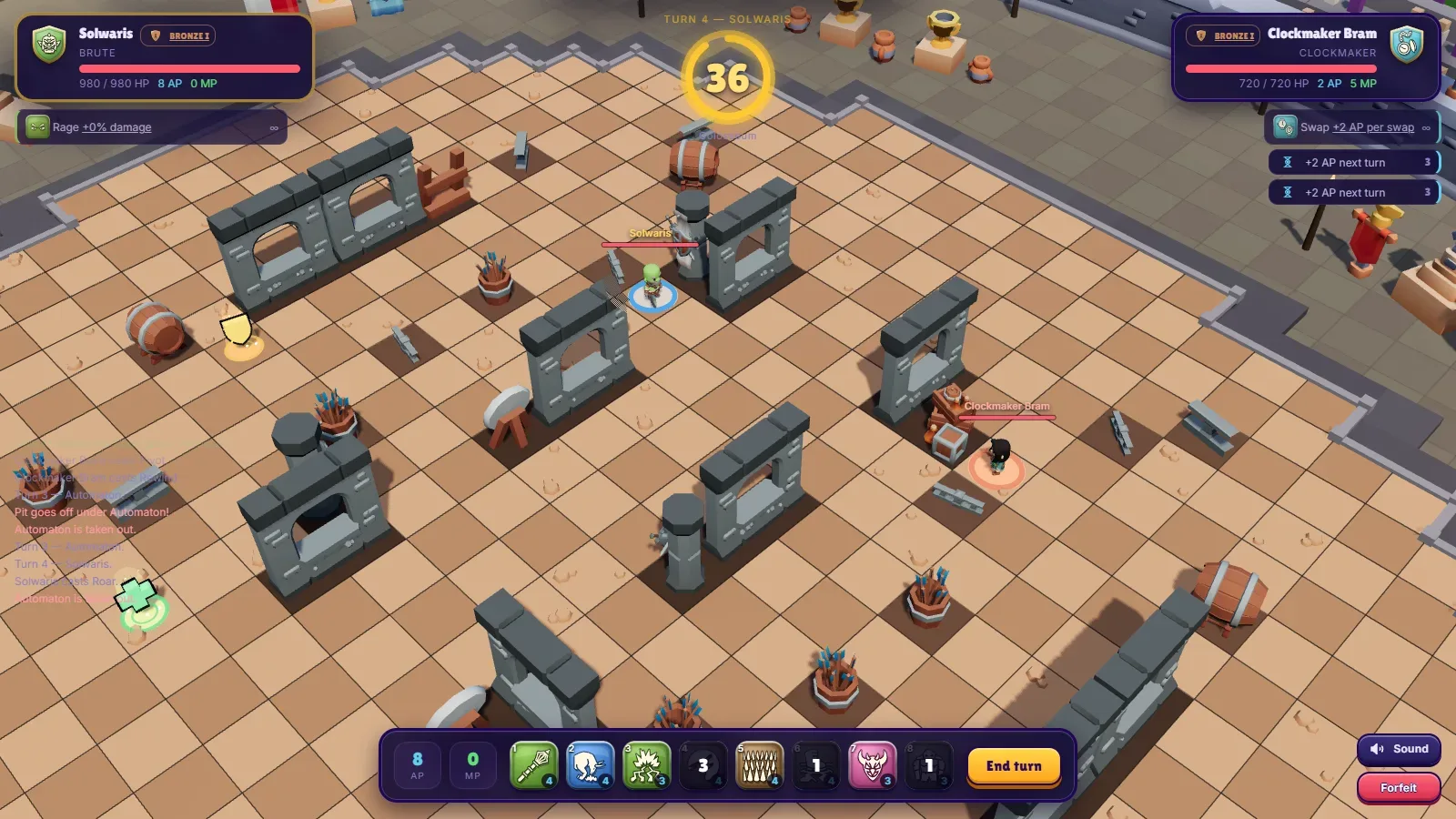
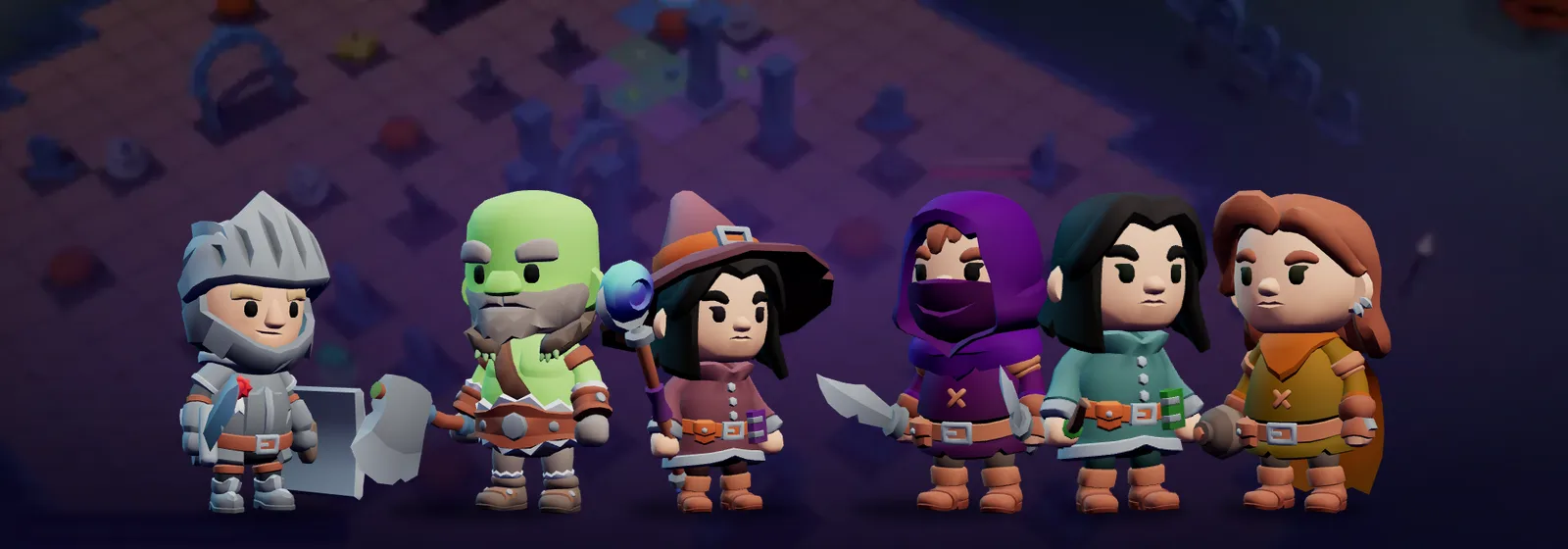
Many people come to play to earn while really looking for something else: a competitive game where skill matters. For that, you do not need crypto. Solwaris, for example, is a turn-based 1v1 tactical duel, free to play in the browser, with no download, and a free wallet is all you need to sign up: 6 classes, ranked leagues with a rating per class, training against the AI and a spectator mode. All you earn is experience and Waris, and shop skins do not change any rule. The game also offers optional staked matches in USDC; everything else is played with no crypto and no transaction.
It is a young game with a small community: at off-peak hours the queue can stay empty, and training against the AI, a separate mode that does not count for the leagues, lets you play in the meantime. If turn-based play is what draws you, our selection of turn-based games will give you more ideas.
This article is for information only and is neither financial nor legal advice. Axie Infinity, Gods Unchained and BR1: Infinite are trademarks of their respective publishers; Solwaris has no connection with them.
A play-to-earn game where your skill pays
Pick a hero, take your position and beat another player — or an AI — turn by turn. Nothing to install: it plays right here.
Frequently asked questions
What exactly is play to earn?
It is a video game model where players can earn assets that have a market value outside the game, usually cryptocurrency tokens or NFTs. These assets can then be resold, which assumes someone wants to buy them.
Is play to earn a scam?
Not by nature, but many projects relied on a constant flow of new players to hold up the value of their token. When new arrivals slowed, rewards collapsed. Some projects were also plain scams. Each game has to be judged on how it pays.
Can you lose money with a play-to-earn game?
Yes. You can lose what you paid to get in, watch the reward token lose almost all its value, have your wallet stolen or see the game shut down. Never put money you cannot afford to lose into this kind of game.
Are there free play-to-earn games?
Some can be played without buying anything, but earnings are often small or reserved for players who paid. If you are mainly looking for a good game, a free game with no crypto economy is still the safest option.