Play-to-Earn Games in 2026: Why Skill-Based PvP Beats Token Farming
Most play-to-earn games paid players in a token that someone else had to buy. When new money stopped coming in, the rewards collapsed. Here is what is left of P2E in 2026, and why skill-based PvP, where you win what your opponent staked, is a different thing entirely.
For a while, play-to-earn games looked like a revolution: get paid to play. In practice, most of them paid players in a token the game itself created, and that token was only worth something as long as new players kept buying in. By 2026 the verdict is in, and it is not kind to that model. But play-to-earn is not dead. It is changing shape.
What play-to-earn meant, and what went wrong
The classic P2E loop looked like this: buy NFTs to enter, play to earn a reward token, sell that token to the next wave of players. It worked while the wave kept growing. Then it stopped.
- Axie Infinity, the symbol of the model, halted SLP rewards in its ranked mode on January 7, 2026, citing bots. The token had already fallen from a high of $0.43 in May 2021 to under a cent in early 2022, and closed at about $0.0005 on Binance in October 2026, 99.9% below its peak.
- The Ronin bridge behind Axie was hacked in March 2022 for roughly $625 million in ETH and USDC.
- According to DappRadar, blockchain gaming went from 5.8 million daily unique active wallets in Q1 2025 to 4.66 million in Q3 2025, while investment in the sector collapsed.
- Dozens of crypto games shut down or left web3 in 2025, including Nyan Heroes on Solana, whose token had lost around 99% of its peak value.
The lesson is simple. If the rewards come from inflation, the rewards eventually go to zero. For the full story, with price charts and the four kinds of P2E economy, read are play-to-earn games legit? and what play to earn actually is.
The three kinds of play-to-earn games in 2026
Not every game that pays works the same way. It helps to sort them into three models.
- Token and NFT farming. You earn a game token by playing. Its value depends on the market for that token. This is the Axie model.
- Pay-to-enter competitions. You pay a fee to join a match or a table and earn from what you achieve inside it. BR1: Infinite on Solana works like this: you pay to spawn, and you earn for each elimination.
- Skill-based stakes between players. Two players put up the same stake, and the better player takes the pot, minus a fee. Nothing is printed: the money comes from the opponent, not from a token.
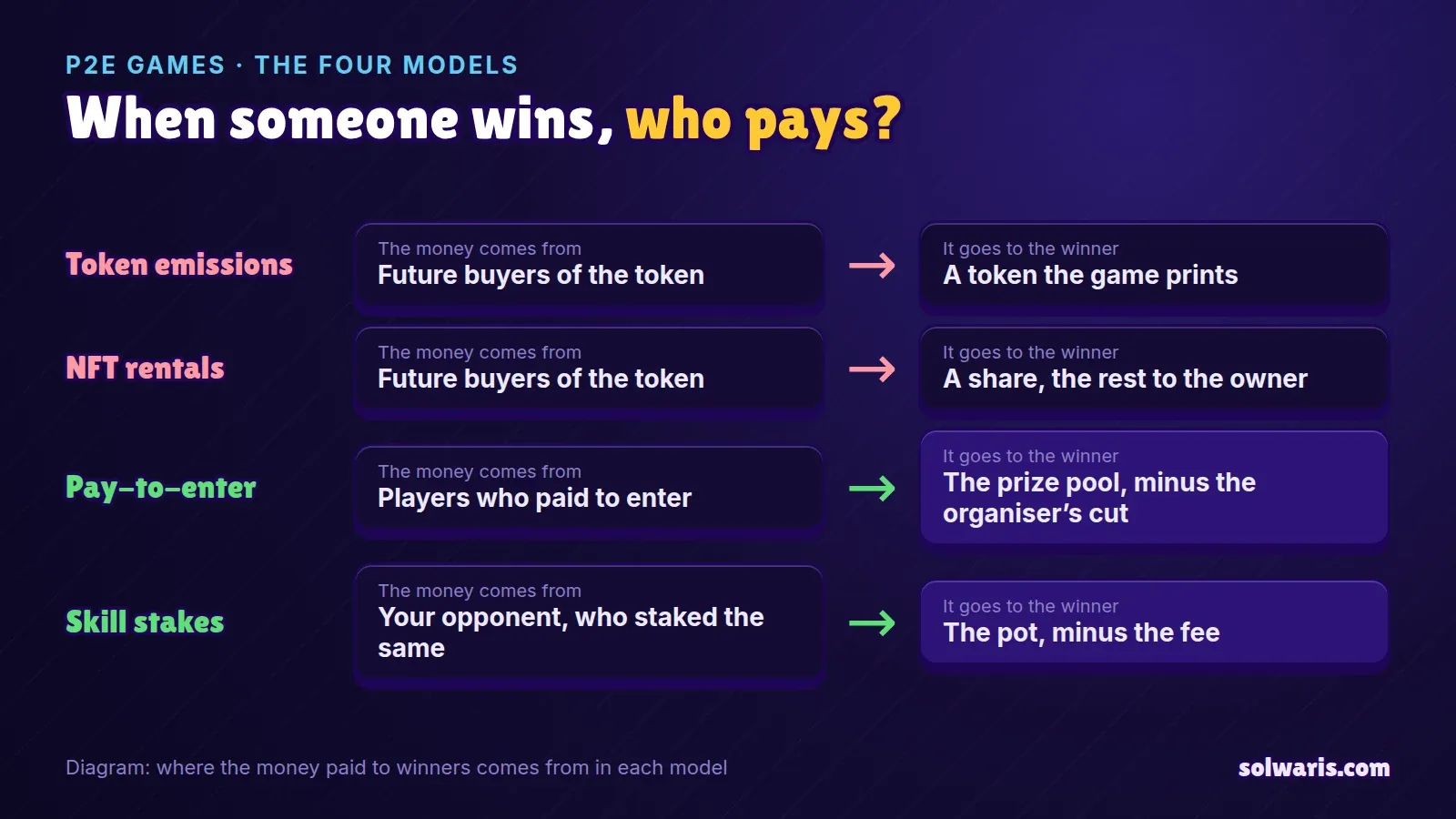
Our guide to P2E models details each one, with a fourth: NFT rentals.
A comparison of popular play-to-earn games
| Game | Network | How you earn | NFT needed to play? | Status in 2026 |
|---|---|---|---|---|
| Axie Infinity | Ronin | SLP token (halted in ranked since Jan 2026) | Free starter Axies; NFT Axies for the rest | Refocusing on a new MMO |
| Splinterlands | Hive | SPS token rewards | Paid Spellbook for ranked; a free mode exists | Active |
| Gods Unchained | Immutable zkEVM | Tradable NFT cards, GODS token | No, free to play | Active |
| BR1: Infinite | Solana | $1 USDC to spawn, $1 per elimination | No, but NFT holders keep a bigger share | Playable |
| Amiko Legends (ex-Aurory) | Solana | Weekly rewards converted to AURY | No | Active |
| Solwaris | Solana | Waris earned by playing (not tradable); your opponent’s USDC stake in optional staked matches | No | Active |
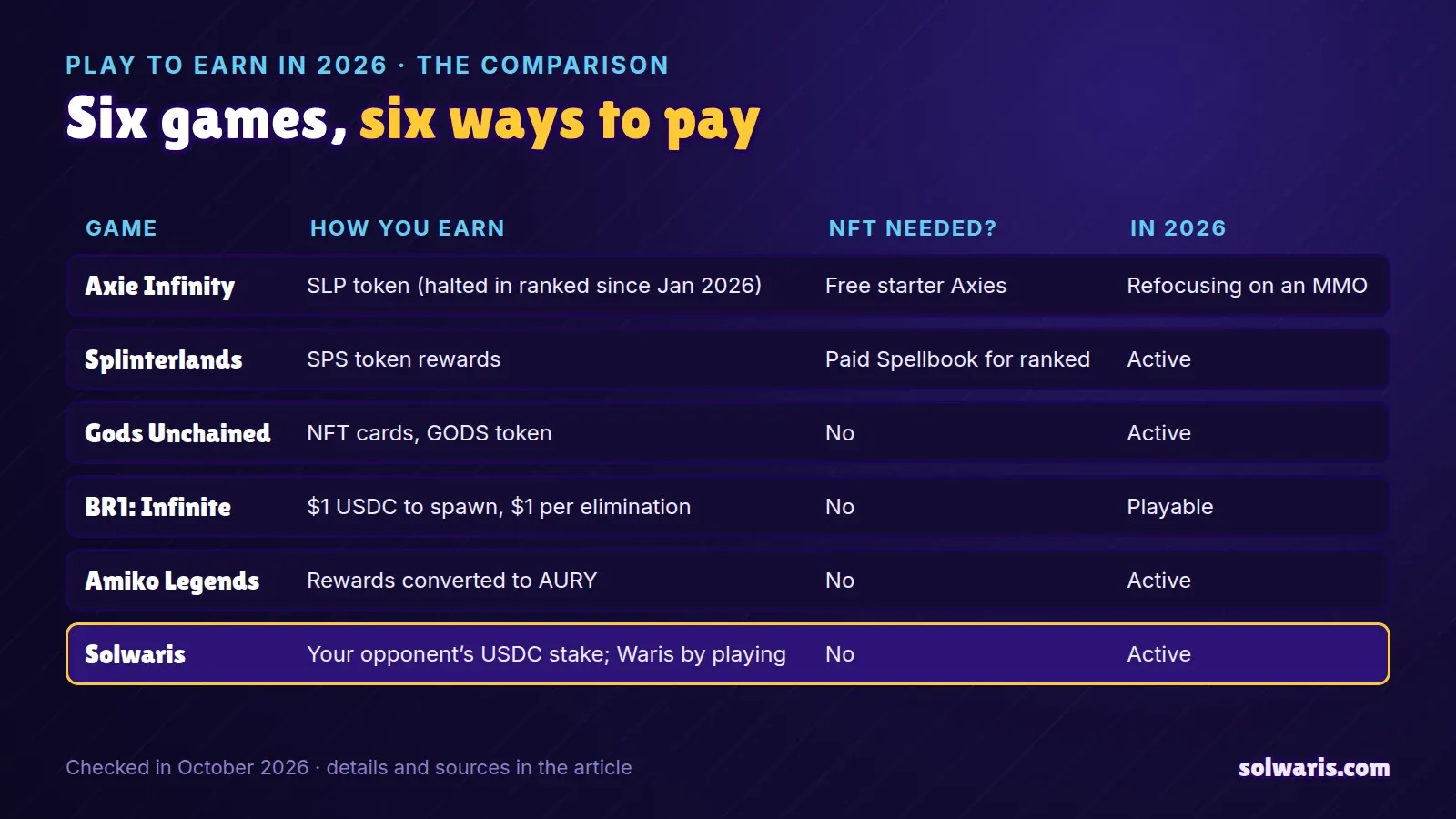
A detail worth noticing: in BR1, players who hold the studio’s NFTs keep a larger share of their winnings (90% or 85% versus 75% without). In a skill-based game, anything you can buy should never change what you win on the field. That is the line between cosmetics and pay-to-win.
How skill-based PvP works in Solwaris
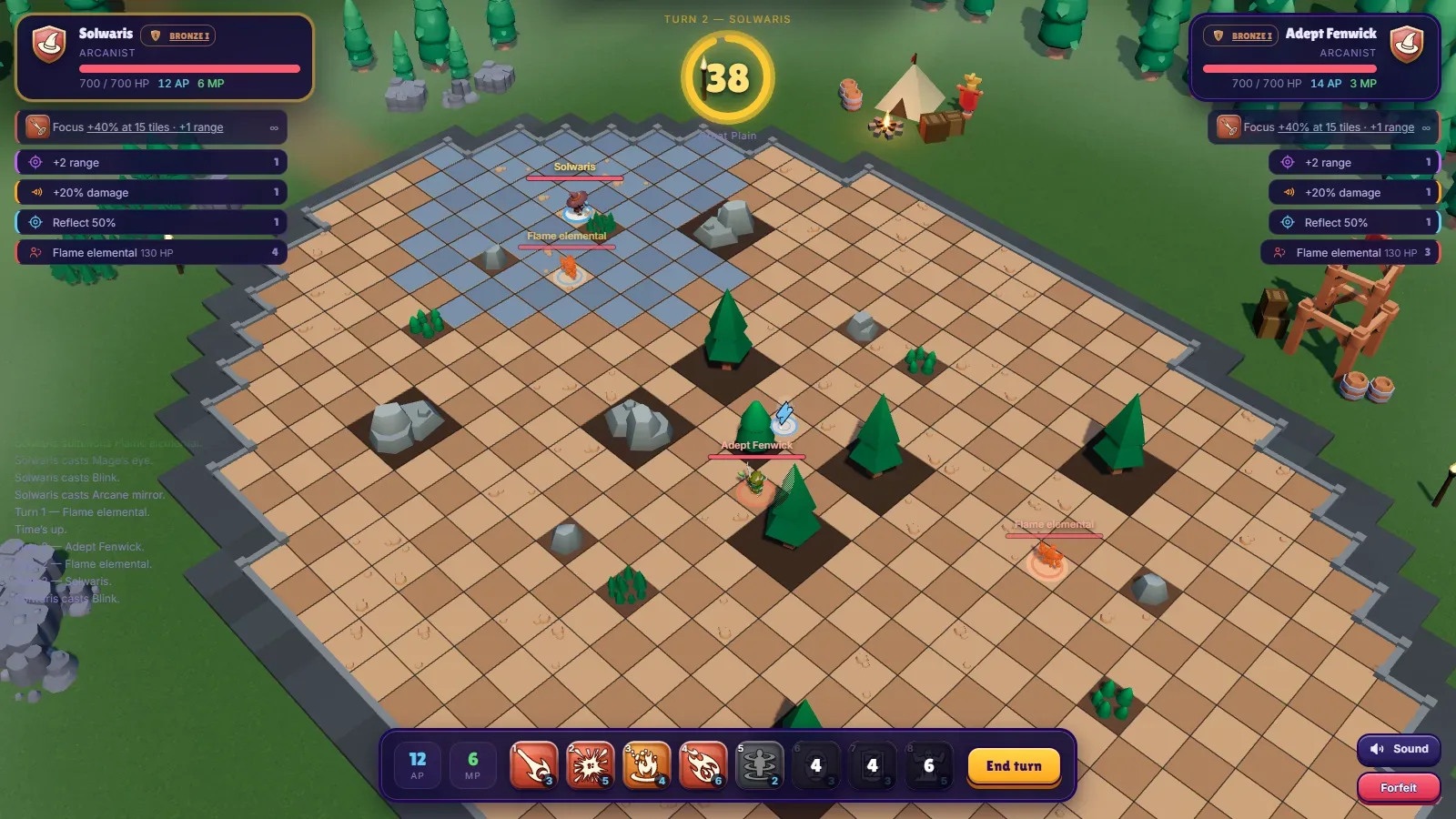
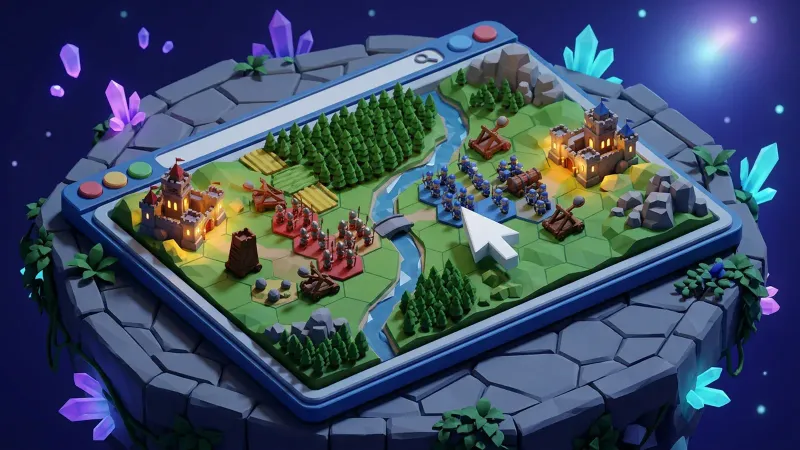
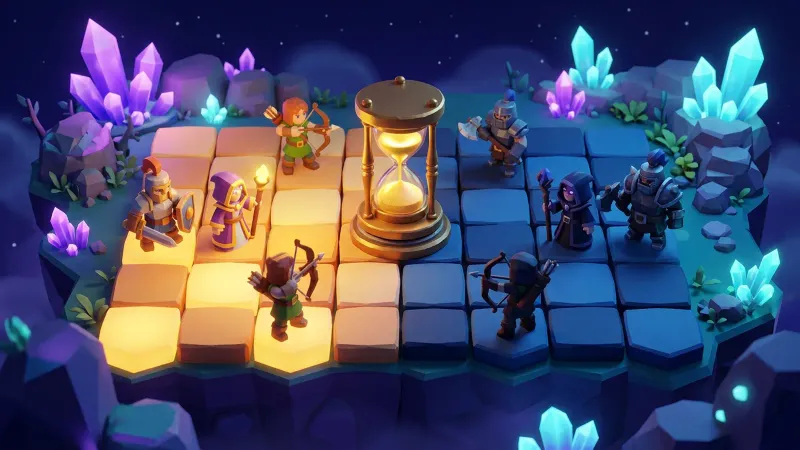
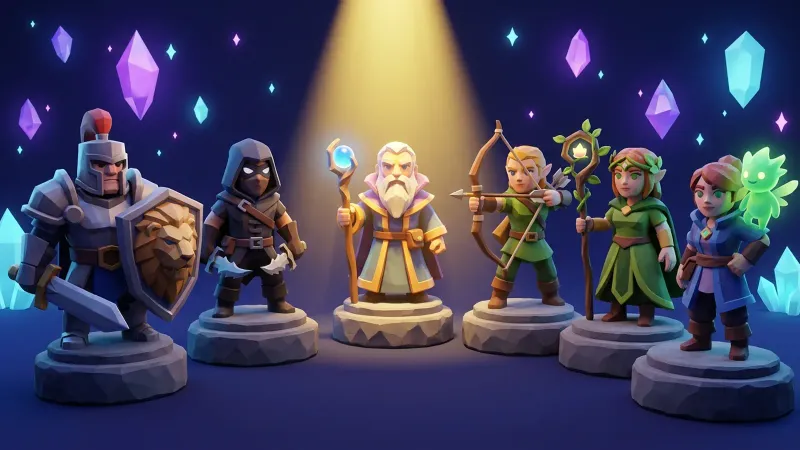
Solwaris is a 1v1 turn-based tactics game played in the browser. Every turn you spend 12 action points and 6 movement points on moves and spells, with range, line of sight, pushes and hidden traps. There are 6 classes and 48 spells. Randomness is kept small: mainly damage ranges on spells and critical hits, at 10%.
The whole game is free, and a free wallet is all you need to sign up: ranked leagues with an Elo rating per class, AI training, spectating and 2v2. For players who want it, there are also stake servers at 1, 5 or 10 USDC:
- both players stake the same amount, and both stakes move to an address dedicated to that single match;
- the winner takes the pot minus a 12.5% fee, so a 10 USDC duel pays 17.50 USDC to the winner;
- staking uses a capped delegation on Solana that the player signs and can revoke at any time;
- there is no NFT, and the game’s one token, the Waris, is earned by playing, never needed to start and not tradable; cosmetics lower the fee but never touch damage, range or any rule.
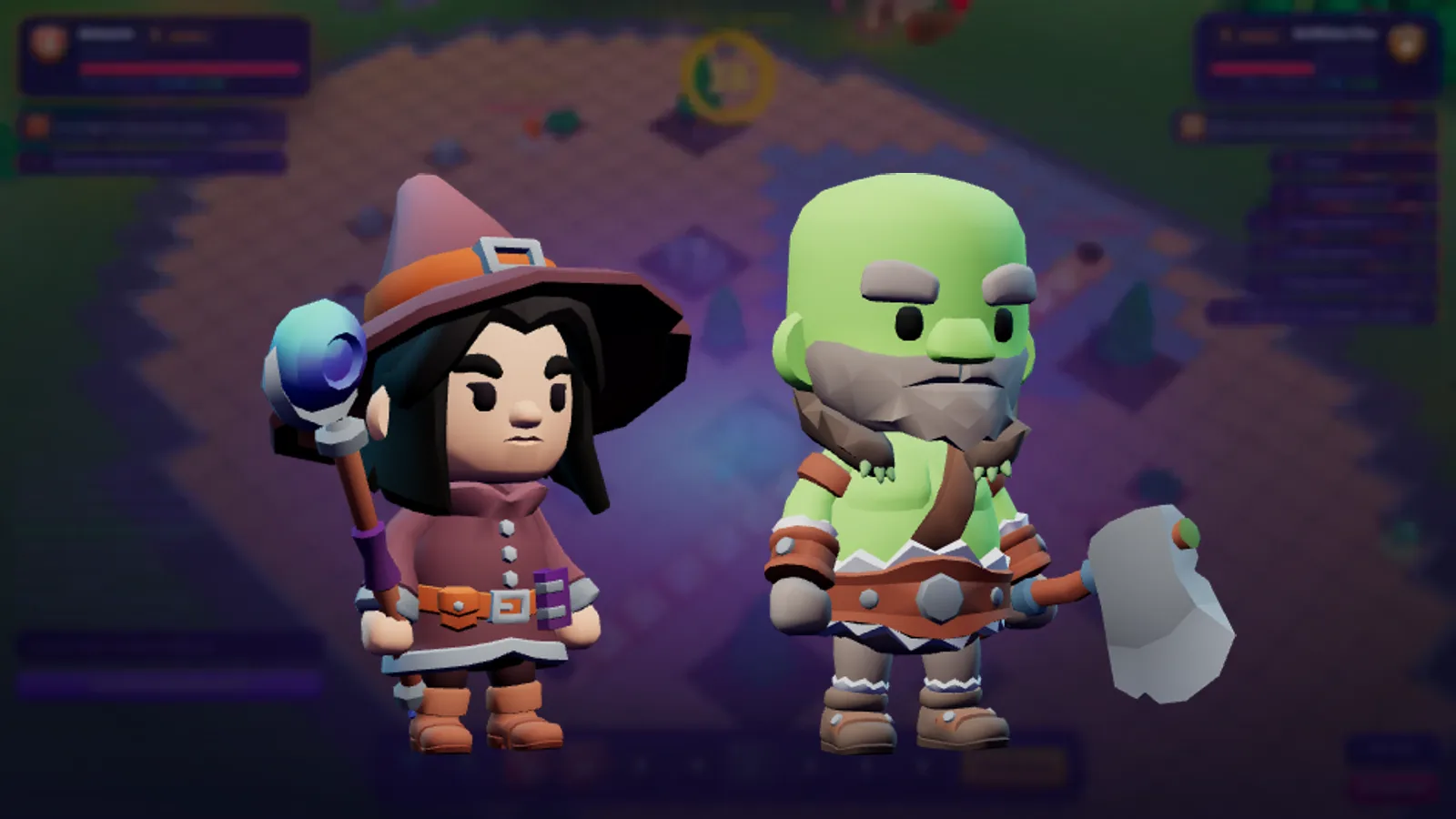
In other words, Solwaris does not pay you to play. It lets two players put their skill on the line, and the better one wins. That is less exciting on paper than “earn while you play”, and much more honest.
A checklist before you play any P2E game
The bottom line
The play-to-earn games that survive 2026 are the ones that are games first. The token farms are fading; what remains is simpler and more durable: games you would play anyway, with an optional way to compete for real stakes when you are good at them.
If turn-based tactics are your thing, try Solwaris for free first: a free wallet creates your account, with no transaction. And if you mostly want great free strategy games, see our list of the best turn-based strategy games you can play in your browser.
Staked matches can be lost: only stake what you can afford to lose.
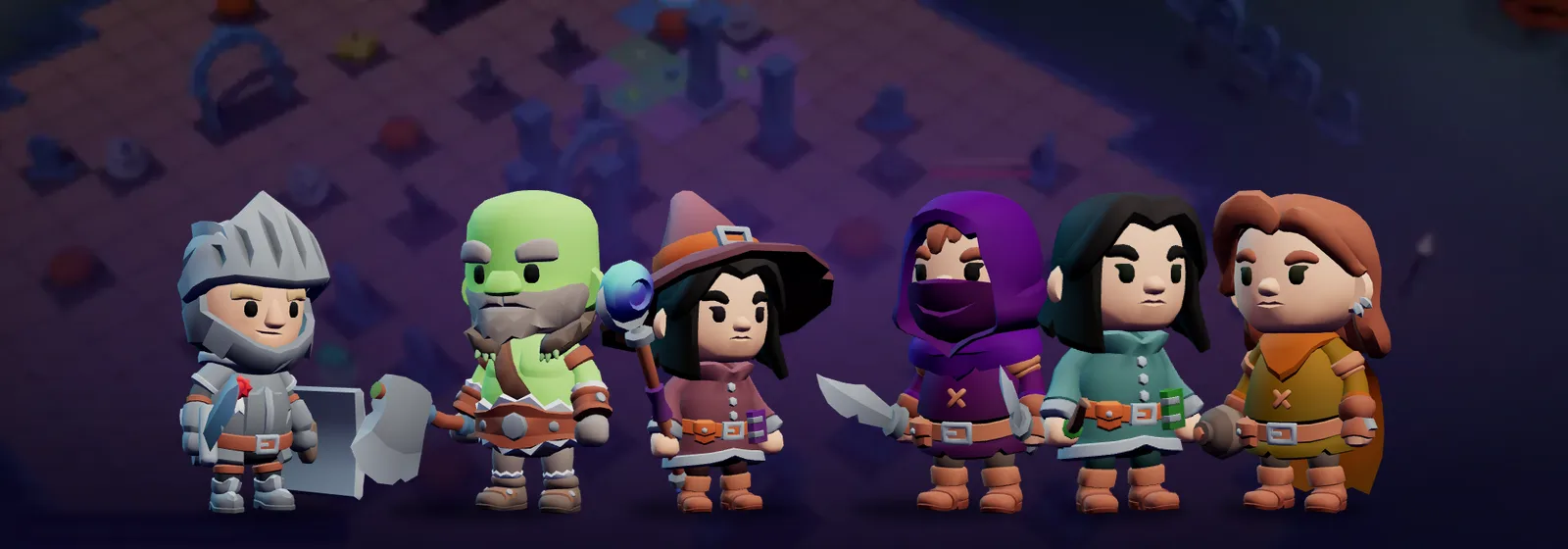
A play-to-earn game where your skill pays
Pick a hero, take your position and beat another player — or an AI — turn by turn. Nothing to install: it plays right here.
Frequently asked questions
Are play-to-earn games legit?
Some are, many were not. Be wary of any game where the rewards are paid in its own token and the only buyers of that token are new players. A game is more trustworthy when it is fun without the money, when you can see where the rewards come from, and when nothing forces you to buy an NFT to start.
What is a skill-based play-to-earn game?
It is a game where money moves between players according to who plays better, not according to how long you farm. In Solwaris, two players stake the same amount of USDC and the winner takes the pot minus a platform fee. Its one token, the Waris, has a fixed supply, is earned by playing and is never needed to start.
Can you play Solwaris without crypto?
Yes, with no crypto and no transaction, but with a free wallet: it creates your account with one signature. The whole game, all six classes and the ranked leagues are free. Stakes are optional and only apply on dedicated servers.
Can you lose money in a skill-based P2E game?
Yes. If you lose a staked match, you lose your stake, and with the platform fee you need to win about 57% of your matches just to break even. Treat stakes as a competitive option for players who are confident in their level, never as income.