1v1 Games Online: The Best Duels by Genre, and What Makes a Duel Fair
One against one, with no teammate to blame and no luck to hide behind, the duel is the most demanding way to play. Here are the best 1v1 games online, genre by genre, then what separates a fair duel from a frustrating one, and how Elo ratings work.
1v1 games online have a rare quality: they are perfectly honest. In a team, you can lose because of a teammate; against the computer, you can win because it is predictable. In a duel, there is you, the other player, and the result. That is what makes them so addictive, and sometimes so frustrating.
This article covers the best online duel games, genre by genre, then spends time on what other lists leave out: what makes a duel fair, and how the ranking that tells you whether you are improving actually works.
The best 1v1 games online, genre by genre
| Game | Genre | Pace | Where | Price |
|---|---|---|---|---|
| Solwaris | Turn-based tactics | Turns of 40 s at most | Browser | Free |
| Advance Wars By Web | Tactical war game | Asynchronous or live | Browser | Free |
| Lichess | Chess | Blitz to correspondence | Browser, mobile | Free |
| Chess.com | Chess | Blitz to correspondence | Browser | Free, optional subscriptions |
| Hearthstone | Cards, turn-based | Turn-based | PC, mobile | Free, optional purchases |
| Marvel Snap | Cards, simultaneous turns | About three minutes | PC, mobile | Free, optional purchases |
| Generals.io | Real-time strategy | Real time | Browser, iOS | Free |
| Street Fighter 6 | Fighting | Real-time rounds | PC, consoles | Paid |
Turn-based tactics: Solwaris
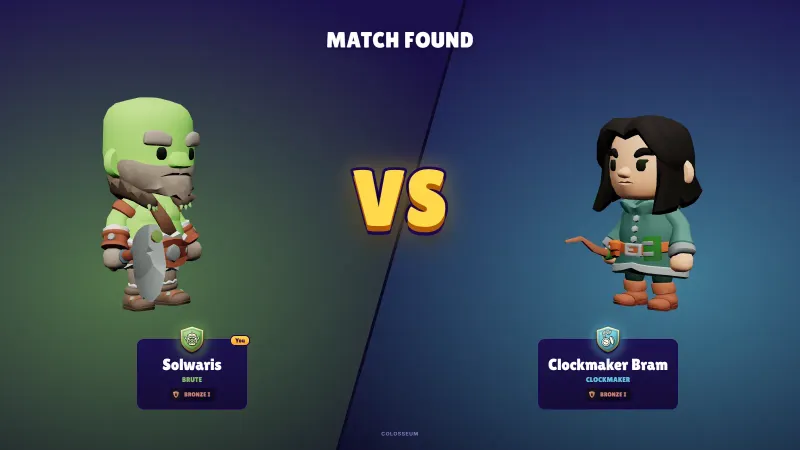
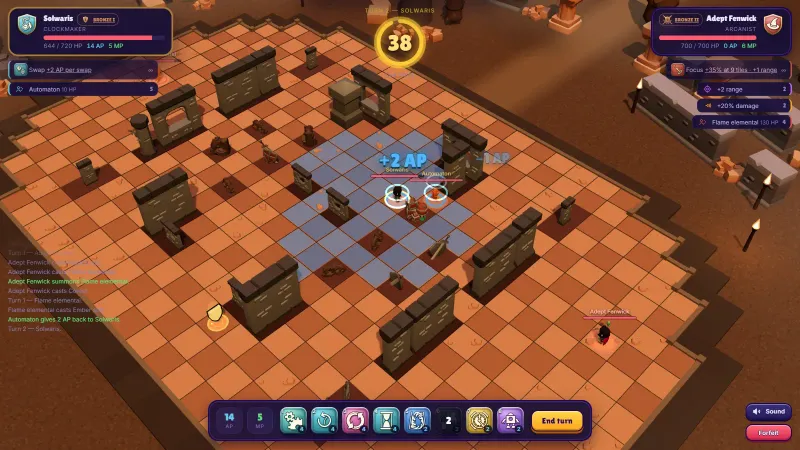
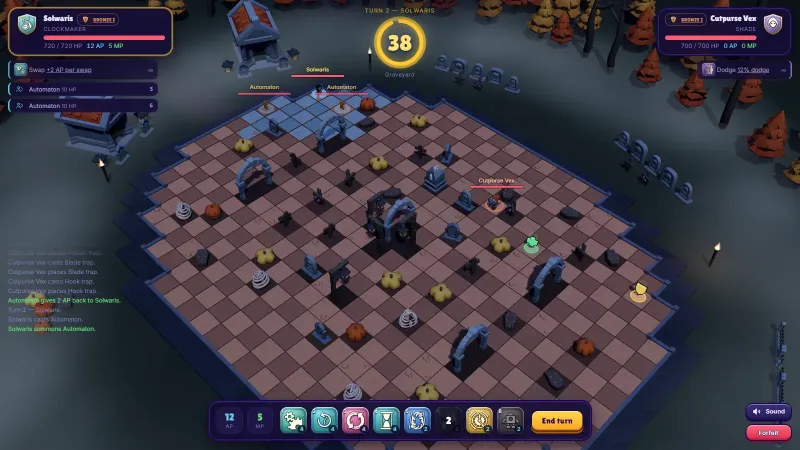
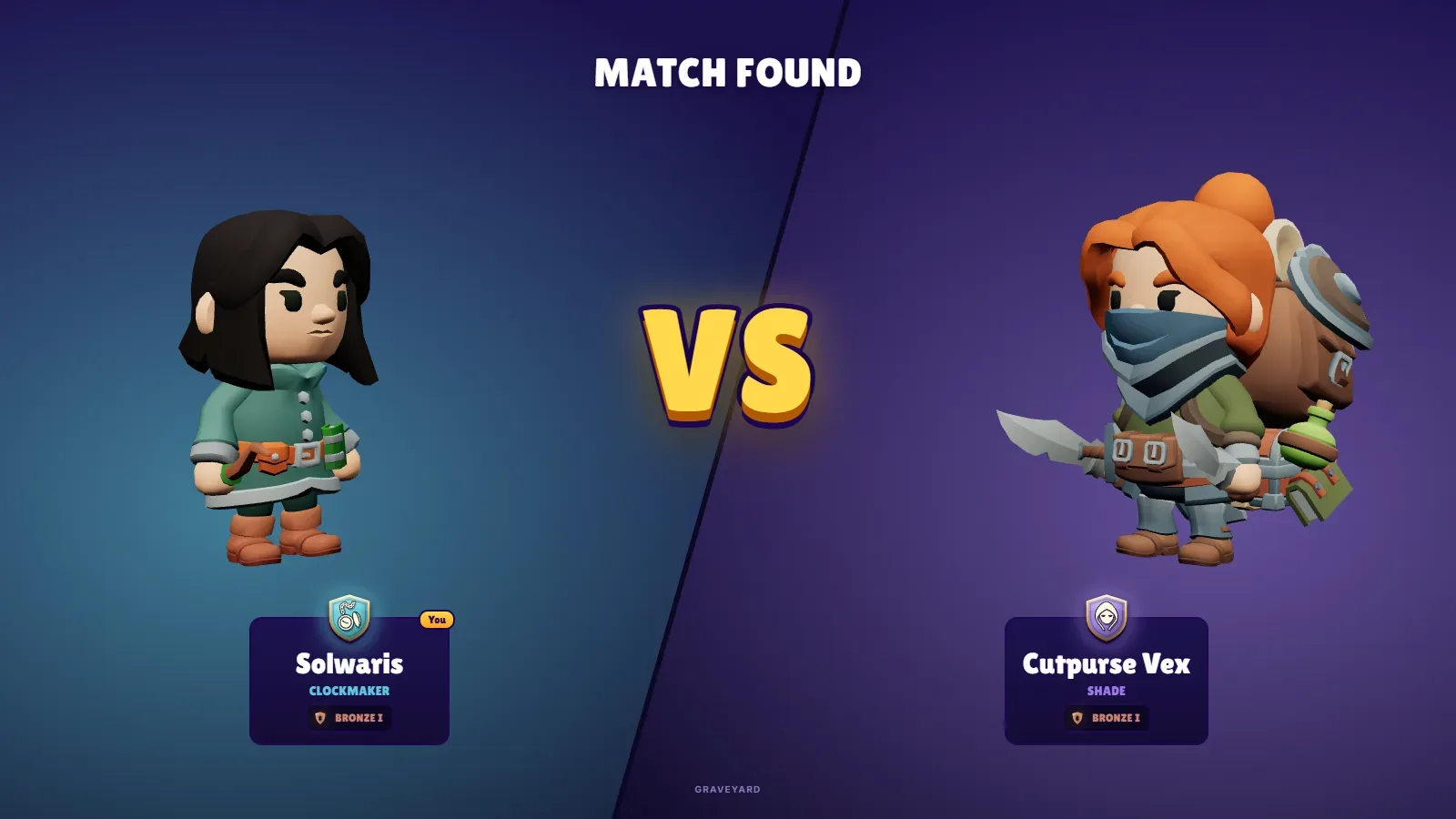
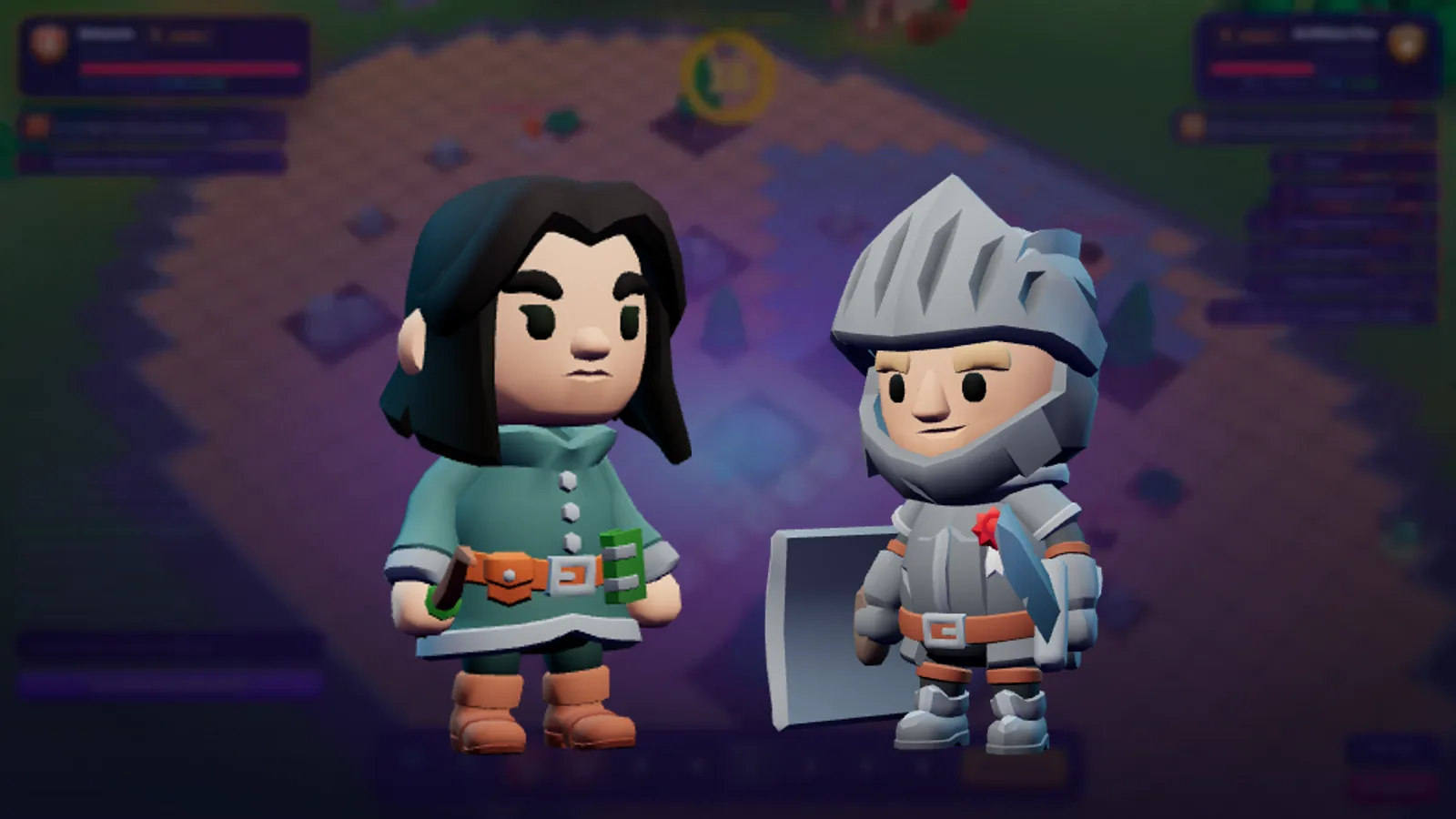
Solwaris is a 3D turn-based tactical duel you can play in the browser without signing up. Each player picks one of the 6 classes, then the two heroes fight on a grid arena: 12 action points and 6 movement points per turn, spells that need line of sight, pushes into walls, invisible traps. The fight ends when a hero falls, when a player forfeits, or after 40 turns (a draw).
We put it first in this category because it was designed for the duel, not adapted to it afterwards: no team, no campaign, a single opponent. To be clear, it is our game, and it is young: the community is small, and at off-peak hours the queue can stay empty. Training against the AI, a separate mode outside the leagues with no effect on your rating, fills the wait.
In the same category: Advance Wars By Web, a fan site where you command a whole army, often asynchronously. Outside the browser, XCOM 2 has an online 1v1 mode, and Wargroove can also be played as a duel.
Chess: Lichess and Chess.com
The turn-based duel par excellence, with no luck at all. Lichess is completely free and ad-free, run by a non-profit. Chess.com is free with optional subscriptions. Both offer every time control, from bullet games to correspondence.
Cards: Hearthstone and Marvel Snap
Hearthstone (Blizzard, 2014) pits two players against each other turn by turn, with decks built from a collection. Marvel Snap (Second Dinner, 2022) tightens the formula: 12-card decks, three locations to control, and turns played simultaneously, revealed together at the end of each round, for games of about three minutes. In both, cards are earned by playing or bought: not everyone starts with the same collection.
Real-time strategy: Generals.io
A map, an enemy general to find, and territory to expand as fast as possible. Generals.io offers free ranked 1v1 in the browser. Here, the speed of a decision matters as much as the decision itself.
Fighting: Street Fighter 6
The duel in its purest real-time form: reflexes, reading your opponent, execution. Released by Capcom on 2 June 2023, on PC and consoles. The exact opposite of turn-based play: here, you never have long to think.
What makes a good duel: fairness
A duel is frustrating when the loser feels they did not lose fairly. Four sources of unfairness keep coming up, and each game answers them in its own way.
1. The first-move advantage. In chess, White moves first, and the statistics show it: White wins slightly more often than Black, with a score usually between 52 and 56%. Solwaris took another route: a draw picks a player, then the other can buy the first turn back in an auction, with coins earned by playing. If there is a counter-bid, whoever starts has paid for that privilege, and only they pay; if nobody bids, the first turn stays free.
2. Luck. A little luck keeps games varied; too much makes the result arbitrary. Chess has none. Solwaris limits it to damage ranges and critical hits (10% chance): what decides the fight is positioning and the order of your spells.
3. Asymmetry. When each player picks a different character, the balance between characters becomes a fairness issue. That is the challenge of fighting games and class-based games. One simple answer: rank players per character. In Solwaris, the rating is calculated separately for each class.
4. Money. A duel is no longer a duel if one side has bought better weapons. In collectible card games, the question comes up. In Solwaris, shop items are cosmetics with no effect on damage, range or action points. The core combat mechanics are covered in our article on what makes a tactics game.
Elo ratings, explained simply
Almost every duel game ranks its players with the Elo system, or one of its descendants. It was designed by Arpad Elo, a physics professor and chess player, adopted by the United States Chess Federation in 1960, then by the international federation (FIDE) in 1970.
The principle fits in three sentences:
- Each player has a rating, a number.
- Before the match, the gap between the two ratings gives an expected score. With a 200-point lead, you are expected to score 76% of the points; with 100 points, 64%.
- After the match, the winner takes points from the loser. If they were the favourite, they take few; if they were the underdog, they take a lot.
The system has two consequences worth knowing. First, beating weak players does almost nothing: you do not climb by farming. Second, matchmaking matters: a game that pairs you with players of your level gives you close games, which are more interesting.
Some sites use a variant. Lichess uses Glicko-2, and Chess.com the Glicko system: on top of the rating, they measure how reliable that rating is. A new player's rating moves a lot, then less and less as the system gets to know them.
Solwaris uses classic Elo, one rating per class: improving with the Shade says nothing about your level with the Arcanist. Training against the AI is played outside the leagues: it does not count towards your rating at all.
Choosing your duel game
- You want zero luck: chess, on Lichess or Chess.com.
- You like grid tactics with nothing to install: Solwaris, or Advance Wars By Web if you would rather command an army.
- You have three minutes: Marvel Snap.
- You want reflexes, not reflection: Street Fighter 6 or Generals.io.
Would you rather play with friends than against strangers? See our guide to multiplayer browser games to play with friends.
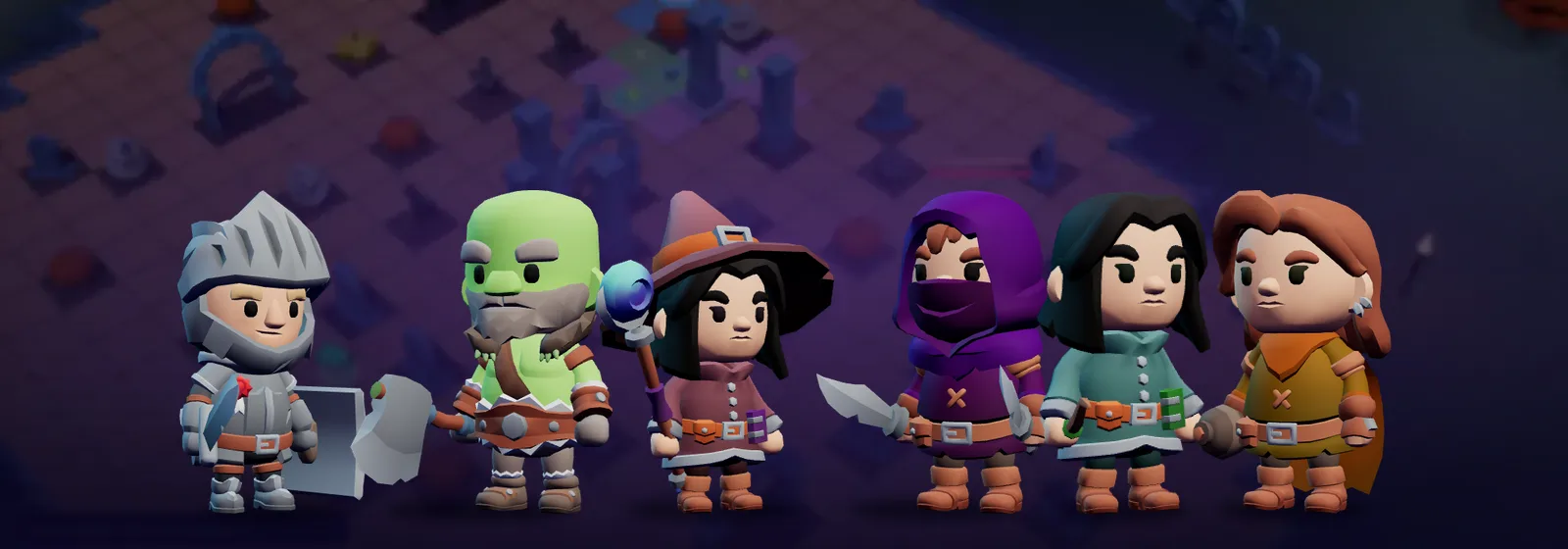
Six classes. One duel. Your strategy.
Pick a hero, take your position and beat another player — or an AI — turn by turn. Nothing to install: it plays right here.
Frequently asked questions
What is the best free 1v1 game online?
It depends on the genre. For chess, Lichess is completely free. For turn-based tactics, Solwaris is free to play in the browser. For cards, Hearthstone and Marvel Snap are free, with optional purchases.
How does the Elo rating system work?
Every player has a rating. After a match, the winner takes points from the loser, and how many depends on the gap between the two ratings. Beating a stronger player earns a lot, beating a weaker one earns almost nothing.
What makes a 1v1 game fair?
Both players start with the same chances, luck stays marginal, and matchmaking pairs players of similar skill. Money must not buy any advantage in combat.
Can you play 1v1 in a browser with no download?
Yes. Lichess, Chess.com, Generals.io, Advance Wars By Web and Solwaris can all be played one on one directly in the browser.