Free Play-to-Earn Games: What “Free” Really Means in 2026
“Free to play” on a play-to-earn game rarely means free to earn. Sometimes the download is free and the ranked mode is not; sometimes the rewards are paid in a token that loses most of its value. Here is what the word actually covers in 2026, with a checklist to tell the difference in five minutes.
Search for free play-to-earn games and you will find long lists of titles marked “free to play”. The label is usually true and almost always incomplete. A game can be free to download, free to start, or free to earn, and those are three very different promises.
This guide separates them, shows where the cost tends to hide, compares a few real games as of 2026, and ends with a short checklist you can run on any title before you spend time or money on it.
Three meanings of “free”
When a play-to-earn game says it is free, it can mean one of three things:
- Free to access. The client or the website costs nothing. That says nothing about rewards.
- Free to play, paid to earn. You can play a mode at no cost, but the mode that pays rewards, usually ranked or competitive, requires a purchase: an NFT, a pass, a starter deck.
- Free to earn. The rewarded mode itself is open to a player who has paid nothing. This is the rare case, and even then the rewards are small by design, because nothing pays for them except the game’s own budget or other players.
Most marketing blurs the first two into the third. The question to keep in mind is simple: can a player who has spent nothing reach the mode that pays, and what does it pay in?
Where the cost usually hides
The cost of a “free” play-to-earn game rarely sits on the download page. It tends to appear in five places.
The rewarded mode. Splinterlands is a good example of an honest split: its Frontier mode is playable without a purchase, but ranked play requires a paid Spellbook. Nothing is hidden, but “free” stops where earning starts.
The reward currency. Many games pay in their own token. When the token falls, so does every reward. Axie Infinity’s SLP went from about $0.36 in May 2021 to about $0.009 in February 2022. In January 2026, Axie stopped SLP rewards in Origins ranked mode altogether, citing bots.
The NFT advantage. Some games let anyone play, then give NFT holders a better cut. BR1: Infinite, a Solana shooter, has a free mode and paid tables, and its published fee split keeps 75% of winnings for a player without an NFT and up to 90% for some NFT holders.
The scholarship economy. At the 2021 peak, players who could not afford the NFT entry cost borrowed assets and shared their earnings with the owner. The model collapsed with token prices. Free on paper, but the player kept only part of the earnings.
Your time. A mode that pays a few cents an hour is free in money and expensive in hours. That is fine if you enjoy the game. It is not fine if the rewards are the only reason to play.
Free play-to-earn games compared (2026)
Here is how a few known games handle the “free” question. Facts were checked in September 2026; these games change often, so check the official pages before you start.
| Game | Free to play? | What costs money | What you can earn |
|---|---|---|---|
| Axie Infinity (Origins) | Yes, starter content | Axie NFTs for a competitive team | SLP rewards in ranked mode halted since January 2026 |
| Splinterlands | Yes, Frontier mode | Spellbook required for ranked | SPS token rewards, with decreasing emissions |
| Gods Unchained | Yes, in the browser | Optional card NFTs | Tradable cards, $GODS token |
| Amiko Legends (ex-Aurory) | Yes, NFT not required | Optional | Weekly rewards converted to $AURY |
| BR1: Infinite | Yes, a free mode | Paid tables, NFTs for a bigger cut | USDC per elimination at paid tables |
| Solwaris | Yes, every mode | Optional stakes, cosmetics | USDC from opponents in staked duels; free modes pay in-game rewards |
Two patterns stand out. Games that pay in their own token now try hard to remove the NFT barrier, because that barrier is what drove players away. And games that pay in a stablecoin like USDC do not suffer from token inflation, but the money has to come from somewhere: usually from other players at the same table.
A five-minute checklist
Before you invest time or money in any play-to-earn game, run these five checks. Our article on whether play-to-earn games are legit goes deeper into the warning signs.
- Is the rewarded mode free? Find the mode that pays and check its entry conditions, not the store page.
- What does it pay in? A token you cannot sell easily is not the same as a stablecoin. Look up the token’s price history, not just today’s price.
- Do NFT holders earn more? If they do, a free player is playing a weaker version of the game.
- Who pays the winners? New buyers, other players, or the studio. Each answer has a different risk.
- Would you play it for nothing? If the answer is no, the game will feel like a job the day rewards drop.
And on the safety side: use a wallet that holds nothing for your first sessions, never type your seed phrase into a game, and treat any “guaranteed earnings” promise as a reason to leave.
How Solwaris handles “free”
Solwaris is the game this blog belongs to, so take this section as our side of the story, and check it yourself in a few minutes.
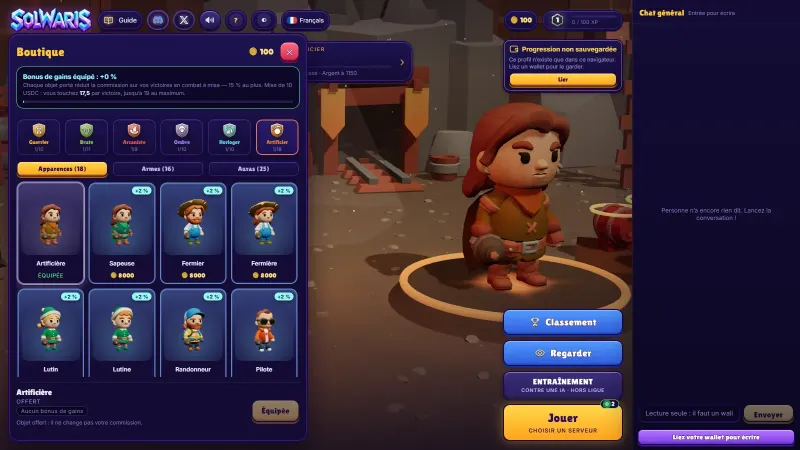
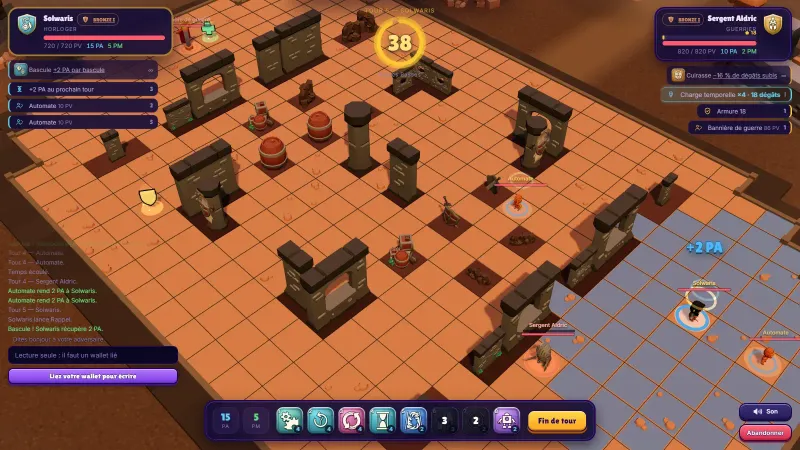
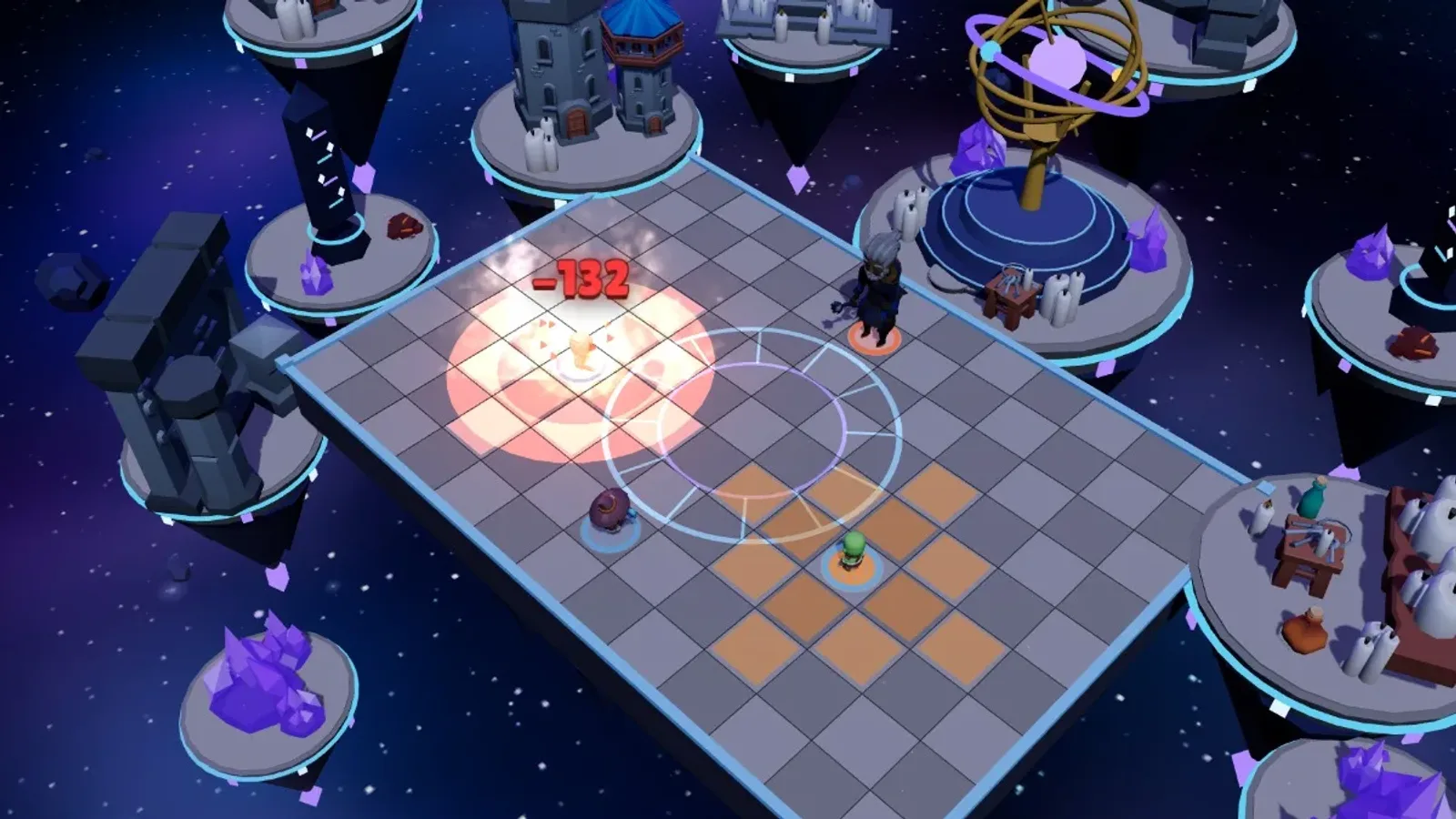
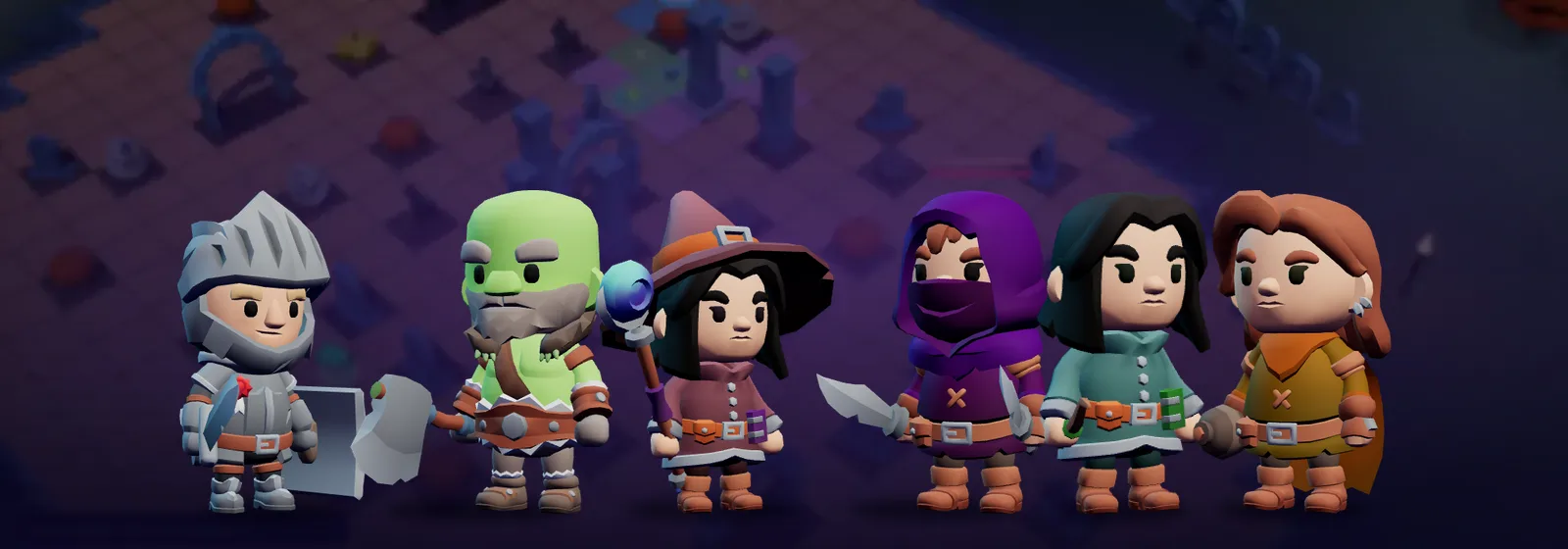
It is a 1v1 turn-based tactics game played in the browser, with 6 classes and 48 spells. There is no token and no NFT. Every mode can be played without paying anything:
- free ranked duels, with an Elo rating per class;
- free 2 vs 2 matches;
- training against AI opponents;
- a weekly boss you can fight alone or with up to two other players, whose loot is coins and a chance at in-game crystals.
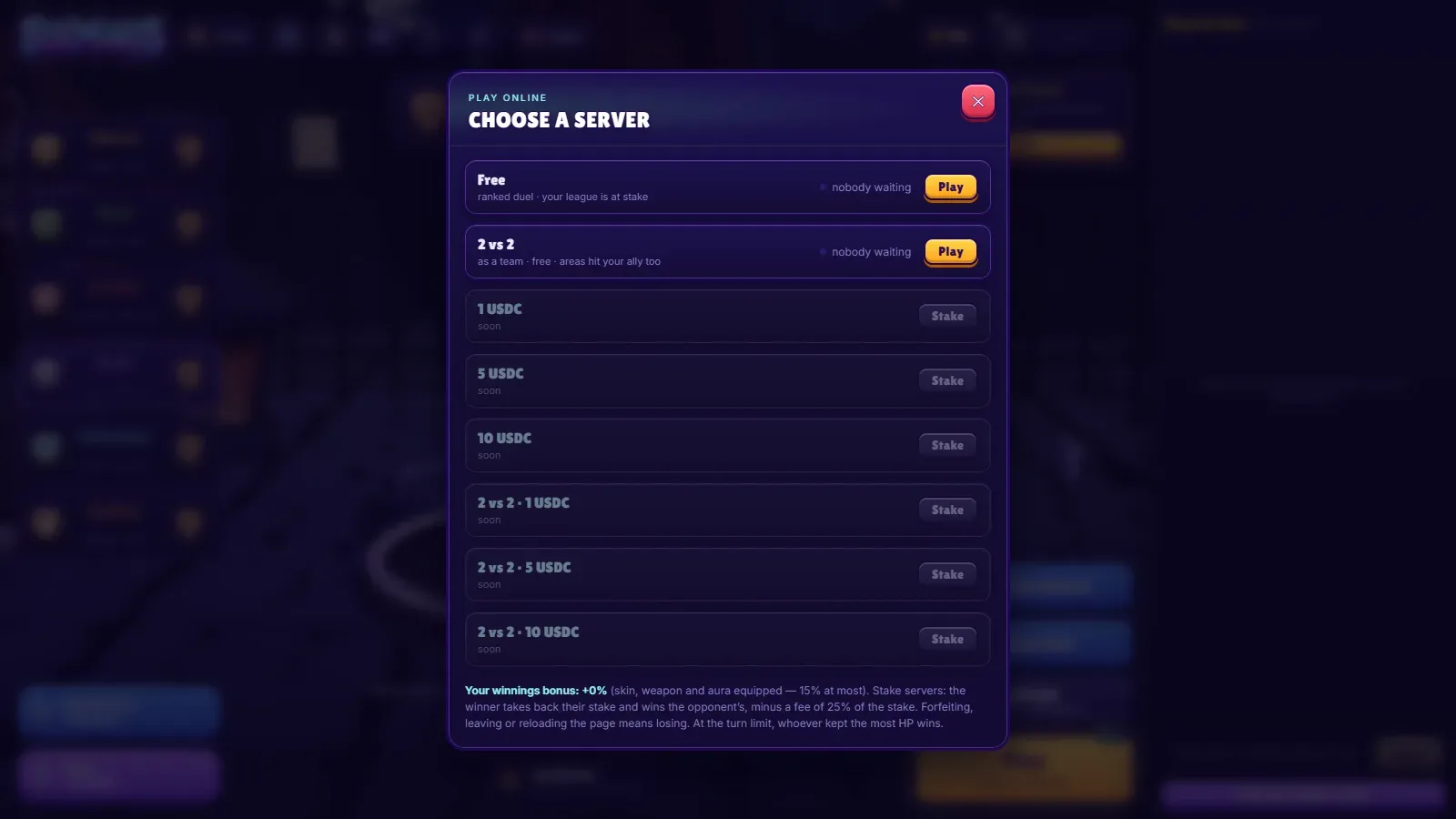
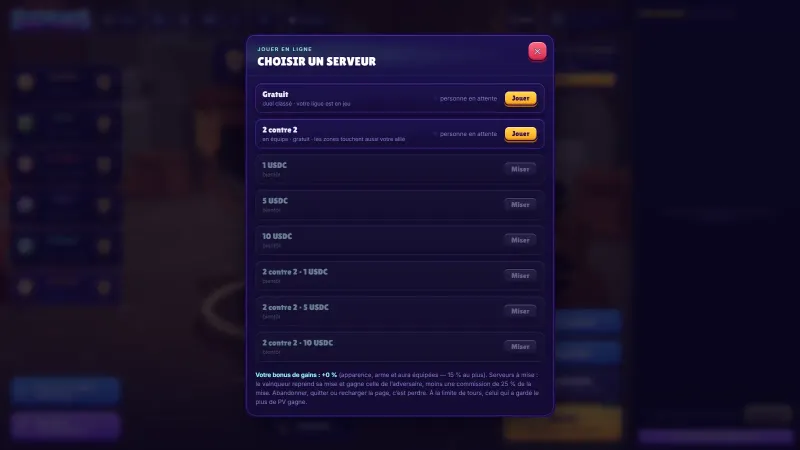
Money only enters if you choose it. Optional stake servers run at 1, 5 or 10 USDC: both players put up the same stake, and the winner takes the pot minus a 12.5% fee, so 17.50 USDC on a 10 USDC duel. The money you win comes from the opponent you beat, which also means you can lose your stake. Cosmetics change how your hero looks and can lower that fee; they never change the rules of a fight.
The honest limits: the game is young, the community is small, and at quiet hours the free queue can stay empty. No AI fills an empty queue; training against the AI is a separate button. If you want to learn the rules first, the rules page covers action points, movement and line of sight.
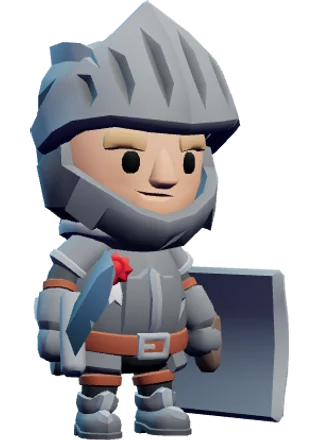 WarriorMelee · Tank
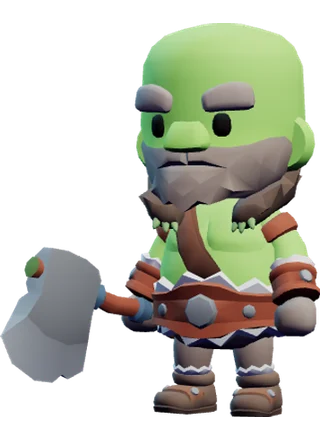 BruteMelee · Area
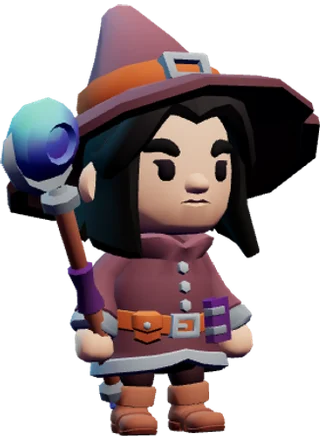 ArcanistRanged · Damage
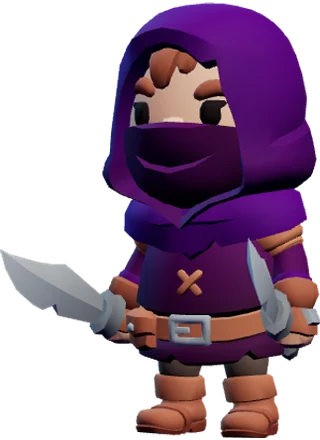 ShadeTraps · Poison
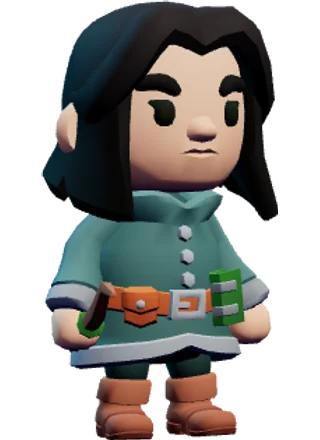 ClockmakerSwap · Control
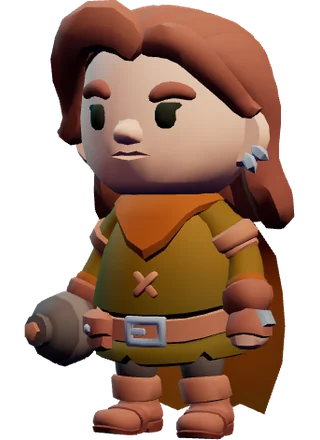 ArtificerBombs · Area
The bottom line
A free play-to-earn game is worth your time when the game is worth your time. The word “free” tells you how you get in, not how you get paid. Look for the mode that pays, what it pays in, and who pays it. If those three answers are clear and you would play anyway, the rewards are a bonus. If they are vague, keep your wallet closed.
For a broader view of how the different models work, see our guide to P2E games.
Axie Infinity is a trademark of Sky Mavis. Splinterlands, Gods Unchained, Amiko Legends and BR1: Infinite belong to their respective owners. Solwaris is an independent game with no link to them.
Six classes. One duel. Your strategy.
Pick a hero, take your position and beat another player — or an AI — turn by turn. Nothing to install: it plays right here.
Frequently asked questions
Are there play-to-earn games that are really free?
Some let you play without buying anything, but few let you earn without paying at some point. Check whether the mode that pays rewards is the free one, and what the reward is paid in.
Do I need an NFT to play to earn?
Not always. Several games now let you play without one, but holding NFTs often still raises your share of the rewards. Read the reward rules before buying anything.
Is free play to earn worth my time?
Only if you enjoy the game itself. Free rewards are small by design, and token rewards can lose most of their value, so treat any earnings as a bonus, never as income.
What is the safest way to try a play-to-earn game?
Start with the free mode, connect a wallet that holds nothing, never share your seed phrase, and only stake money you are ready to lose once you know the game.